AI and computer science, ages 16 to 17, in Cambridge, from £5,795.
Deadline: Not announced yet · From £5,795 · 16-17 · Cambridge · In-person
by UC Berkeley Pre-College Scholars
The Berkeley Summer Computer Science Academy is a two-week residential course at UC Berkeley for students with little or no coding experience. It's built on CS10: The Beauty and Joy of Computing, the introductory course Berkeley undergraduates take. You work through daily coding challenges in Snap!, a visual blocks-based language, and the 2026 course added an introduction to AI covering machine learning, generative AI and AI ethics. It ends with the Code Celebration, where you show your own project to Berkeley computer science faculty and instructors.
 Sean Stevens · Sources
Get the key facts by email
The dates, costs and how to apply, all in one place.
Why it's worth it
You get two weeks based on CS10, the course Berkeley undergraduates actually take, taught by veteran teachers of that course, and your final project is seen and questioned by Berkeley computer science faculty, which gives a beginner's first real project a serious audience.
What it asks of you
The 2026 fee was $5,197 for the two weeks, plus a $25 application fee and the cost of getting to the Bay Area, which is a lot to pay for an introductory course that carries no credit.
Who should skip it
Students with advanced computer science experience, because the course is designed for students with little or no coding behind them, and Berkeley recommends that experienced students apply to its residential or commuter tracks instead.
The academy is open to domestic and international high school students aged 16 or 17. For 2026 you had to have finished 10th or 11th grade by the start, hold a B average (3.0, weighted or unweighted) across all your high school courses, be 16 by 21 June 2026 and have your own health insurance. Students who turn 18 before summer classes begin can't apply.
International students are welcome but must meet Berkeley Summer Sessions' English proficiency requirement, either with a test taken in the last three years (such as IELTS 6.5, TOEFL iBT 80 or Duolingo 115), through an exempt country or with a waiver. Because the academy is short and doesn't carry credit, Berkeley can't sponsor a student visa for it, and students who come on an existing visa get no immigration support or advising.
Places are limited and admission is rolling, and once the academy is full Berkeley offers waitlist places. Accepting one counts as accepting full admission, so if a place opens up you're enrolled and billed straight away without being asked again.
You learn the core ideas of computer science through Snap!, the blocks-based visual language used in Berkeley's Beauty and Joy of Computing (BJC) course. BJC is the CS10 class Berkeley undergraduates take, and it's an endorsed curriculum for AP Computer Science Principles. Day-to-day teaching comes from veteran BJC teachers, and the academy's curriculum was developed by Dan Garcia, a teaching professor in Berkeley's Electrical Engineering and Computer Science department. Each summer's instructors aren't announced until before the program starts. The 2026 topics were these:
Computing foundations
Abstraction and functions, number representation, Boolean logic and conditionals, algorithms, and the social implications of computing.
Deeper programming
Lists and higher-order functions, recursion and tree recursion.
Artificial intelligence, new for 2026
Supervised machine learning, reinforcement learning, generative AI and the ethics of AI.
You leave with a coding project of your own and feedback on it, but no credit. Berkeley says the track doesn't give any units or credits, so there's nothing to transfer to your high school or a future university. You can build the project alone or in a group, and you show it at the Code Celebration that closes the course, where Berkeley computer science faculty and instructors look at it, comment and ask questions.
You also get Berkeley's college exploration workshops. Past sessions have included College in Perspective, The Best College for You and What Admissions Officers Look For, along with a presentation from UC Berkeley's Office of Undergraduate Admissions. Berkeley's program details don't claim that taking part helps an application to UC Berkeley itself.
The 2026 program fee was $5,197, so with the $25 application fee a family paid $5,222 before travel. That covered tuition, a shared room in Bowles Hall, meals (three a day on weekdays and two on weekends and holidays), orientation, excursions and activities, basic emergency-use health insurance and on-site support. Flights to the Bay Area, airport transfers and personal spending are extra. So are any vaccines you get at the campus health center if you arrive without them.
Berkeley bills the full fee as soon as you're admitted, and it has to be paid within seven days or the place is canceled. The Fee Payment Plan and third-party contracts aren't accepted for this track. In 2026 you could withdraw through the admissions portal by 9 April and get everything back except the $25 application fee. After that date the whole fee was owed, though you could appeal. Withdrawals by email or phone don't count.
There's no formal financial aid. Berkeley does partner with the National Society of High School Scholars (NSHSS) on a scholarship that covered tuition and room and board for the 2026 academy, with details on the NSHSS website.
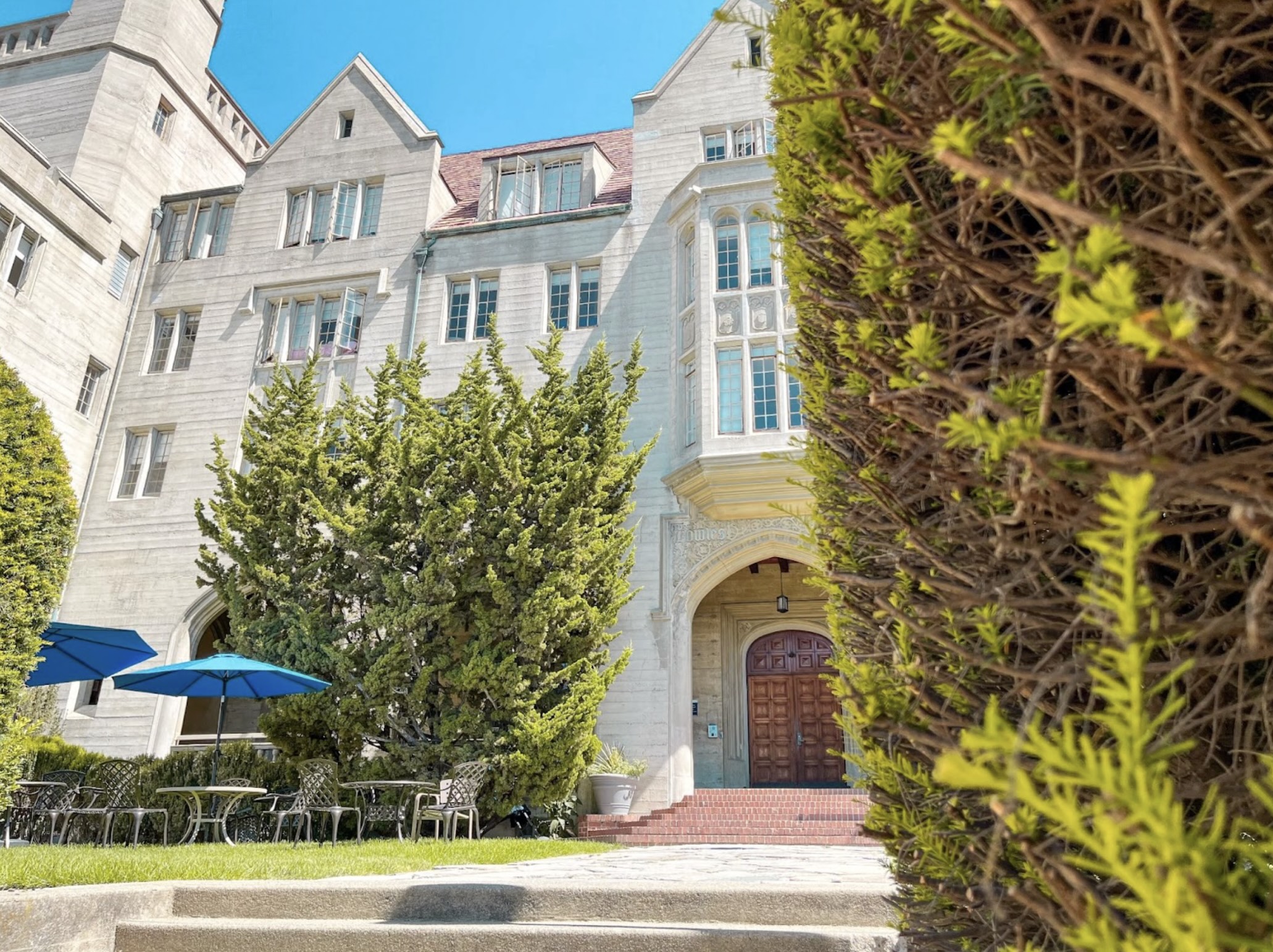
Students live together in Bowles Hall, a residence hall within walking distance of campus, where residential staff and resident assistant mentors (RAMs), who are UC Berkeley undergraduates, supervise them full-time. Rooms are shared doubles and triples, assigned at random when you arrive, and you can't swap. The rules are strict. Curfew runs from 10 p.m. to 6 a.m., you can't leave campus until a RAM approves where you're going and who you're with, and you need written permission to travel outside the City of Berkeley. Rideshares, taxis, e-scooters and bike-share are banned, and so is riding in another participant's or a staff member's car. Berkeley's responsibility starts when you check in at the hall and ends when you check out.
Everyone is enrolled in an emergency-use insurance plan but still needs their own coverage. You also need the measles (MMR) vaccine, plus the chickenpox (varicella) vaccine if you've never had chickenpox, and you're responsible for storing and taking your own medication under a form you sign beforehand. The full rules are in the Student Code of Conduct Agreement, which both student and parent sign.

Sean
Talk it through with Sean
“I can help you compare the programs you're considering, think through the practicalities and work out what makes sense for you.”
AI and computer science, ages 16 to 17, in Cambridge, from £5,795.
Deadline: Not announced yet · From £5,795 · 16-17 · Cambridge · In-person
Computer science and AI, ages 13 to 18, in Cambridge, from £5,995.
Deadline: Not announced yet · From £5,995 · 13-18 · Cambridge · In-person
Coding, computer science and AI, ages 15 to 18, in Oxford, from £6,995.
Deadline: Not announced yet · From £6,995 · 15-18 · Oxford · In-person
Save this program in Succeed to compare it with similar programs, dates, costs and formats in one place.
Compare with other programsprecollege.berkeley.edu · Official page
berkeleyprecollege.zendesk.com
berkeleyprecollege.zendesk.com
berkeleyprecollege.zendesk.com
berkeleyprecollege.zendesk.com
myapp.berkeley.edu
myapp.berkeley.edu
Facts checked against the official page on 11 Nov 2026
Editor: Sean Stevens
Succeed has no commercial relationship with UC Berkeley Pre-College Scholars.
Spot an error? Report it