
UC Davis Summer Academy U.S. College Study Skills Program
- 2027 program
U.S. College Study Skills is a two-week course at UC Davis in California for international high school students aged 14 to 17 who are thinking about studying for a degree in the United States. You spend 22.5 hours in class on college-level writing, note taking, test preparation, time management and critical thinking, then join campus activities and tours around those classes. Students who finish the course earn two units of UC Davis academic credit.

At a glance
Official facts · checked 12 Nov 2026- DatesOfficial
- 2027: 25 January to 5 February (Winter Session), 5 to 16 July (Summer Session I), 19 to 30 July (Summer Session II)
- Who can applyOfficial
- English Placement Test required, with a minimum English level of CEFR B1+/B2-. Equivalent scores listed: TOEFL iBT 3.5 (as of January 2026, previously 60/120), TOEFL PBT 500, IELTS 5, Duolingo 90, Michigan English Placement Test 45
- Total costOfficial
- 2027: $1,400
- Format and placeOfficial
- In person, UC Davis International Center, Davis, California
- Length
- 2 weeks
- Included / budget separately
- Separately: application fee $100 (nonrefundable), health insurance $68.75 per week if not already insured
- Deposit and refunds
- The $100 application fee is nonrefundable
- Financial aid
- Not published
- Apply by
- Not published
- Cohort and selectivity
- Places depend on reaching CEFR level B1+/B2- on UC Davis's English Placement Test. UC Davis publishes no acceptance rate. 63 students (Winter 2025)
- Credit or certificate
- Two units of UC Davis academic credit on completion
Succeed's assessment
Should you apply?
SucceedIn short
Why it's worth it
You get two units of UC Davis academic credit for 22.5 hours of class, which UC Davis says few of its international youth programs offer, and with sessions in January as well as July it can fit around school calendars in either hemisphere.
What it asks of you
The class load is light, so the real commitment is getting to Davis, California for two weeks, paying for flights and a place to stay on top of the fee, and arranging that housing yourselves with help from the university's housing office.
Who should skip it
Students who want to dig into one subject or need hands-on help writing their applications, because the course teaches general study habits and treats admissions only as background.
Check the housing yourself
UC Davis says it doesn't endorse any homestay agency and families must make their own evaluation, and the organizer doesn't describe any overnight supervision for students this young, so ask about it before you book.
Who teaches the classes, and what are they like?
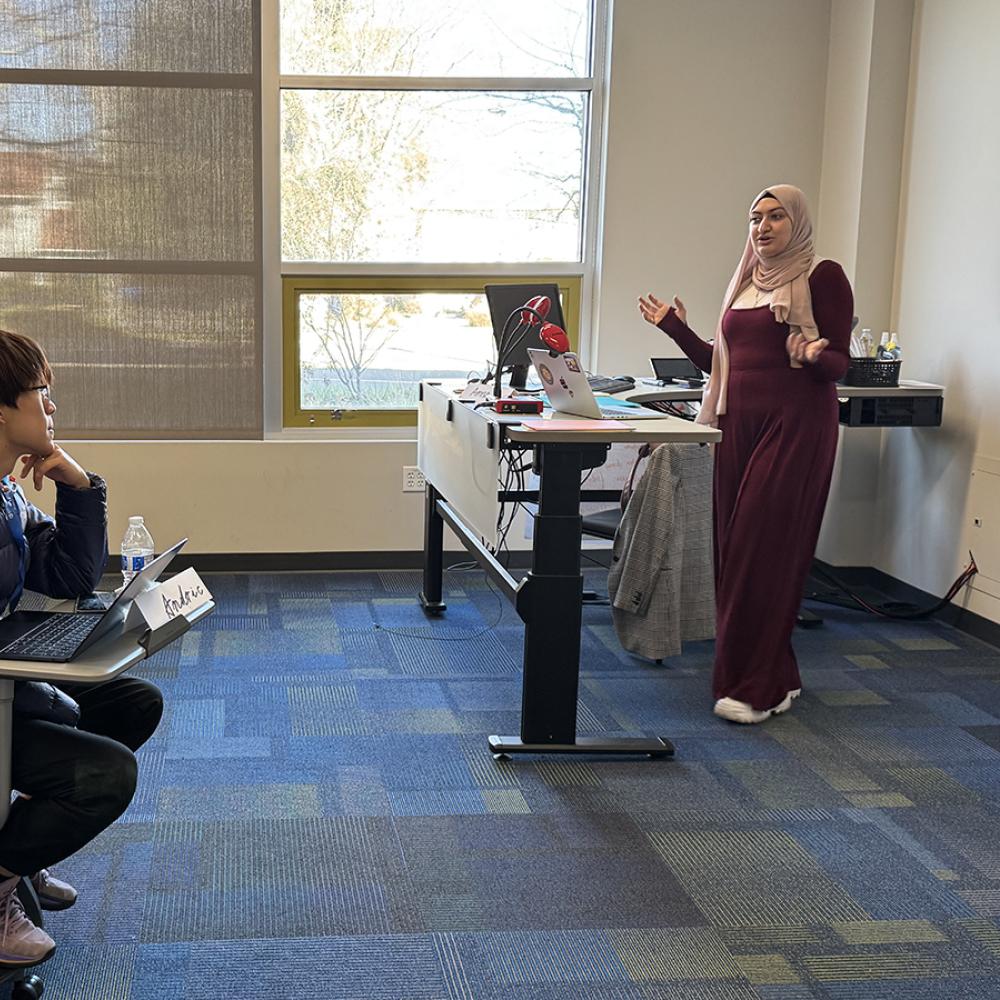
UC Davis describes its instructors as highly qualified and experienced, and classes usually hold about 15 to 20 students. They meet at the UC Davis International Center in classrooms that use educational technology and AI. One instructor, Amna Abunijem, has described an active listening exercise in which half the class practices bad habits such as checking their phones and avoiding eye contact, while the other half finds out what it feels like not to be heard.
Alongside the core study skills, the course covers how to research and cite online sources without plagiarizing, and how to give feedback and handle conflict when working in a group. Outside class, UC Davis runs daily recreational, cultural and social activities with its student leaders, as well as campus tours and optional weekend trips that may include Lake Tahoe, Yosemite National Park, San Francisco and Los Angeles.
What English level do you need?
You need at least CEFR level B1+/B2- (on the Common European Framework of Reference scale), and every student takes UC Davis's English Placement Test to confirm it. UC Davis lists the equivalent scores below. Beyond the age range and that English level, it publishes no academic requirements, and you apply by emailing its international team.
Recent groups have often come from one country. UC Davis says 63 students from China joined the winter 2025 session through a longstanding partnership with Gowell Education, and students from China attended again in summer 2026, so it's worth asking about the mix of students in the session you're considering.
TOEFL iBT
3.5 on the scale used since January 2026, previously 60 out of 120.
TOEFL PBT
500.
IELTS
5.
Duolingo
90.
Michigan English Placement Test
45.
What will two weeks in Davis cost?
The fees come to $1,500, made up of the $1,400 program fee and a $100 application fee you won't get back. The program fee covers the 22.5 hours of classes, the activities and the campus tours, but not housing, and UC Davis says all fees are subject to change.
Health insurance is required on UC Davis's international programs. You either show proof of a U.S.-valid plan in English with at least $500,000 of coverage, or buy one at registration for $68.75 a week, which comes to about $137.50 for the two weeks, and no student can start classes without one or the other.
Housing has no published price for this course. The university's housing office helps with homestays and apartments, and residence halls are available in summer only. Flights are on top, the optional weekend trips have no published price, and you should check visa requirements with UC Davis.
What does the UC Davis credit get you?
Students who complete the course earn two units of UC Davis academic credit, and UC Davis says they also come away with a better understanding of the U.S. admissions process, particularly its own. Whether those units count anywhere else is up to the college that receives them, and UC Davis doesn't say the course plays any part in its own admissions decisions. So check with any university you're aiming for before you treat the credit as more than a head start.

Sean
Founder, Succeed
Talk it through with Sean
Want to talk it through?
“I can help you compare the programs you're considering, think through the practicalities and work out what makes sense for you.”
20 minutes · No obligation to enroll
What should you do next?
Frequently asked questions
Sources
- U.S. College Study Skills
cie.ucdavis.edu · Official page
- Medical Information
cie.ucdavis.edu
- Visa Information
cie.ucdavis.edu
- International High School Students Get a Head Start on College Success
cie.ucdavis.edu
- Housing | Continuing and Professional Education
cie.ucdavis.edu
- UC Davis Summer Academy
cie.ucdavis.edu
- UC Davis Summer Programs Help High School Students Explore What’s…
cie.ucdavis.edu
- Program Costs and Dates
cie.ucdavis.edu
Not ready to decide yet? Keep it for later.