
UC Santa Barbara Summer Sessions Pre-College Research Mentorship Program (RMP)
by UC Santa Barbara Summer Sessions Pre-College
- 2026 program
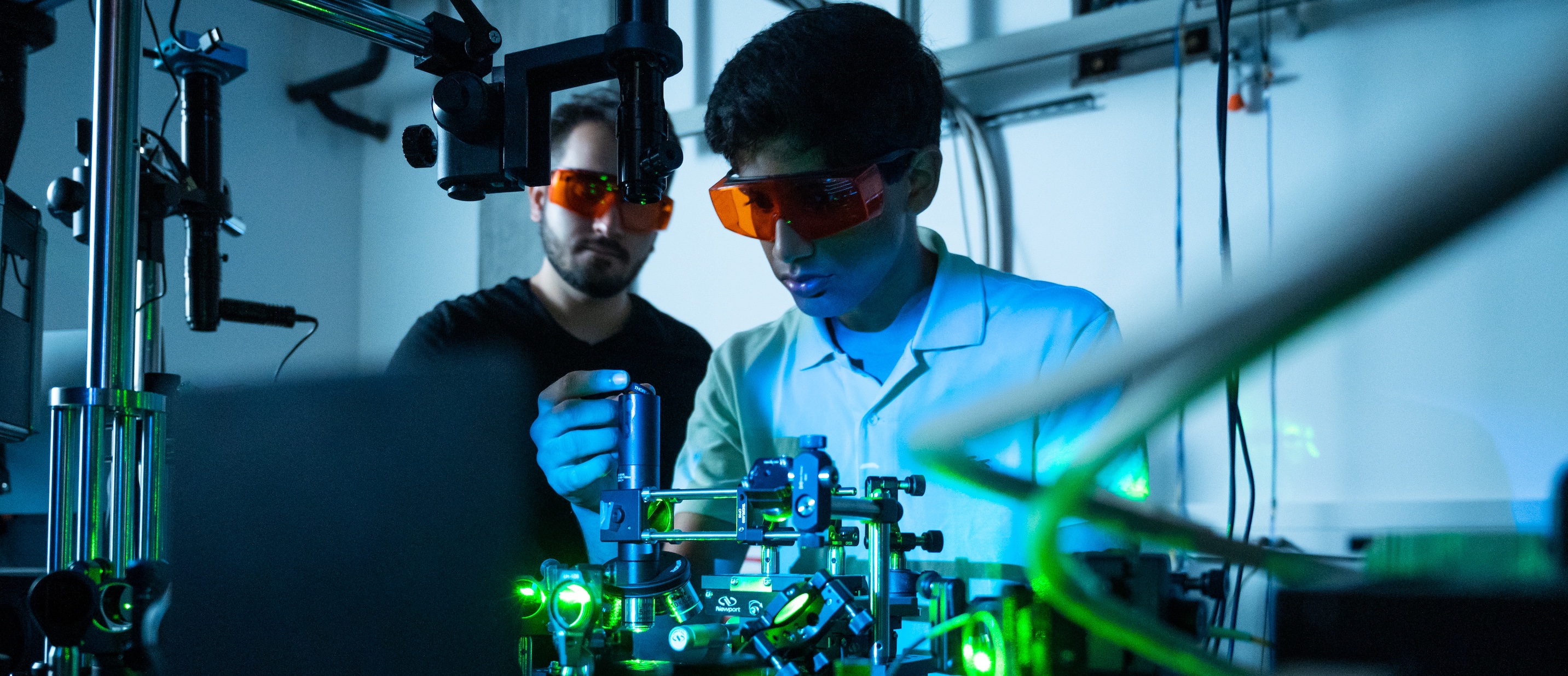
You spend six weeks at UC Santa Barbara working on a real research project with a graduate student, postdoc or faculty mentor, after a short online start where you meet the mentors. Projects change each summer and range from biology and engineering to history and music. You finish with a technical research paper, a presentation at a formal academic symposium and 8 university credits. You can live on campus or, if you're within an hour's drive, commute.
 Sean Stevens · Sources
At a glance
Official facts · checked 12 Nov 2026- DatesOfficial
- 2027: 14 June to 30 July
- Who can applyOfficial
- High school students in 10th or 11th grade. International students welcome. No TOEFL or English proficiency scores needed
- Total costOfficial
- $5,675 commuter (2026), $13,274 residential (2026)
- Format and placeOfficial
- In person, UC Santa Barbara, Santa Barbara, California
- Length
- 6 weeks in person, after a 4-day virtual component
- Included / budget separately
- Included: accommodation in the residential price, meals (The residential package includes a meal plan at the De La Guerra dining commons, with plant-forward dishes and a daily-changing salad bar). Separately: Credit card payment fee 2.75% of the tuition payment
- Deposit and refunds
- Deposit $1,000. The $75 application fee and $1,000 enrollment deposit are never refunded, and withdrawing by email through 15 May 2026 gets the rest of the tuition and program fees back in full
- Financial aid
- A limited number of need-based scholarships, awarded on qualifications and availability
- Apply by
- Applications open 15 December 2026. 2027: Not announced yet. 2026: 9 March
- Cohort and selectivity
- Applications are reviewed on the transcript, personal statement and short responses. UCSB describes the program as competitive but publishes no acceptance rate or cohort size
- Credit or certificate
- 8 university credits from UC Santa Barbara, shown on an official UCSB transcript
Get the key facts by email
The dates, costs and how to apply, all in one place.
Succeed's assessment
Should you apply?
SucceedIn short
Why it's worth it
You join an actual project in a UC Santa Barbara department, not a classroom exercise, with a mentor who works in that field, and the credits go on a permanent UCSB record you can later order as an official transcript.
What it asks of you
For six weeks the project comes first, sometimes late into the night. In 2026, living on campus cost more than twice as much as commuting, so the price looks very different depending on whether you live within an hour of Santa Barbara.
Who should skip it
Students with a family trip, a job or another program anywhere between mid-June and the end of July, because UCSB requires you to attend from the virtual start to the closing events and doesn't allow other courses or activities alongside.
Who will you actually be working with?
Your mentor is a graduate student, postdoc or faculty member at UC Santa Barbara, so the person guiding you day to day won't necessarily be a professor. You meet the mentors online during the virtual component and learn about their research. Then, once you're on campus for the Welcome Event, you're matched to a project of your choice and start research the next day.
Topics change every summer depending on which mentors are available, but UCSB's list of research areas includes anthropology, biochemistry, chemistry, computer science, ecology, economics, engineering, environmental policy, global studies, history, marine biology, mathematics, music, neuroscience, physics, psychology and statistics, among others.
Alongside the project you take two courses. Introduction to Research teaches you to write a formal paper, from the abstract to the references, while Presentation Techniques covers talks, posters and elevator pitches and takes you to GRIT talks, where UCSB researchers present their own work.
What do six weeks of research actually look like?
Depending on your project, you'll spend 35 to 50 hours a week on research, whether that's in the library, out on fieldwork or collecting data. UCSB warns that you may sometimes work into the night. It doesn't publish a fixed daily timetable.
Outside the project, development workshops let you ask researchers about undergraduate and graduate study, staff hold drop-in hours, and there are Friday mixers plus game nights, watch parties and other social events. As a registered UCSB student for the summer, you can also use the library and the Recreation Center, which has an Olympic-sized pool, courts and a track.
For 2027 the virtual component runs from 14 to 17 June 2027, and residential students move in on 20 June 2027 and move out on 1 August 2027.
What can you take away from RMP?
You leave with a technical research paper, the experience of presenting at a formal academic symposium and 8 university credits from the two courses, which become part of your permanent UCSB record. You can order an official UC Santa Barbara transcript afterward, but UCSB doesn't say how other colleges treat the credits. You can also ask your mentor or the program directors for a recommendation letter, and UCSB suggests giving them at least three to four weeks.
The research isn't yours to use freely. Before you reference or share it in a competition, a journal, on social media or in a college application, you need approval from your mentor, the project's Principal Investigator and the Director of Academic Programs. You request it through UCSB's consent form at least three weeks ahead, once for each use, and UCSB says using the work without permission can lead to legal action.
What does it take to get in?
You need to be in 10th or 11th grade with a weighted academic GPA of at least 3.80, and outstanding 9th graders are considered case by case. Students from anywhere in the world can apply, and international applicants don't need TOEFL or other English test scores. UCSB calls the program competitive but doesn't publish how many apply or get in.
For the 2026 program, the application asked for the items below along with a $75 application fee. Recommendation letters weren't part of the review that year, so UCSB judged applicants on their grades and their own writing. Decisions are posted in the application portal, and you get an email when yours is ready.
Transcript
Your whole high school record, and an unofficial copy is fine, but it must include this school year's first semester or trimester grades because quarter grades aren't accepted.
Personal statement
Up to 500 words proposing a process-based research question, how you'd investigate it and why RMP is the place to do it.
Four short responses
150 words or fewer each, on what sparked your excitement about learning, what ethical research means to you, the skills you hope to build, and the setbacks you expect and how you'd deal with them.
AP scores
Optional, as a copy of your College Board score report with your full name on it.
What will a summer at UCSB cost?
For 2026, commuting cost $5,675 in total and living on campus cost $13,274, and UCSB will post 2027 prices in early December 2026. Both totals include the $75 application fee and $5,600 in tuition and program fees, and the $1,000 deposit you pay when you confirm your place counts toward that tuition. The residential total adds $7,599 for housing and meals, which Summer Discovery collects. Commuting is only an option if you live within a 60-minute drive and can get to campus every day, weekends included.
Paying tuition by credit card adds a 2.75% fee, while eCheck is free. In 2026 the balance was due by 8 May 2026. If you withdrew by email before the program started, you got a full refund of the remaining tuition through 15 May 2026, half through 22 May 2026 and nothing after that. The application fee and deposit are never refunded.
UCSB offers a limited number of need-based scholarships, with priority for California residents. You mark your interest on the application, and if you're admitted a parent or guardian completes a scholarship form, which in the latest round asked for 2025 federal tax returns and W-2 forms.
How are students looked after on campus?
Residential students live in Santa Cruz Residence Hall under the supervision of Summer Discovery, which keeps a staff office open 24 hours a day and runs supervised social activities. Rooms are doubles or triples with high-speed internet and a bed, desk, chair and dresser for each student. The hall sits near academic and recreational buildings and has a laundry room and a TV lounge, and residents have access to the beach and off-road running trails.
Meals come with the residential package at the De La Guerra dining commons, where plant-forward dishes are always available and the salad bar changes daily. Commuters join all on-campus programming, including the social events, but get themselves to and from campus each day.

Sean
Founder, Succeed
Talk it through with Sean
Want to talk it through?
“I can help you compare the programs you're considering, think through the practicalities and work out what makes sense for you.”
20 minutes · No obligation to enroll
What should you do next?
Frequently asked questions
Sources
- Overview
summer.ucsb.edu · Official page
- Alumni Resources
summer.ucsb.edu
- Student Life
summer.ucsb.edu
- Research Experience
summer.ucsb.edu
- Admissions
summer.ucsb.edu
- Cost of Attendance
summer.ucsb.edu
- 2025 2026 CBF
registrar.ext-prod.sa.ucsb.edu
- Payment Information
summer.ucsb.edu
Not ready to decide yet? Keep it for later.