
UC Santa Barbara Summer Sessions Pre-College Summer Research Academies (SRA)
by UC Santa Barbara Summer Sessions Pre-College
- 2026 program
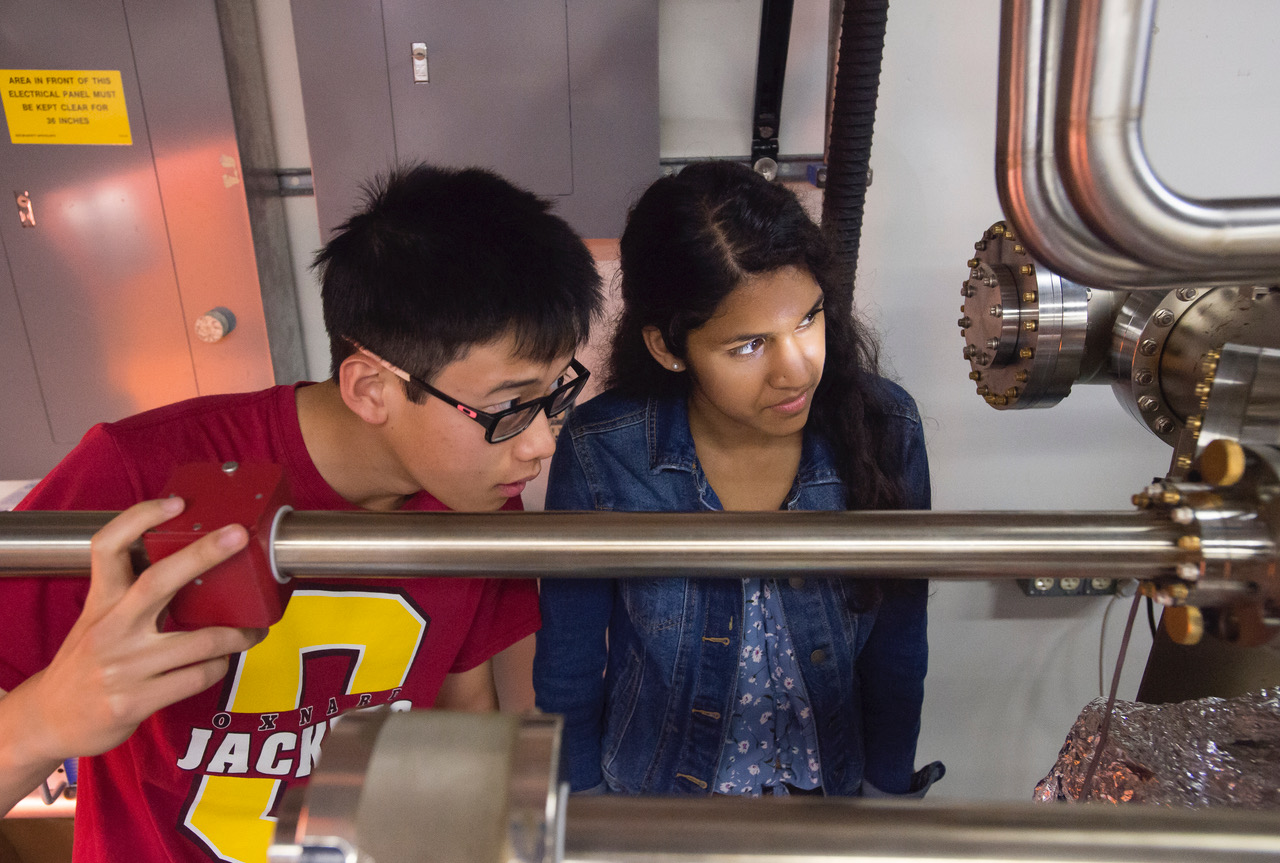
Summer Research Academies is a four-week program at UC Santa Barbara where 9th to 11th graders take a 4-unit university course built around one research track in STEM, the humanities or the social sciences. You work in a research group under an instructor who is actively researching the field, forming a research question and working through lectures and labs before analyzing your results. The program ends with a technical paper and a presentation at a capstone seminar. The 2026 tracks ranged from probabilistic computing and robotics to bioethics and online social movements, and you can either live on campus or commute if you live nearby.
 Sean Stevens · Sources
At a glance
Official facts · checked 12 Nov 2026- DatesOfficial
- 2027: 25 June to 23 July
- Who can applyOfficial
- High school students in the 9th, 10th or 11th grade. No TOEFL or English proficiency scores needed for international applicants
- Total costOfficial
- $3,475 commuter, $9,874 residential (2026)
- Format and placeOfficial
- In person, University residence hall, UC Santa Barbara, Santa Barbara, California
- Length
- 4 weeks
- Included / budget separately
- Included: accommodation, meals (meal plan at De La Guerra dining commons for residential students). Separately: Credit card convenience fee 2.75% of tuition payment, airport transfer $45 each way (Santa Barbara airport)
- Deposit and refunds
- Deposit $900. The $75 application fee and $900 enrollment deposit are never refunded
- Financial aid
- A limited number of need-based scholarships, awarded on qualifications and availability
- Apply by
- Applications open 15 December 2026. 2027: Not announced yet. 2026: 23 March
- Cohort and selectivity
- Applications are reviewed after transcripts are verified, and the provider publishes no acceptance rate or cohort size
- Credit or certificate
- Official UC Santa Barbara transcript and grade, available through GOLD
Get the key facts by email
The dates, costs and how to apply, all in one place.
Succeed's assessment
Should you apply?
SucceedIn short
Why it's worth it
The 4 units go on a permanent UC Santa Barbara record, and the course is taught by an instructor who's actively researching the field, so you leave with a real transcript, a technical paper and a capstone talk, not just an attendance certificate.
What it asks of you
Expect 25 to 40 hours of research a week, with no other courses or activities allowed alongside it. Living on campus cost $9,874 in 2026, against $3,475 for local students who could commute every day from within an hour's drive.
Who should skip it
Students who want one-on-one mentoring on a question they choose alone, because SRA students form research groups inside a track course that the program sets each year.
How do the four weeks run?
UC Santa Barbara doesn't publish daily class hours, but it expects 25 to 40 hours of research a week, including time in the library and the occasional late night. The program opens with a Welcome Event on 25 June 2027 and an Academic Intensive on 26 and 27 June, which gets you ready for university-level research.
| Week | Lectures | Labs | Discussions | GRIT talks | Also |
|---|---|---|---|---|---|
| Kick-off weekend | Welcome Event, Academic Intensive | ||||
| Week 1 | 4 | 2 | 2 | 2 | |
| Week 2 | 3 | 2 | 2 | 1 | |
| Week 3 | 4 | None | 3 | 2 | |
| Week 4 | 3 | None | 3 | 1 | Capstone Seminar |
In the first half you form a research group, settle on a research question and work through hands-on labs tied to the lectures. After that the labs stop and the time goes into investigation and analysis, building toward a formal capstone seminar at the end. GRIT talks, a lecture series where UC Santa Barbara researchers present their work, run through every week.
Outside class there are development workshops where researchers give advice on undergraduate and graduate study, drop-in hours with program staff, Friday mixers and social events such as game nights and watch parties.
What does it take to get in?
You need to be in 9th, 10th or 11th grade with at least a 3.60 weighted GPA, calculated under the UC a–g requirements, and free for the whole program, since SRA doesn't allow other courses, activities or programs alongside it. International applicants don't need a TOEFL or any other English test score.
The 2026 application asked for the three pieces below. Students who enroll also have to take part in an SRA Preparation Webinar, and UC Santa Barbara hasn't yet set the 2027 dates.
Transcript
An unofficial transcript covering all of high school, including first-trimester or first-semester grades from the current school year. Quarter grades alone aren't enough. UC Santa Barbara verifies the transcript before reviewing the rest of the application.
Personal statement
Up to 500 words on why your chosen track interests you, the questions you want to explore and how SRA would help you grow as a researcher.
Four short responses
Up to 150 words each, on a researcher who inspires you, your role in group academic work, something that makes you unique and a setback you've faced.
What does it really cost?
In 2026 a commuting student paid $3,475 in total and a residential student paid $9,874. UC Santa Barbara says 2027 prices will be out in early December 2026, so treat these as a guide until then.
Both totals included the $75 application fee, paid when you submitted the application, and $3,400 in tuition and program fees. A $900 enrollment deposit, due when you confirmed your place, counted toward that tuition, and the rest was due by 8 May 2026. Living on campus added $6,399 for housing and meals, which Summer Discovery, the program's residential partner, collected directly. Paying tuition by credit card carried a 2.75% processing fee, while paying by eCheck had none.
The application fee and deposit weren't refundable. If you withdrew by email before the program, the rest of the tuition came back in full through 15 May 2026 and at 50% through 22 May 2026, with nothing refunded after that.
UC Santa Barbara offers a limited number of need-based scholarships, with priority for California residents. You flag your interest in the application, and if you're admitted, a parent or guardian completes the scholarship form with the family's federal tax returns and W-2 forms, if they apply.
| 2026 fee | Commuter | Residential |
|---|---|---|
| Application fee (non-refundable) | $75 | $75 |
| Tuition and program fees (includes $900 deposit) | $3,400 | $3,400 |
| Housing and meals (paid to Summer Discovery) | None | $6,399 |
| Total | $3,475 | $9,874 |
How are residential students looked after?
Residential students live on campus under the supervision of Summer Discovery, the program's residential partner, which keeps a staff office open 24/7. You'd share a double or triple room in Santa Cruz Residence Hall, close to the academic and recreation buildings, and eat on a meal plan at the De La Guerra dining commons, where plant-forward dishes are always available. Move-in is 25 June 2027 and move-out is 24 July 2027.
Summer Discovery uses daily sign-ins and room checks, and students may walk around campus, Isla Vista and downtown Santa Barbara in small groups. Its staff make medical appointments, go with students to them and let parents know afterward.
Commuting is for students within a 60-minute drive who can get to campus every day, weekends included. Commuters take part in all the on-campus programming, including the social activities.
What do you come away with?
You leave with 4 UC Santa Barbara units and a grade on a permanent university record, which you can later order as an official UC Santa Barbara transcript. You also finish with a technical research paper and the experience of presenting at a formal capstone seminar, and you can ask your instructor or teaching assistants for recommendation letters. UC Santa Barbara doesn't say how your high school or other colleges will treat the units, so check with them if the credit matters to you.
The research itself comes with strings attached. To use it in a competition, a college application, a journal, a video or even on social media, you need approval from your track's instructor and the Director of Academic Programs, and UC Santa Barbara warns that using it without permission can lead to legal action. Requests go in at least three weeks before the due date, one for each use, with your project title and exactly how you plan to use it. In some cases students can continue their research remotely during the school year, but only with the instructor's guidance and the director's consent.

Sean
Founder, Succeed
Talk it through with Sean
Want to talk it through?
“I can help you compare the programs you're considering, think through the practicalities and work out what makes sense for you.”
20 minutes · No obligation to enroll
What should you do next?
Frequently asked questions
Sources
- Overview
summer.ucsb.edu · Official page
- Alumni Resources
summer.ucsb.edu
- Student Life
summer.ucsb.edu
- Research Tracks
summer.ucsb.edu
- Admissions
summer.ucsb.edu
- Cost of Attendance
summer.ucsb.edu
- Summer Discovery UC Santa Barbara RMP/SRA Residential Guide
summer.ucsb.edu
- 2025 2026 CBF
registrar.ext-prod.sa.ucsb.edu
Not ready to decide yet? Keep it for later.