Deadline: Not announced yet · From £6,995 · 14-18 · Cambridge · In-person
In-person Program
Closed for 2026. 2027 dates not announced yet
UF Center for Precollegiate Education and Training Student Science Training Program
by UF Center for Precollegiate Education and Training
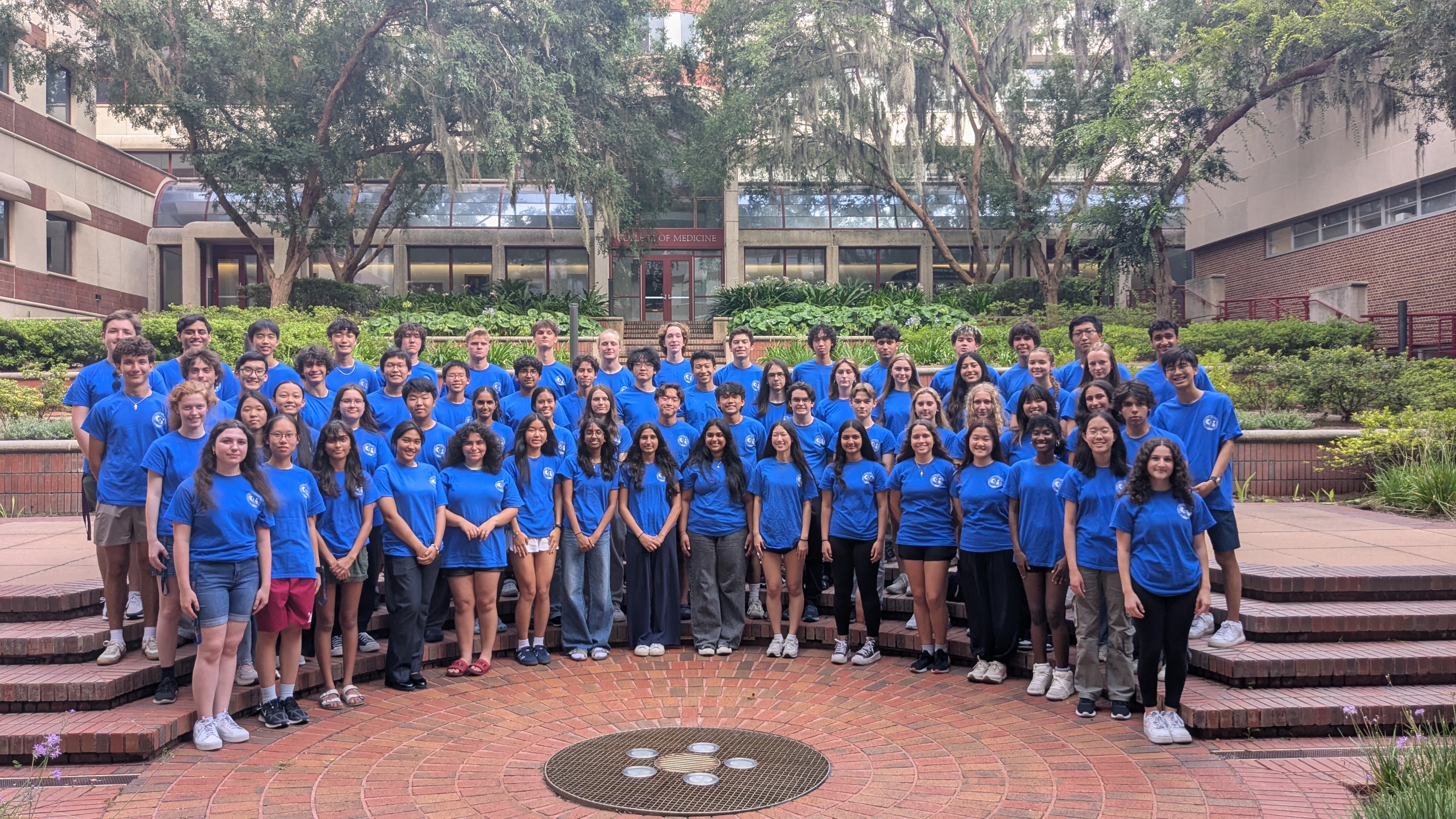
The Student Science Training Program is a seven-week summer at the University of Florida in Gainesville where rising high school seniors live on campus and join a faculty member's research lab. Alongside the lab work, you attend a daily lecture series and a small honors seminar, and by the end you've written a research paper, presented a poster and given two talks about your project. Weekends bring field trips and service activities with the rest of the group.
Facts checked against the official page on 16 Nov 2026 · Editor:  Sean Stevens · Sources
At a glance
Official facts · checked 16 Nov 2026- 2027: Not announced yet. 2026: 7 June to 25 July
- Students currently in 11th grade (rising 12th graders). Must be 16 or older by the start of the program, with no exceptions to the age or grade policy
- $5,500 (2026)
- In person, University of Florida, Gainesville, Florida
- Length
- 7 weeks
- Included / budget separately
- Included: accommodation, meals (daily meals are not included). Separately: application fee $50 (non-refundable), daily meals (not included in program cost), travel to and from Gainesville, Dorm equipment such as bedding, dishware, cookware and toiletries
- Deposit and refunds
- Deposit $500. The $50 application fee is never refunded, including when an application is rejected or waitlisted or the program is canceled
- Financial aid
- Limited need-based scholarships, partial or full, for students attending a Florida high school
- Apply by
- 2027: Not announced yet. 2026: 25 March
- Cohort and selectivity
- Up to 90 students are invited each summer (2022 handbook), and the University of Florida says accepted students are chosen from an application pool of hundreds
- Credit or certificate
- Dual enrollment credit (college and high school credit) for students from Florida high schools
Get the key facts by email
The dates, costs and how to apply, all in one place.
Should you apply?
SucceedWorth it for a rising senior who's ready to spend seven weeks working inside a university lab. Families outside Florida face a harder call on cost.
Why it's worth it
You spend the summer as a member of a faculty research lab, at least 28 hours a week according to the 2022 handbook, and finish with a paper, a poster and two talks on your own work. That's a real research project, not a lab tour.
What it asks of you
You'll be away from home for seven weeks with long, tightly scheduled days, and you can't leave for sports, school events or other programs. The application also takes some planning during 11th grade.
Who should skip it
Students at high schools outside Florida who couldn't manage the full cost, because need-based aid and the application fee waiver are only for Florida high school students, and only a limited number of places go to students from elsewhere.
You don't pick your lab
Your lab placement may or may not follow your interests, so a biology fan can end up in computer science, as one 2019 participant did and came to enjoy.
What does a typical day in the lab look like?
Weekdays are long and mostly spent in your lab. In the University of Florida's 2022 sample schedule, Monday to Thursday started with an 8 am lecture or general session, followed by lab work from 9:30 am to 5 pm. The honors seminar met on Tuesday and Thursday evenings from 6:30 to 8 pm, there was a weekly study group meeting, and Thursday nights were set aside for one-on-one research meetings. On Fridays lab finished at noon, which left the afternoon for a workshop and the evening for a group social.
Saturdays were full-day field trips or volunteering, such as the Kennedy Space Center and a marine lab in St. Augustine in 2022, while Sundays were for grocery runs, downtime and catching up on projects. Midway through, there was a short midsummer break when students went home. Details change from year to year, and accepted students get the current handbook in mid May.
Who mentors you in the lab and the classroom?
Your main mentor is a University of Florida faculty researcher, and you work as part of their lab team, which can include undergraduates, graduate students, post-docs and research staff. The daily lectures come from the university's research faculty, while the honors seminar is taught by post-docs, PhD candidates and medical students researching that seminar's topic, in classes capped at 12 students.
Day-to-day support comes from counselors who double as academic advisers. In 2022 each study group had 20 to 26 students and two leaders. Every student met one-on-one with their assigned leader each week, and leaders also visited the labs to hear from mentors how their students were doing. Seminar topics change every year, and in 2022 they included Introduction to Cancer Immunology and From Bench to Bedside: Neuroscience & its Clinical Applications.
What do you have to show at the end?
You leave with a finished research paper, a poster you present at a reception for faculty and families, and two oral presentations on your lab work. Along the way you hand in weekly lab notes to show your progress.
Students from Florida high schools can also earn dual enrollment credit, which the 2022 handbook describes as college and high school credit for the lab research, lectures and seminar. Students from other states and countries take part in exactly the same academic work, but no credit option is described for them.
Who gets a place, and what does the application ask for?
You need to be in 11th grade when you apply and 16 or older by the first day, and the University of Florida makes no exceptions to either rule. There's no minimum GPA and no test requirement, although your transcript should show strong grades in demanding courses and any SAT, ACT or PSAT scores you've taken should be reported. Students from other states and countries can apply for a limited number of places, and their families handle all travel and any passport or visa needs.
The 2022 handbook puts the cohort at up to 90 students, and the University of Florida says those accepted come from a pool of hundreds. Admission is rolling, with reviews starting in March and continuing until the program fills, and decisions come out between late March and mid April. Students who aren't invited at first can be placed on an unranked waitlist that runs until mid May, and you have to confirm your place on it to stay in the running.
Written and video responses
One 300- to 500-word written answer and one video answer, along with details of your activities.
Two teacher endorsements
Recommended from math, science, research or computer science teachers or mentors, who rate your maturity, how well you work with others and whether you're ready for a university lab.
Academic Record Form
Completed by your guidance counselor or a similar administrator and uploaded to the application portal.
Unofficial transcript
Your grades through the fall semester of 11th grade, as a PDF, JPG or PNG.
Application fee
$50 and non-refundable, with a waiver that qualifying Florida high school students can request.
What does the summer really cost?
The 2026 program cost $5,500, which covered your residence hall room, staff and supervision, insurance, field trips and their meals, weekly socials, a banquet and program supplies. Daily meals weren't included, so you cook in your suite's kitchen with help from weekly grocery runs or eat out. Families also pay for travel to and from Gainesville, bedding and cookware, printing your final poster and personal spending money. The program doesn't count toward tuition reimbursement plans such as Florida Prepaid.
Accepting a place means paying a $500 non-refundable deposit with your response, which is due within 14 days, and the University of Florida doesn't say whether it counts toward the $5,500. Need-based aid is limited and only for students at Florida high schools. It can be a partial or full scholarship or, in some cases, a payment plan. If you ask for aid when you apply, the deposit can be waived until scholarship decisions are made, and the full aid application arrives after acceptance. Ability to pay doesn't affect selection, and donor-funded scholarships with their own criteria are sometimes offered to students who've accepted.
How are students supervised on campus?
Residential counselors live in the residence hall with students and run nightly check-ins, with sign-in by 10:30 pm and everyone in their suite from 11 pm to 7 am. Students share same-gender suites with two to a bedroom, and you can't request a roommate or room with someone from your own high school.
Under the 2022 handbook rules, you sign out whenever you leave the residence hall area and talk to your counselor before leaving campus. The building doors stay locked and open with a swipe card. No student can have a car, and every student needs a working cell phone, while parents can reach students urgently through the program office. The program runs a shuttle from Gainesville's airport and bus stations at the start, the midsummer break and the end, but not from any other airport. Students who break the code of conduct can be dismissed without a refund.

Sean
Talk it through with Sean
Want to talk it through?
“I can help you compare the programs you're considering, think through the practicalities and work out what makes sense for you.”
What should you do next?
The 2026 application window ran from 5 January to 25 March 2026, and 2027 dates haven't been posted yet. If you're in 11th grade this school year, ask two math, science, research or computer science teachers now whether they'll endorse you, start shaping ideas for your written and video responses, and keep June and July 2027 clear.
Similar programs
View details
A Taste of Science and Engineering
Applications open
31 May 2027 · From £5,500 · 16-17 · Coventry · In-person
Deadline: Not announced yet · From £6,950 · 16-18 · St Andrews · In-person
Save this program in Succeed to compare it with similar programs, dates, costs and formats in one place.
Compare with other programsFrequently asked questions
Yes. It's administered by the University of Florida's Center for Precollegiate Education and Training in Gainesville, which has run outreach programs since 1959, and by 2022 the program itself had been running for 60 years.
Only for a one-time family event such as a wedding, and the request has to go to sstp@cpet.ufl.edu in advance. Otherwise students stay with the program every weekend except the midsummer break, when everyone goes home.
No. The University of Florida doesn't give comments or feedback on applications and won't discuss selection with students or parents.
Sources
- cpet.ufl.edu/students/uf-cpet-summer-programs/student-science-training-program
Official page
- SSTP 2022 Handbook (Example Handbook PDF)
cpet.ufl.edu
- SSTP 2022 Combined Schedule (Example Schedule PDF)
cpet.ufl.edu
- cpet.ufl.edu/students/summer-programs/student-science-training-program
- UF Center for Precollegiate Education and Training
ufcpet.smapply.us
- Summer Programs
cpet.ufl.edu