
University of Notre Dame Pre-College Programs Time Traveler's Guide to Disease: Pathogens, Past and Present
by University of Notre Dame Pre-College Programs
- 2027 program
You spend two weeks living on the University of Notre Dame's campus in Indiana and taking one college-level course on how pathogens and people have changed over time, from the Black Death and tuberculosis to HIV, Covid-19 and antibiotic resistance. The class pulls in biology, archaeology, medical anthropology, forensic science, history, art and theology to ask why some people get sick and others don't. It runs in Summer Scholars Session II, 10 to 24 July 2027, and finishing every requirement can earn one transferable Notre Dame credit.
 Sean Stevens · Sources
At a glance
Official facts · checked 11 Nov 2026- DatesOfficial
- 2027: 10 to 24 July
- Who can applyOfficial
- Current high school sophomores and juniors (rising juniors and seniors). At least 16 years old by 1 August 2027, with no exceptions
- Total costOfficial
- 2027: $5,200
- Format and placeOfficial
- In person, On-campus residence hall, Notre Dame, Indiana
- Length
- 2 weeks
- Included / budget separately
- Included: accommodation, meals (meals are included as board in the tuition and housing fee). Separately: application fee $75 (non-refundable)
- Deposit and refunds
- Deposit $300. Once paid, neither the $300 enrollment fee nor the $4,900 tuition and housing balance is refunded
- Financial aid
- Limited need-based scholarships covering partial to full tuition, with no merit-based aid
- Apply by
- 2027: 17 February
- Cohort and selectivity
- Notre Dame reviews complete applications for academic standing, extracurriculars and maturity, and publishes no acceptance rate or cohort size
- Credit or certificate
- 1 transferable college credit and a Satisfactory (S) grade from the University of Notre Dame
Get the key facts by email
The dates, costs and how to apply, then 2 reminders: 3 Feb (2 weeks before) and 14 Feb (3 days before).
Succeed's assessment
Should you apply?
SucceedIn short
Why it's worth it
It treats disease as a biology question and a history question at once, with case studies running from the Black Death to vaccine hesitancy, which suits a student who hasn't yet chosen between the sciences and the humanities.
What it asks of you
You give up two weeks of July to live on campus in Indiana under tight rules, and travel isn't among the costs the fee covers. The application takes real work too, with two essays, a counselor report and a teacher's recommendation.
Who should skip it
Students whose summer plans might still change, because Notre Dame refunds neither the enrollment fee nor the balance once paid. Students mainly after hands-on lab training may also get less, since Notre Dame describes the course through case studies and historical and archaeological evidence and doesn't mention lab sessions.
Who teaches the course?
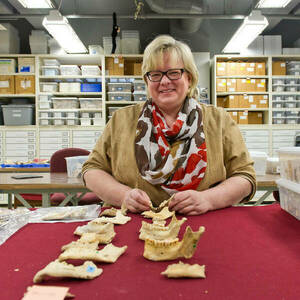
The course is directed by Susan Sheridan, a bioarchaeologist who studies ancient diet and disease, childhood health and daily life in the past through the evidence left in human skeletons. She and her students excavated the remains from the Byzantine monastery of St. Stephen's in Jerusalem, and she has also worked on the Early Bronze Age town of Bab adh-Dhra' by the Dead Sea, on Nubian mummies from Sudan and on Hohokam burials in the American Southwest.
That background shows in the course, which sets archaeological and historical evidence of past epidemics beside the molecular and epidemiological tools used to study new infections today. Notre Dame says it keeps Summer Scholars classes small, but it doesn't give a class size.
Who can apply, and what counts in the application?
You can apply if you're a high school sophomore or junior this school year and will be at least 16 by 1 August 2027. Notre Dame makes no exceptions to the age rule, citing its insurance and child protection policies. Beyond that, it looks for strong academic standing, solid extracurriculars and the maturity to manage yourself.
Notre Dame calls the two essays very important and wants them to show why you're interested in this particular course and what you'd bring to it. It also finds it helpful when your recommending teacher can speak to your interest in the subject, so a biology or history teacher who knows you well makes sense here. SAT, ACT or PSAT scores are encouraged but optional. International applicants who don't attend an English-speaking high school need a TOEFL (5.5+), IELTS (7.5+), PTE (55+) or Duolingo English Test (120+) score.
How do you apply?
Everything goes through Notre Dame's online application portal.
Start the online application and add your counselor's and recommending teacher's names and emails, which sends each of them an automatic request for their part.
Write the two essays and fill in the activities section, upload a resume, or do both.
Upload SAT, ACT or PSAT scores by 31 January 2027 if you want them considered.
Submit your part by 17 February 2027 and pay the $75 application fee by credit card, and check that your counselor and teacher have sent their documents by the same date.
If you're admitted, pay the $300 enrollment fee by 23 April 2027 to hold your place and the $4,900 balance by 14 May 2027.
What does the course really cost?
An admitted student pays $5,200 on top of the $75 application fee every applicant pays, so $5,275 in all. The $5,200 covers tuition, room and board, extracurricular activities and class field trips, and it's paid in two parts: a $300 enrollment fee by 23 April 2027, then the $4,900 balance by 14 May 2027. Travel to and from campus isn't on that list, and parents also pay for any medical or mental health care a student needs during the program.
Neither payment is refundable. That includes a student dismissed for breaking the rules, whose family also pays for the trip home.
Notre Dame offers limited need-based scholarships, from partial to full tuition, and no merit awards. Students living in Indiana can be considered for a Lilly Endowment grant and those in the Philadelphia area for a donor-funded grant, both covering tuition, room and board for students who qualify. A parent or guardian requests all of these on one Financial Aid Request Form by 17 February 2027. Asking for aid doesn't affect the admission decision, and any tuition aid is announced in the admission letter.
What do you leave with?
If you complete all the program requirements, you can receive one transferable college credit from Notre Dame with a Satisfactory (S) grade, and you order the transcript from the University Registrar. Notre Dame calls the credit transferable but doesn't say which colleges accept it, so check with any college you hope to count it toward. The grade is also Satisfactory rather than a letter such as an A or B.
Notre Dame's aim for the course is that you come away understanding the recurring patterns of fear, adaptation and resilience in how societies respond to disease, and able to connect past epidemics with today's health crises.
How are students looked after on campus?
Students stay on campus under Pre-College staff and Resident Counselors and can't leave except on a scheduled, supervised activity or with a staff member or Resident Counselor as chaperone. Every class, field trip, meal and check-in is compulsory unless it's clearly marked optional, students can't enter a residence hall of the opposite gender or drive any vehicle, and alcohol, tobacco and vapes are banned whatever a student's age.
Medical needs take the most planning. It's up to parents to arrange any known medical or mental health needs at least 30 days before the start, and staff won't store or hand out medication, so students manage their own. These rules come from Notre Dame's standards and policies for pre-college students, published for summer 2026, and its code of conduct for summer residents.

Sean
Founder, Succeed
Talk it through with Sean
Want to talk it through?
“I can help you compare the programs you're considering, think through the practicalities and work out what makes sense for you.”
20 minutes · No obligation to enroll
What should you do next?
Frequently asked questions
Sources
- Time Traveler's Guide to Disease: Pathogens, Past and Present
precollege.nd.edu · Official page
- Standards and Policies for Pre-College Students
precollege.nd.edu
- FAQ's
precollege.nd.edu
- Summer Scholars
precollege.nd.edu
- Eligibility and Application Requirements
precollege.nd.edu
- Dates & Deadlines
precollege.nd.edu
- Tuition, Fees, and Financial Aid
precollege.nd.edu
- Notre Dame Pre-College Programs Residential Handbook by Office of…
issuu.com
Not ready to decide yet? Keep it for later.