11 Jun 2027 · From $2,273 · 15-18 · Los Angeles · In-person
In-person Program
Open, rolling admissions
UT Austin Computer Science Summer Academies Robotics Academy
by UT Austin Computer Science Summer Academies
- 2027 program
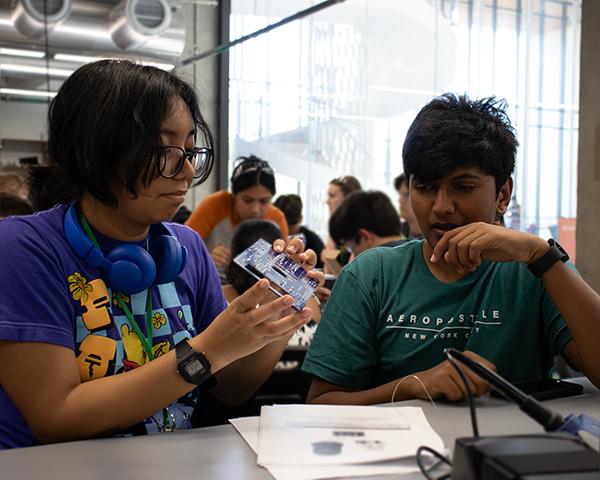
Over six days on the University of Texas at Austin campus, you assemble and program a robot, work through robotics projects in simulation using C++ and Linux, and hear from UT professors, industry representatives and UT admissions. You live in a campus residence hall with a roommate, eat in the dining halls and spend evenings at organized social activities. UT Computer Science runs it with Texas Robotics, and you enroll directly with no application.
Facts checked against the official page on 16 Nov 2026 · Editor:  Sean Stevens · Sources
At a glance
Official facts · checked 16 Nov 2026- 2027: 11 to 16 July (Session 1), 18 to 23 July (Session 2)
- Students entering 10th to 12th grade in fall 2027. All skill levels welcome, no programming or robotics experience required
- 2027: $2,100
- In person, Campus residence hall, UT Austin campus, Austin, Texas
- Length
- 6 days
- Included / budget separately
- Included: accommodation, meals (breakfast, lunch and dinner included)
- Deposit and refunds
- Not published
- Financial aid
- Need-based academy scholarships are available on a limited basis
- Apply by
- Applications open 31 January 2027. Rolling admissions
- Cohort and selectivity
- No application is required, and places go to students who enroll while seats last
- Credit or certificate
- Academy Certificate
Should you apply?
SucceedBest for a curious beginner who wants to build a robot and try out dorm life, since no experience or application is needed. If you're looking for research experience or a credential that carries real weight, six days and a certificate won't take you far.
Why it's worth it
It puts beginners in a real university robotics setting, building and programming a robot alongside UT faculty and undergraduates, and the week of living on campus gives an honest preview of college with nothing to apply for first.
What it asks of you
Six full days away from home with lab work from morning to late afternoon, plus $2,100 and the trip to Austin, which is a lot for one week if a scholarship doesn't come through.
Who should skip it
Students who already build and program robots at a high level may find much of it familiar, because the labs are designed for all skill levels and some of the project work happens in simulation rather than on hardware.
Do you need coding experience to get in?
No. Anyone entering 10th, 11th or 12th grade in fall 2027 can enroll, and there's no application, essay or selection round. UT Computer Science welcomes all skill levels and sets up its labs to teach you to program or build on what you already know, so C++ experience helps but isn't required. The academy uses C++ and Linux, although UT Computer Science notes that the curriculum and tools may change.
Seats are limited and registration closes once the academy is full, which makes timing the only real hurdle.
What does a day at the academy look like?
Days start with breakfast around 7:30 am, and from 8:30 am to 5:00 pm you're in the computer lab on group projects, with a lunch break, guest lectures and tours of campus departments mixed in. The academy is based in the Gates-Dell Complex, home of UT Computer Science, and you'll also spend time in the Engineering Education and Research Center and the Anna Hiss Gym.
After dinner there are social activities such as bowling, movie night and basketball, and everyone is back in their residence hall by 9:30 pm.
Who runs the robotics labs?
UT Computer Science says all its summer academies are led by UT Austin faculty, and the staff it lists for robotics are Ross Neuman, PhD, an assistant professor of practice in the Department of Mechanical Engineering, and Aleece Methvin, who directs the summer academies. Neuman researches assistive and rehabilitative devices for human mobility and teaches a course on medical robotics and haptics.
Day to day you'll also work with Program Assistants, current UT undergraduates trained to help with robot assembly and programming. UT Computer Science gives a 10:1 student-to-mentor ratio across its academies.
What does the $2,100 cover?
Either six-day session costs $2,100, which covers tuition, your residence hall room, three meals a day and all the educational and recreational activities. Getting to and from Austin isn't listed among the inclusions, so budget for travel if you live farther away.
Need-based scholarships are available on a limited basis, and the application opens with registration. UT Computer Science hasn't announced a scholarship deadline or said how much the awards cover, so if cost decides whether you go, apply as soon as registration opens on 31 January 2027.
How are students looked after overnight?
Students are supervised at all times, in groups of around 10 with a counselor responsible for them 24 hours a day. Program Assistants supervise during the day in the lab, while Resident Assistants run the evening activities and sleep in the residence halls overnight.
You share a room with another student of the same gender, matched by age, and floors are split by gender with same-gender counselors on each. Meals are in UT's main dining halls, where meals free of the top nine allergens are available. For any other accommodation need, the team at academies@cs.utexas.edu will put you in touch with the Academy Accommodations Coordinator.
What do you take away from the week?
You leave with an Academy Certificate, which isn't college credit. The more practical takeaways are the C++ and Linux skills from building and programming a robot, a session with UT admissions on what makes a strong UT application, and time with professors and industry representatives, along with a look at internship and career opportunities. One past participant, James, a 12th grader from San Antonio, said that "the skills I learned have made their way onto my school's robot."
UT Computer Science doesn't say that attending counts in UT admissions decisions, so treat the admissions session as advice rather than an advantage.

Sean
Talk it through with Sean
Want to talk it through?
“I can help you compare the programs you're considering, think through the practicalities and work out what makes sense for you.”
What should you do next?
Registration for both July 2027 sessions opens on 31 January 2027 and stays open only until the academy fills, so decide between Session 1 (11 to 16 July) and Session 2 (18 to 23 July) before then.
You enroll through UT's Ideal-Logic portal, signing in with the community or guest login rather than the University of Texas Login, which is only for UT faculty and staff. You'll give contact, emergency and medical details and some background on your experience, and both you and a parent or guardian sign agreements, so have a parent on hand when you register.
You enroll through UT's Ideal-Logic portal, signing in with the community or guest login rather than the University of Texas Login, which is only for UT faculty and staff. You'll give contact, emergency and medical details and some background on your experience, and both you and a parent or guardian sign agreements, so have a parent on hand when you register.
Similar programs
View details
Robotics High School Course
Applications open
21 Feb 2027 · From $2,998 · 14-18 · San Luis Obispo · In-person
17 Feb 2027 · From $5,200 · 16-18 · In-person
Save this program in Succeed to compare it with similar programs, dates, costs and formats in one place.
Compare with other programsFrequently asked questions
Yes. It's co-hosted by UT Austin's Department of Computer Science and Texas Robotics, and every activity takes place on the UT Austin campus.
UT Computer Science lists the academy as residential and overnight, with students staying on campus for the whole program, and it doesn't publish a day option.
Sources
- Academy for Robotics
cs.utexas.edu · Official page
- Summer Academies
cs.utexas.edu
- Undergraduate Cost & Aid
cs.utexas.edu
- X + Computer Science Programs
cs.utexas.edu
- UTCS Summer Academies Scholarship Application
utexas.qualtrics.com
- UT Austin Participant Registration Portal
apps.ideal-logic.com