
Applications
Rolling admissions

Explore how medicines treat heart disease, hypertension and type 2 diabetes through real-world case studies and evidence-based treatment reasoning.
Request your Program Guide. We'll email it within 24 hours.
or let us know if .
What Succeed checks
We review public program details such as eligibility, age range, cost, duration, location, format, accommodation, meals and application timing.
What Last verified means
Last verified is the latest date Succeed checked the public details shown on this page. Program dates, prices and availability can still change.
How official sources are used
Succeed uses official provider information where available, then rewrites it into a student-facing summary for comparison and planning.
Why some dates are reference dates
If the current cycle is not available, Succeed may show the latest verified cycle dates so you can understand typical timing.
Succeed is independent from this provider unless a partnership is clearly stated.
Current status
Applications open
Eligibility
Rising grades 7-8; academic-fit review
Age range / Year group
Ages 12-14
Location / Region
Nashville, Tennessee, United States
Cost
$2,150
Duration
1 week
Format
In-person
Application deadline
Rolling · Next cycle not announced yet. These dates are from the latest verified cycle and should be used as a reference only.
Save programThis Vanderbilt Summer Academy course connects common diseases with the medicines used to treat them. Its focus is understanding why a treatment works and what can make it fail.
Real-world case studies help students compare drug classes, reason through treatment choices and anticipate side effects.
It suits students who enjoy biology and want to explore the scientific reasoning behind medicine.
From Symptoms to Solutions: A Disease-Focused Pharmacology Course is a Vanderbilt Summer Academy course offered through Vanderbilt University's Programs for Talented Youth. It introduces pharmacology by linking heart disease, hypertension and type 2 diabetes to the drugs used to treat them.
Students explore how these conditions develop and are diagnosed, then connect disease mechanisms with treatment strategies. Real-world case studies turn concepts such as drug targets, pharmacokinetics and adverse effects into practical exercises in explaining treatment choices.
The disease-focused structure gives drug mechanisms a clear biological purpose.
Real-world case studies ask students to apply concepts rather than simply recall terminology.
The learning goals include justifying treatment choices and predicting side effects, making the reasoning concrete.
Instructor Lauren Schnitkey brings Vanderbilt doctoral research in cardiovascular development and pharmacological mechanisms.
Students curious about how medicines work who enjoy connecting biology with explanations of treatment decisions.
You want a broad survey of every medical specialty or prefer learning that focuses mainly on memorizing facts.
The course is worth considering if your main goal is to understand the science behind treatment decisions. Connecting drug action with recognizable diseases can make pharmacology more meaningful, while case studies give students a way to test their explanations.
Its three-condition focus is also a limitation: it offers depth within a narrow area rather than a complete introduction to medicine. Families should judge its value by the student's interest in biological reasoning and readiness for accelerated study.
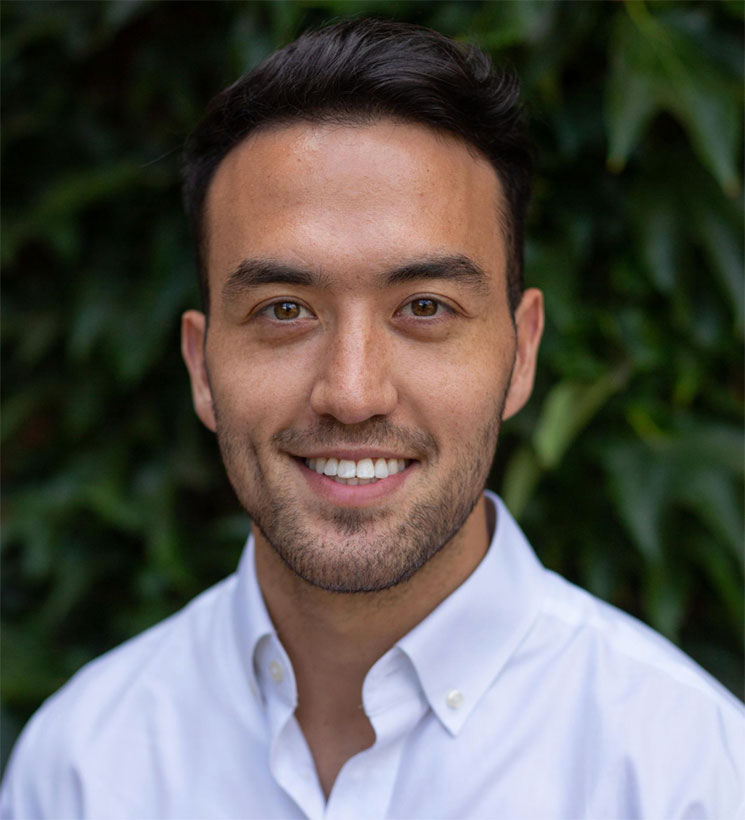
Sean
Founder, Succeed
Talk it through with Sean
“I can help you compare the programmes you're considering, think through the practicalities and work out what makes sense for you.”
20 minutes · No obligation to enrol
A practical overview of cost, accommodation, meals, dates and provider details to review before deciding.
Cost and what is included
$2,150.
Provider details
Review the Vanderbilt Summer Academy provider page and official sources before making a final decision.
Dates and logistics
1 week; Nashville, Tennessee, United States.
What to check before committing
Confirm current dates, payment terms, travel arrangements, cancellation rules and what is included with the provider.
Compare this program with similar options before deciding on dates, cost, format and fit.
Compare with similar programsEffort level
Moderate to high for an introductory course.
Best started
Begin gathering application materials several weeks before a future VSA application window.
Main challenge
Explaining why a treatment may help while also causing adverse effects.
Review basic ideas about cells, circulation and blood-glucose regulation.
Gather your transcript and choose the test-score or portfolio application route.
If using the portfolio route, allow educators time to submit recommendations and draft your course-interest essay.
Useful if
You want to test your interest in pharmacology and medical reasoning.
You connect the biology of three common conditions with the mechanisms of medicines used to treat them. Real-world case studies help you practice explaining treatment choices and anticipating outcomes.
Explore how heart disease, hypertension and type 2 diabetes develop and are diagnosed.
Study drug targets, mechanisms of action, pharmacokinetics and pharmacodynamics.
Consider adverse effects and the challenges of using multiple medicines.
Apply these concepts to real-world case studies.
Compare drug classes, justify treatment choices and predict outcomes.
Next cycle not announced yet. These dates are from the latest verified cycle and should be used as a reference only.
Applications
Rolling admissions
Programme dates
14-19 June 2026
Applications open
7 January 2026
VSA priority application window begins.
Applications open
15 January 2026
VSA general rolling-admission phase begins.
| Milestone | Date | Timezone | Status | |
|---|---|---|---|---|
Applications | Rolling admissions | Local | Reference date | |
Programme dates | 14-19 June 2026 | Local | Reference date | |
Applications open | 7 January 2026 | Local | Reference date | |
Applications open | 15 January 2026 | Local | Reference date |
Rising seventh- and eighth-grade students.
Qualifying academic documentation is required.
Test-score route: assessment results and transcript.
Portfolio route: transcript, educator recommendations and essay under 600 words.
Test scores should be less than three years old.
VSA has no fixed standardized-test-score cutoff.
Financial assistance
Need-based financial aid — Based on family income; admissions review is need-blind.
Visit the VSA application page and review the course choices.
Create a SchoolDoc account or use your existing account.
Choose the test-score documentation route or the portfolio route.
Submit your transcript and the other materials required for that route.
For a portfolio application, follow up with educators to confirm recommendation submission.
Complete the application through SchoolDoc.
Next step with Succeed
or let us know if .
Succeed replies first, usually within a working day
The program covers the following focus areas.
Disease foundations
Explore the development and diagnosis of heart disease, hypertension and type 2 diabetes.
Drug targets and action
Connect drug targets and mechanisms of action with the diseases medicines treat.
Drug behavior and risks
Study pharmacokinetics, pharmacodynamics, adverse effects and polypharmacy.
Treatment reasoning
Use real-world case studies to compare drug classes and explain evidence-based treatment choices.
Curriculum may be adjusted based on participant interests and current developments.
Lauren Schnitkey is a Ph.D. candidate in Vanderbilt's Pharmacology Department, researching signal transduction, cardiovascular development and pharmacological mechanisms in Dr. Ethan Lee's laboratory. She holds a pharmaceutical sciences degree from The Ohio State University and completed a post-baccalaureate fellowship at the National Institutes of Health.
After completing this program, participants often pursue:
Explain disease mechanisms at molecular and physiological levels.
Compare major drug classes and their therapeutic roles.
Justify treatment choices through pharmacological reasoning.
Predict treatment outcomes and potential side effects.
The course sits within Vanderbilt Summer Academy at Vanderbilt University in Nashville, Tennessee.
Compare these options if you want a broader medicine course or a research-focused next step.
An online introduction to medicine
Best for
Students seeking a broader medical starting point
Online research study focused on medicine
Best for
Students interested in exploring medical research
Medical and biological sciences study in Cambridge
Best for
Older students connecting medicine with biological sciences
Save this program in Succeed to compare it with similar programs, dates, costs and formats in one place.
Compare with other programsContent reviewed by
Co-founder, Succeed | Founder, Immerse Education (2012–2026)
Sean works at the intersection of academic enrichment, program quality and university preparation, with expertise in evaluating pre-university experiences for ambitious secondary school students.
Succeed uses official provider information where available, but keeps this public page focused on comparison and planning inside Succeed.
Official course listing reviewed
Course-specific dates checked
Instructor credentials reviewed
Eligibility routes reviewed
Financial assistance reviewed
We use source material to verify core facts, then show older cycle dates as reference when a current cycle is not available. Always check current application instructions before applying.
From Symptoms to Solutions: A Disease-Focused Pharmacology Course
by Vanderbilt Summer Academy
Get the full picture before you decide
Request your Program Guide. We'll email it within 24 hours.
No account needed to compare programmes.