
Psychiatry program in Chapel Hill, ages 15 to 18, from $2,995.
Deadline: Not announced yet · From $2,995 · 15-18 · Chapel Hill · In-person
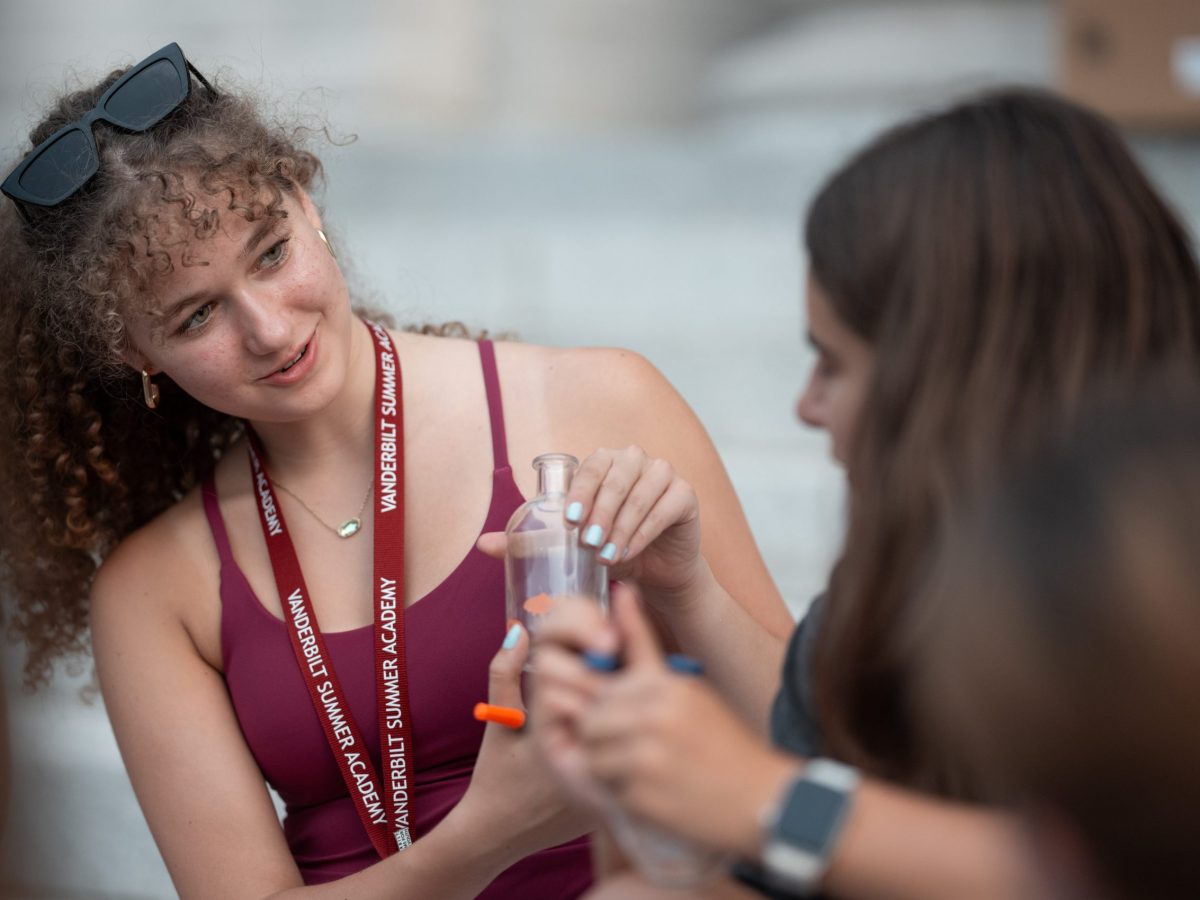
Inside Clinical Psychology was a one-week course for rising 9th and 10th graders at Vanderbilt Summer Academy, held 5 to 11 July 2026 on Vanderbilt's campus in Nashville. Students worked through case studies showing how clinicians assess and treat mental health concerns in individuals and families. They then looked at the field from a researcher's side and learned how to design studies, while hands-on activities explored how clinical psychologists combine science and practice and the ethical questions that can come up along the way. Students lived in a university residence hall and spent about six hours a day in class, with supervised evening activities afterward.
Why it's worth it
The course centers on one career question, what clinical psychologists actually do and how they differ from other mental health professionals. You work through both halves of the job, analyzing clinical case studies and then designing research, which makes it a practical way to find out whether the field suits you before you commit to it in college.
What it asks of you
A week living away from home on a full, tightly run schedule. For families, the bigger commitment is paying early, because the deposit is due soon after placement and is lost if plans change.
Who should skip it
Students who want credit or an edge in college admissions, because VSA gives no grades or credit and says admission to VSA isn't an indicator of admission to Vanderbilt. Older students can't take it anyway, since you can only apply for courses designed for your own rising grade.
Ali Sloan, who taught the 2026 course, was then a second-year PhD student in Vanderbilt's clinical psychology program, so you're learning from someone partway through training for the job the course describes, not a senior professor. Her research looks at how childhood adversity raises the risk of developing mental illness. Before her doctorate she taught high school special education in Boston through Teach for America and then worked as a research assistant in the Early Psychosis Program at Vanderbilt University Medical Center. She holds a BS in neuroscience from Duke and an MEd from Boston University.
VSA gives every course a dedicated instructor and a teaching assistant. It also says instructors can change depending on demand and availability, so check who's listed when the 2027 courses appear.
Class runs about six hours each weekday, all on this one course, since VSA has each student study a single subject in depth. Outside class, residential staff run evening activities and outings, and VSA expects everyone to take part unless accommodations are approved before the session. Meals are cafeteria-style in campus dining halls, with boxed lunches on field trips, and the day ends back in the residence hall. You can bring a phone, but you can't use it in class or during organized activities.
The sign-out free time and afternoon homework VSA describes are only for rising 11th and 12th graders. For 9th and 10th graders, the week is class, activities and supervised downtime.
VSA doesn't rank you against other applicants. Instead it checks whether its accelerated pace suits you, which you can show in one of two ways. Both count equally, although VSA strongly encourages test scores. Qualifying applications sent during the priority window, which usually runs for a week after applications open, are reviewed in random order. After that, seats go first come, first served, and full courses keep a waiting list. You rank up to four courses and get placed in the highest one with a seat, so only rank courses you'd actually take. If you've attended a PTY program before, your past performance and conduct are considered too.
Test scores
Scores around the 90th percentile or higher for your age, in one or more sections of the ACT, SAT, PSAT or another nationally normed test such as state tests or MAP, give the best chance of placement. Cognitive tests and psychologists' assessments also count. Scores must be less than three years old, and you add a transcript.
Portfolio
A transcript, one recommendation from a teacher or academic advisor sent through VSA's online form, and an essay of under 600 words on why you'd spend part of your summer vacation on an academic program and why you picked your first-choice course.
VSA lists one-week tuition for rising 9th and 10th graders at $2,850, alongside its 2027 session dates. That one price covers the course, materials, housing, meals and residential outings. On top of it you pay a $50 application fee ($100 for international applicants) when you apply, which isn't refundable. If you fly into Nashville alone, the airport shuttle is required and costs $75 round trip. Flights, health insurance (VSA requires proof of it) and spending money are extra, and VSA suggests about $50 to $75 a week for spending money.
Once you're placed, 20% of tuition ($570 on $2,850) is due within a week as a nonrefundable deposit. The rest is due by the tuition deadline, which was 14 March 2026 for students admitted before 1 March. Withdraw before that deadline and you get back everything above the deposit. After it, nothing is refunded, even if you leave early. Any family can spread tuition over a monthly payment plan, but installments already paid aren't refunded if you cancel.
Need-based aid is open to families with an adjusted gross income of $105,000 or less or a severe hardship, though not to international students, and asking for aid doesn't affect placement because applications are reviewed need-blind. VSA also lists named scholarships from outside sponsors, and some of these cover full tuition.
Rising 9th and 10th graders are with a staff member through class and the afternoon and evening program, then stay in their residence hall until breakfast. VSA warns that students used to unsupervised time may find this restrictive. Each student has a classroom assistant by day and a residential proctor at night. The 25 to 35 proctors are trained undergraduate and graduate students who live on the floors near their groups of about 6 to 14 students, and all staff go through a nationwide background check. VSA follows Vanderbilt's policy on minors on campus.
Residence halls are locked with card access, and a security team watches them overnight. There's no full-time medical staff, but a nurse reviews health records, handles medications and checks on health concerns. Medical emergencies go to the closest hospital, which is usually Vanderbilt's children's hospital. Most students share a double room, some a triple, with roommates assigned at random. Staff meet students flying alone at Nashville's airport, but your child must be old enough to fly without an airline's unaccompanied minor service.

Sean
Talk it through with Sean
“I can help you compare the programs you're considering, think through the practicalities and work out what makes sense for you.”
Psychiatry program in Chapel Hill, ages 15 to 18, from $2,995.
Deadline: Not announced yet · From $2,995 · 15-18 · Chapel Hill · In-person
Medicine and health care program in Ann Arbor, ages 14 to 18, from $4,499.
Deadline: Not announced yet · From $4,499 · 14-18 · Ann Arbor · In-person
Medicine course in Cambridge with clinical simulations, ages 14 to 17, from £3,995.
Deadline: Not announced yet · From £3,995 · 14-17 · Cambridge · In-person
Save this program in Succeed to compare it with similar programs, dates, costs and formats in one place.
Compare with other programspty.vanderbilt.edu · Official page
pty.vanderbilt.edu
pty.vanderbilt.edu
pty.vanderbilt.edu
pty.vanderbilt.edu
pty.vanderbilt.edu
pty.vanderbilt.edu
pty.vanderbilt.edu
Facts checked against the official page on 10 Nov 2026
Editor: Ben Stacy
Succeed has no commercial relationship with Vanderbilt Summer Academy.
Spot an error? Report it