
Foundations of Literature & Writing High School Course
Applications open
One week in person in Oxford, ages 14 to 18, from $2,498.
21 Feb 2027 · From $2,498 · 14-18 · Oxford · In-person
Short Form Prose Writing is a one-week creative writing course for students entering 9th or 10th grade, run as part of Vanderbilt Summer Academy, so you live on Vanderbilt University's campus in Nashville for the week. You read flash fiction and very short stories to see how writers build tension and character in a few words, then draft, revise and workshop your own pieces until you have a small portfolio. The 2026 course ran from 21 to 27 June and was taught by Jan Harris, a writing professor and published poet.
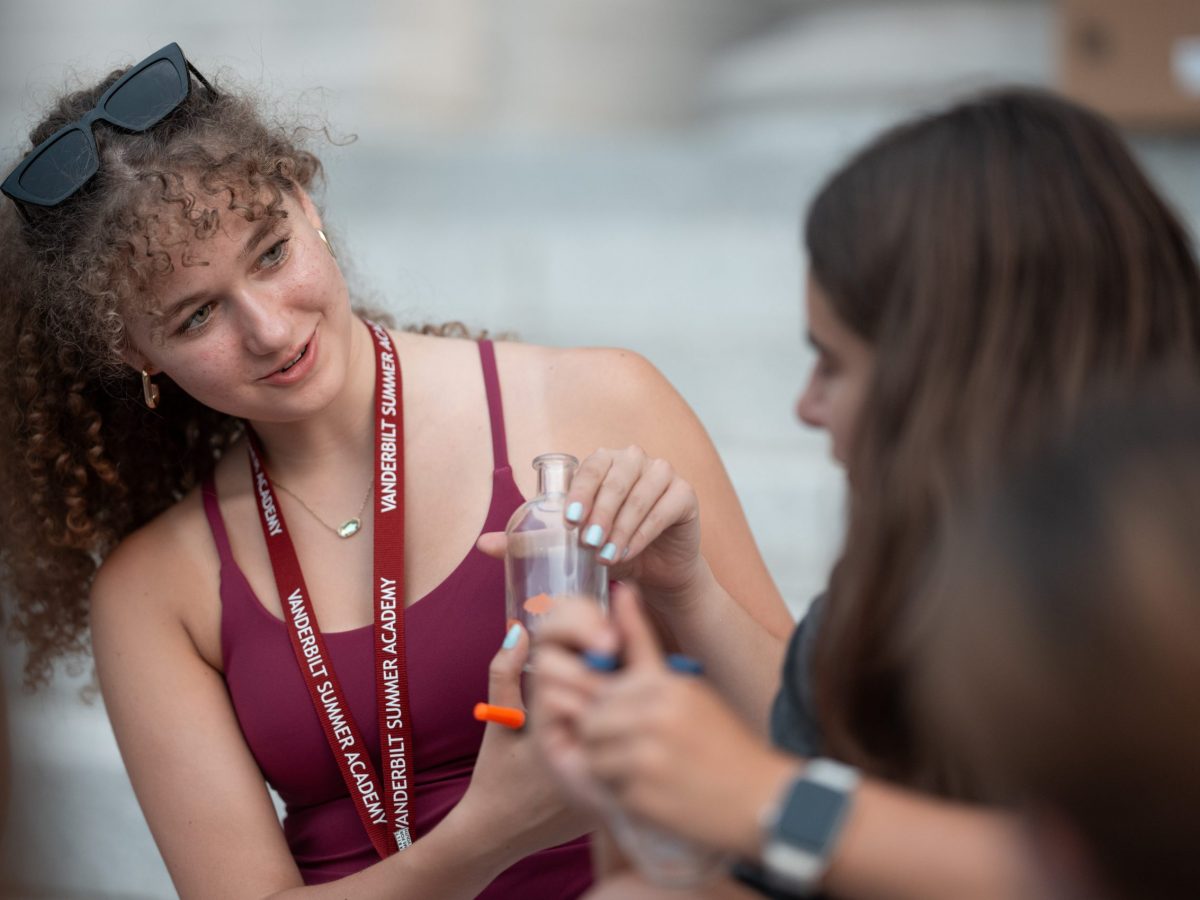
Why it's worth it
You spend a whole week on one narrow craft, writing very short fiction, and the course is built around drafting, micro-revision and peer workshops, so you finish with polished pieces and a written evaluation of your writing.
What it asks of you
A week living on campus in Nashville, about $2,900 in fees before travel, and an early application, ideally in the priority window.
Who should skip it
Students who need something to show on a transcript, and writers hoping to push a longer project forward, since a single week leaves room mainly for short pieces.
Rank only what you'd take
Applicants rank up to four courses, and placement in any of them triggers the nonrefundable 20% deposit within a week, so a backup choice commits you if it's the one you get.
Jan Harris, a Professor of Writing at Lipscomb University in Nashville, taught the 2026 course. Her listed publications are poetry, including a chapbook from Finishing Line Press and poems in journals such as American Writers Review and The Portland Review, and that same summer she also taught Vanderbilt's free verse poetry course for younger students. She received the Bledsoe Award for Excellence in the Humanities in April 2022 and was chosen as one of three Teachers of the Year in April 2024.
Vanderbilt gives every course a dedicated instructor and a teaching assistant, but it doesn't give class sizes, saying only that enrollment varies by summer and program. It also says courses and instructors can change with demand and availability, so check who's teaching when the 2027 list comes out.
Class runs for about six hours each weekday, and the whole week goes to this one course. You read short stories from a range of genres to see how authors build tension and character in very few words, then draft your own, take on micro-revision challenges and bring your pieces to peer workshops.
Outside class, Vanderbilt runs evening activities, organized outings and supervised free time, and you're expected to take part in the scheduled activities unless you've arranged an accommodation in advance. Phones aren't allowed in class or during organized activities. Meals run from dinner on opening day to breakfast on closing day, and admitted families get a typical daily timetable in the student handbook.
You leave with a portfolio of polished short pieces and a written performance evaluation from your instructor, but no grade and no academic credit. Vanderbilt describes the evaluation as constructive feedback to help you judge your progress and plan what to study next, and parents can join a virtual open house led by instructors near the end of the session.
The course aims to give you skills that carry over to longer writing, including novels, memoirs and college essays. Vanderbilt doesn't promise a certificate of completion, and whether your instructor writes you a recommendation letter is entirely up to them.
Only students entering 9th or 10th grade can take this course, and you apply using one of two kinds of evidence that Vanderbilt weighs equally. The first is test scores less than three years old, such as the ACT, SAT, PSAT, state or MAP tests or a cognitive assessment, sent with a transcript. There's no cutoff, but scores around the 90th percentile or above have the best chance, and for a writing course Vanderbilt looks at reading, writing and English language arts scores. The second is a portfolio made up of a transcript, one educator recommendation and an essay of under 600 words on why you'd spend part of your summer on an academic program and why you picked this course. Vanderbilt also says in one place that an application isn't complete until two educator recommendations arrive, so confirm the number with its office.
Vanderbilt doesn't rank applicants against each other. Complete applications sent during the one-week priority window are put in random order for placement, later ones are reviewed as they arrive, and Vanderbilt says its most popular classes fill within the priority window. Review is need-blind. Students whose first language isn't English also need English test results or an English-language portfolio unless they qualify for a waiver.
Tuition for the rising 9th and 10th grade one-week program is $2,850, so with the $50 application fee a US family pays $2,900 before travel. International applicants pay a $100 application fee instead. Tuition covers the course, materials, housing, meals and residential outings and activities.
On top of that come flights or the drive to Nashville, the $75 round-trip airport shuttle that's required for students flying in alone, and pocket money, which Vanderbilt suggests setting at $50 to $75 a week. Every student needs health insurance, and the family pays whatever it doesn't cover.
Once you're placed, a nonrefundable deposit of 20% of tuition, $570 on $2,850, is due within a week. Withdraw before the tuition deadline and you get back everything above the deposit, but after that deadline nothing is refunded, even if you leave early. In 2026 the deadline was 14 March for students admitted before 1 March, while students admitted after 14 March usually had to pay within a week of placement. Families could also spread tuition over monthly payments up to 1 June 2026, but installments already paid aren't refunded if you cancel.
Need-based aid
Available to families with an adjusted gross income of $105,000 or less, or facing a severe hardship, but not to international students.
Named scholarships
Funded by outside donors with their own criteria that change each year, and some cover full tuition.
Rising 9th and 10th graders are with a staff member through the whole academic day and every afternoon and evening activity, and after evening activities they stay in the residence hall until they head to breakfast. Vanderbilt warns that students used to unsupervised time may find this restrictive, and the off-campus free time older students get isn't part of these sessions. Staff follow Vanderbilt's policy on minors on campus.
Students live in the Ingram Commons first-year halls, mostly in double rooms with a roommate assigned at random, and each joins a proctor group of about 6 to 14 students led by trained undergraduate or graduate counselors who live on the same floors.
Staff checks
Every staff member goes through screening and an extensive nationwide background check, and 25 to 35 residential counselors live alongside the students.
Locked halls
Residence halls need a card to enter, a security team watches them overnight and campus police patrol regularly.
Health
There's no full-time medical staff, but a nurse reviews health records and handles medication, and emergencies go to the nearest hospital, usually the children's hospital at Vanderbilt.
Airport
Staff meet students flying alone at Nashville airport and shuttle them back for departure, but there are no unaccompanied minor escorts, so your student has to be old enough to fly alone under the airline's rules.

Sean
Talk it through with Sean
“I can help you compare the programs you're considering, think through the practicalities and work out what makes sense for you.”
One week in person in Oxford, ages 14 to 18, from $2,498.
21 Feb 2027 · From $2,498 · 14-18 · Oxford · In-person
In person in London, ages 15 to 18, several sessions, from £1,799.
Deadline: Not announced yet · From £1,799 · 15-18 · London · In-person
In person in Cambridge, ages 13 to 15, several sessions, from £5,495.
Deadline: Not announced yet · From £5,495 · 13-15 · Cambridge · In-person
Save this program in Succeed to compare it with similar programs, dates, costs and formats in one place.
Compare with other programspty.vanderbilt.edu · Official page
pty.vanderbilt.edu
pty.vanderbilt.edu
pty.vanderbilt.edu
pty.vanderbilt.edu
pty.vanderbilt.edu
pty.vanderbilt.edu
pty.vanderbilt.edu
Facts checked against the official page on 10 Nov 2026
Editor: Ben Stacy
Succeed has no commercial relationship with Vanderbilt Summer Academy.
Spot an error? Report it