
Applications
Rolling admissions
No fixed deadline; applications are reviewed until programs fill.

A hands-on residential biology research experience combining laboratory experiments, ecological fieldwork, microscopy and scientific presentations.
See Succeed's assessment of the programme, who it may suit, the estimated total cost, what applying involves and what is still to confirm.
or let us know if .
What Succeed checks
We review public program details such as eligibility, age range, cost, duration, location, format, accommodation, meals and application timing.
What Last verified means
Last verified is the latest date Succeed checked the public details shown on this page. Program dates, prices and availability can still change.
How official sources are used
Succeed uses official provider information where available, then rewrites it into a student-facing summary for comparison and planning.
Why some dates are reference dates
If the current cycle is not available, Succeed may show the latest verified cycle dates so you can understand typical timing.
Succeed is independent from this provider unless a partnership is clearly stated.
Current status
Applications open
Eligibility
Grades 9-12; good standing
Age range / Year group
Ages 14-18
Location / Region
Winston-Salem, North Carolina, United States
Cost
$3,500
Duration
Sunday-Friday, overnight
Format
In-person
Application deadline
Rolling · Next cycle not announced yet. These dates are from the latest verified cycle and should be used as a reference only.
Save programA residential introduction to biological research that combines laboratory experiments, ecological fieldwork and microscopy.
Students investigate topics including plant development, disease biochemistry, floral ecology, sustainability and global-change biology.
The experience suits students who want to test their interest in research through data collection and a peer presentation.
The Biology Research Institute is a Wake Forest University summer experience focused on practical biological research. Students explore how biological processes connect from organisms and cells to ecosystems and global environmental change.
The residential format combines campus-based laboratory work, ecological fieldwork, microscopy and interaction with faculty and PhD-level researchers. Participants formulate questions, collect data and communicate their findings to peers.
Students experience both laboratory and ecological field research rather than classroom instruction alone.
The subject coverage connects molecular biology, disease, plant development, sustainability and ecosystem change.
Participants use microscopy equipment and collect their own research data.
Faculty and PhD-level researchers bring active scientific expertise into the program.
The final peer presentation adds a concrete communication outcome.
High school students who want an intensive, practical introduction to laboratory and field biology in a residential university setting.
You need academic credit, prefer a non-residential option or want a narrowly focused course without broader ecology and sustainability content.
It can be worthwhile for a student who wants to test whether biological research feels engaging before choosing further study. The mix of experiments, field sampling, microscopy and scientific presentation offers more practical exposure than a conventional short course.
The main limitation is value for money: it is a one-week, non-credit program with additional application and travel costs. Families should judge the fee against less expensive research, volunteering or local laboratory opportunities.
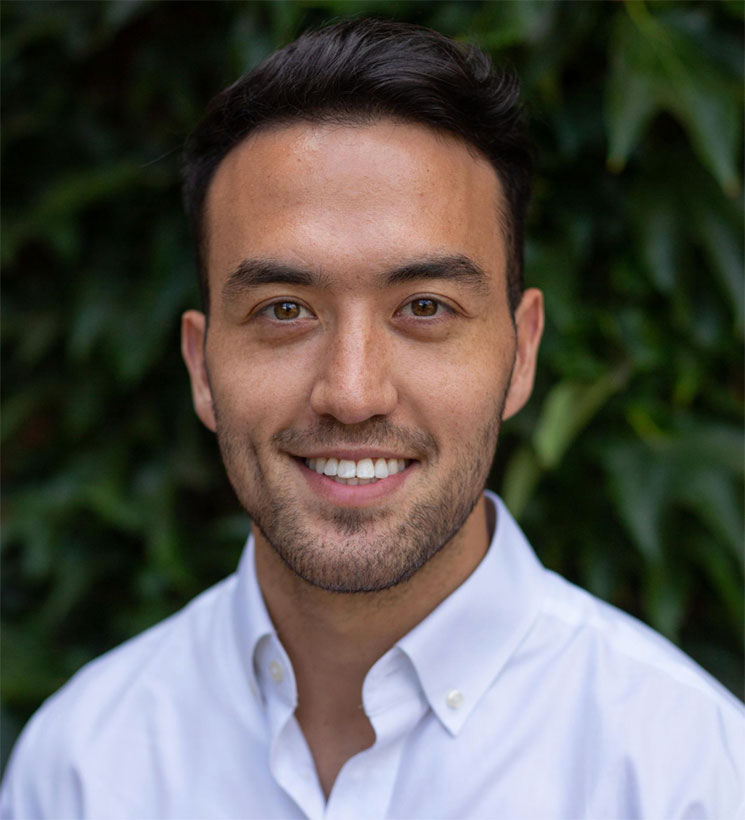
Sean
Founder, Succeed
Talk it through with Sean
“I can help you compare the programmes you're considering, think through the practicalities and work out what makes sense for you.”
20 minutes · No obligation to enrol
A practical overview of cost, accommodation, meals, dates and provider details to review before deciding.
Cost and what is included
$3,500; includes All meals during the campus stay, Transportation to and from off-site field trips, Faculty and researcher-led academic programming, Supervised evening activities, Wake Forest University Certificate of Completion.
Accommodation
Required campus residence hall
Meals
All meals provided
Provider details
Review the Wake Forest University provider page and official sources before making a final decision.
Dates and logistics
Sunday-Friday, overnight; Winston-Salem, North Carolina, United States.
What to check before committing
Confirm current dates, payment terms, travel arrangements, cancellation rules and what is included with the provider.
Compare this program with similar options before deciding on dates, cost, format and fit.
Compare with similar programsEffort level
High-intensity residential week.
Best started
Begin four to six weeks before applying so essays and a recommendation are ready for rolling review.
Main challenge
Adapting quickly to varied research techniques and a full campus schedule.
Review the application essay prompts and identify specific biological questions that interest you.
Ask a teacher, counselor or administrator for a recommendation well before submitting.
Refresh basic laboratory safety, data interpretation and presentation skills.
Plan residential travel, required forms and suitable clothing for laboratory and field activities.
Useful if
You have a genuine interest in biology and scientific investigation.
Students move through question development, laboratory and field investigations, data collection and scientific communication while exploring biological research at different scales.
Formulate biological questions connected to current research themes.
Learn benchtop, field-sampling and experimental-design techniques.
Conduct laboratory experiments involving plant growth and disease biochemistry.
Complete ecological fieldwork and analyze grassland biodiversity.
Use microscopy equipment to examine biological samples.
Work with researchers on studies related to global change.
Present collected data and findings to peers.
Next cycle not announced yet. These dates are from the latest verified cycle and should be used as a reference only.
Applications
Rolling admissions
No fixed deadline; applications are reviewed until programs fill.
Biology Research Institute — 5-10 July 2026
5-10 July 2026
Biology Research Institute — 19-24 July 2026
19-24 July 2026
Applications open
1 November 2026
Opening date announced for summer 2027 applications.
| Milestone | Date | Timezone | Status | |
|---|---|---|---|---|
Applications | Rolling admissions | Local | Reference date | |
Biology Research Institute — 5-10 July 2026 | 5-10 July 2026 | Local | Reference date | |
Biology Research Institute — 19-24 July 2026 | 19-24 July 2026 | Local | Reference date | |
Applications open | 1 November 2026 | Local | Reference date |
Current students in US grades 9-12
Good academic standing required
No school suspensions or disciplinary record
Fluent English required
Home-schooled students may apply
International students may apply
International students cannot receive provider need-based aid
Program tuition
$3,500 — Tuition may change between annual cycles.
Funding or discounts
What's included
All meals during the campus stay, Transportation to and from off-site field trips, Faculty and researcher-led academic programming, Supervised evening activities, Wake Forest University Certificate of Completion
Create an account in the Wake Forest Pre-College application portal.
Complete the online application and answer both essay prompts.
Report your GPA; a transcript and test scores are not required.
Provide a teacher, counselor or administrator as your recommender.
Complete the scholarship section and upload financial documentation if seeking aid.
Pay the $60 nonrefundable application fee and submit the application.
After acceptance, select an institute week and pay the enrollment deposit.
Next step with Succeed
or let us know if .
Succeed replies first, usually within a working day
The program covers the following focus areas.
Plant development
Investigate molecular plant growth and how hormones influence development.
Disease biochemistry
Explore malaria and interactions between disease-causing parasites and their hosts.
Ecology and biodiversity
Use field sampling to examine grassland biodiversity and community assembly.
Global-change biology
Connect biological processes across organisms, ecosystems and environmental change.
Research design and microscopy
Develop questions, design experiments and practice laboratory microscopy techniques.
Curriculum may be adjusted based on participant interests and current developments.
A typical day during the program.
Breakfast is followed by the program introduction and the day's research topic.
Students sample mosquitoes, examine red-blood-cell morphology and begin practical investigations.
Field-site travel, microscopy, a guest speaker and a team research presentation follow lunch.
Dinner is followed by supervised activities, free time and residence-hall routines.
The institute is led by Dr. Anna Parker, an Assistant Teaching Professor of Biology whose work examines global change and plant-insect interactions. Graduate instructors include Wake Forest PhD researchers working on malaria parasites and plant heat stress.
Students also interact with experts and leaders from different areas of biological research.
Roommate requests may be submitted after registration but are not guaranteed.
After completing this program, participants often pursue:
Receive a Wake Forest University Certificate of Completion.
Use research data and a peer presentation as evidence of scientific engagement.
Build familiarity with laboratory, microscopy and ecological field techniques.
Clarify interest in biology, environmental science or scientific research.
Develop questions for deeper independent or school-based study.
The program does not award secondary-school or college credit.
The program takes place at Wake Forest University's Reynolda Campus in Winston-Salem, North Carolina. Students live in campus residence halls, use university learning facilities and travel to fieldwork sites when required.
Optional airport shuttles require separate reservations and fees.
Compare these related biology, environmental science and medical research programs if you want a different location, length or academic emphasis.
Six-day medical research experience in Boston
Best for
Students considering biomedical or medical research.
Environmental science course based in Berkeley
Best for
Students drawn to ecology and environmental science.
Residential introduction to modern scientific methods
Best for
Younger students wanting breadth across scientific subjects.
Senior-level medical and biological sciences study
Best for
Older students seeking biology alongside medicine.
Save this program in Succeed to compare it with similar programs, dates, costs and formats in one place.
Compare with other programsContent reviewed by
Co-founder, Succeed | Founder, Immerse Education (2012–2026)
Sean works at the intersection of academic enrichment, program quality and university preparation, with expertise in evaluating pre-university experiences for ambitious secondary school students.
Succeed uses official provider information where available, but keeps this public page focused on comparison and planning inside Succeed.
Official institute page checked
Application process reviewed
Eligibility requirements verified
Costs and funding reviewed
Residential arrangements checked
Latest cycle dates reviewed
We use source material to verify core facts, then show older cycle dates as reference when a current cycle is not available. Always check current application instructions before applying.
Biology Research Institute
by Wake Forest University
Get the full picture before you decide
Succeed's assessment, estimated total cost and what applying involves.
No account needed for the Guide or Compare.