
In person in Washington, DC, ages 14 to 18, from $3,745.
Deadline: Not announced yet · From $3,745 · 14-18 · Washington, DC · In-person
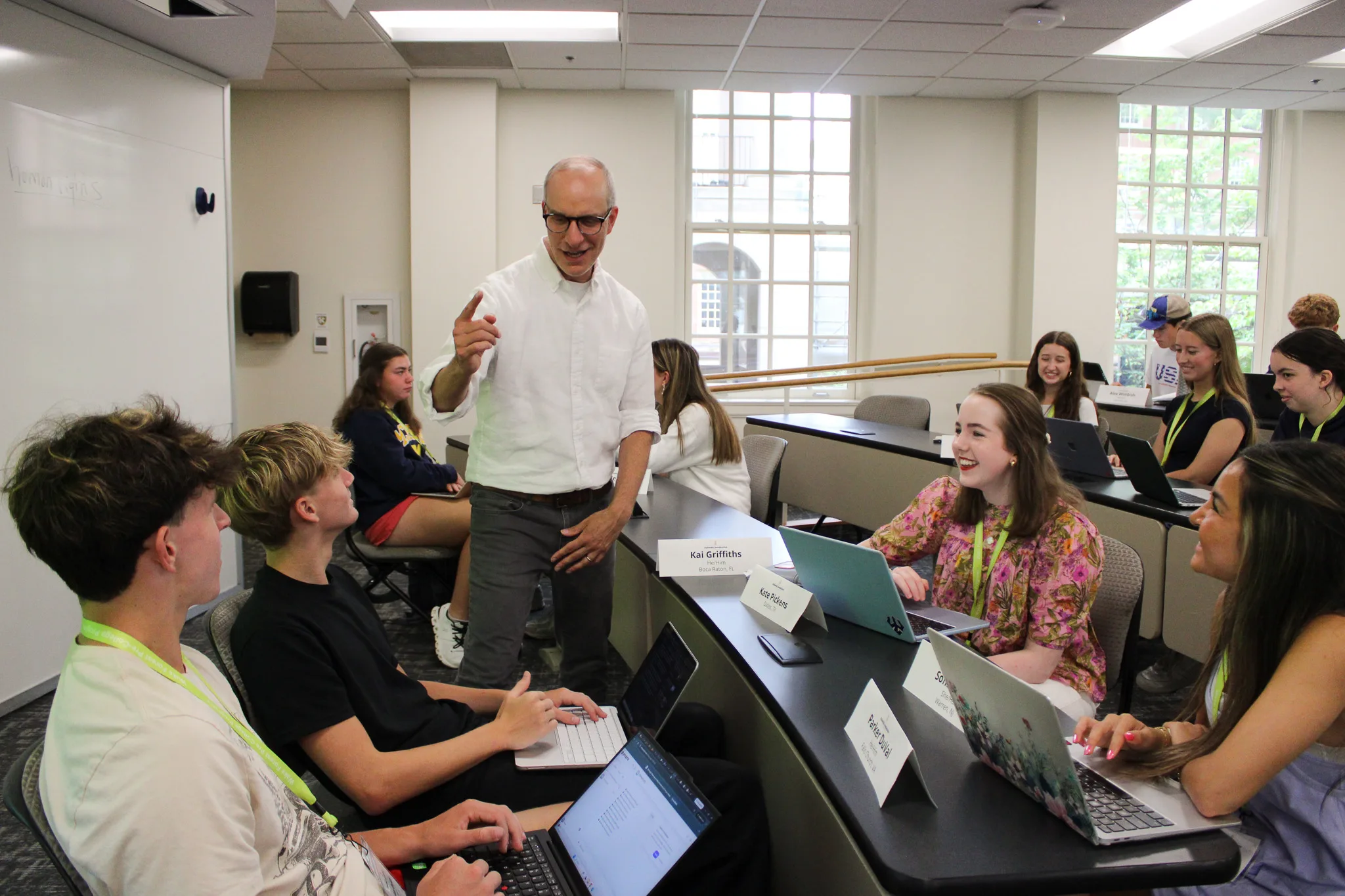
You spend a week living on Wake Forest University's campus in Winston-Salem, studying American democracy, constitutional rights, international politics and how elections shape the law. Days mix discussions, guest speakers and career panels, and you work in a small group on a public policy proposal along with a plan to influence the legislative process. It runs Sunday to Friday, overnight, for students in grades 9 to 12.
Why it's worth it
You're taught by a political scientist who has taught at Wake Forest, you hear from people working in law and government, and you leave having built a policy proposal with a plan to influence the legislative process. For a student unsure whether politics is their field, that's a compact way to find out.
What it asks of you
Mostly money and one week of your summer. At $3,500 in tuition for a single week, before travel, it's a real outlay for a short program, so it makes most sense if you'll use the week to test an interest rather than to build a credential.
Who should skip it
Students hoping to stand out with work of their own, since the policy proposal is a group effort built over a few days and the certificate goes to everyone who completes the week.
Programming runs from 8 am to 5 pm Monday through Thursday, with check-in on Sunday afternoon and check-out at noon on Friday.
In Wake Forest's sample day for this institute, breakfast is at 8:00 and Dr. Pisapia welcomes students at 9:00, before a discussion on political ideologies and a talk from a federal judge. After lunch there's a discussion on democracy and the presidential election, a research block for the policy project and a career panel on working in politics, and the day ends with a debrief to prepare for the next one. Wake Forest says the sample is subject to change.
Dinner is at 5:30, followed from around 6:30 by staff-led evening activities such as basketball, karaoke, Spikeball and s'mores. Free time runs from 7:30 until 9:00, when students get ready for bed, and lights go out at 10:30.
The institute is led by Dr. Michael Callaghan Pisapia, who holds a PhD in political science from the University of Wisconsin, Madison and taught American democracy and political philosophy as an assistant professor at Wake Forest. He now teaches civics and AP social science courses at The North Carolina Leadership Academy, along with political science, public policy and American foreign policy courses at Salem College, and he has won the American Political Science Association's William Anderson Award.
Teaching Assistants and Wake Forest undergraduate interns support the week, and the program brings in policy leaders and Wake Forest alumni who work in law and government. Wake Forest doesn't give a class size or staff ratio.
Students are with program staff at all times, including during evening activities, and staff work an on-call rotation 24 hours a day while the program runs. Professional staff and student interns live in the residence hall overnight, and the Wake Forest University Police Department is available around the clock.
Curfew
You check in with your Program Assistant by 10 pm and stay in your room until 6 am.
Everyone boards
Even students who live in Winston-Salem must stay in the residence hall all week, and anyone who drives hands over their car keys at check-in until Friday.
Rooms
Roommates are assigned randomly and by gender, in single or double rooms, and students can't enter other students' rooms or have visitors.
Rules
A student and a parent both sign the Code of Conduct before arrival, and a student dismissed for breaking it gets no refund.
Gym
University policy means students can't use the gym, although basketball and volleyball courts are open during supervised activities.
You need to be in 9th to 12th grade now, in good academic standing with no school suspensions, and fluent in English, since everything is taught in English. Home-schooled and international students are welcome, and no TOEFL score is needed.
The application asks for two essays, a self-reported GPA and a recommendation from a teacher, school counselor or administrator who knows you well. A family member, coach, religious leader or paid tutor can't act as your recommender, and no transcript or test scores are required.
Expect to pay $3,565 before travel, which is the $3,500 tuition plus a $65 application fee that's due when you apply and isn't refunded. Tuition covers the week on campus, including all meals and transport to off-site field trips, and Wake Forest notes that tuition can change from year to year.
When you register, a $550 deposit holds your seat and counts toward tuition, and the rest is due by 2 April 2027 (register after that and you pay in full at once). Once you've taken a seat, the deposit isn't refunded, although if you join a waitlist and never get a seat you can have it refunded or move it to another institute. Cancel with more than three weeks' notice and Wake Forest refunds the rest of the tuition you've paid, but within three weeks of the start nothing is refunded. Wake Forest also offers to defer your acceptance and deposit to a future summer.
Need-based scholarships are limited and awarded first come, first served. You request one in the application, which asks for the previous year's W-2, and must apply by 1 February 2027, although Wake Forest says the money is often gone by January. International students can't receive aid. Payment plans are available if you ask.
Airport shuttles
$100 each way from Greensboro (GSO) or $150 each way from Charlotte (CLT), with no shuttle from Raleigh-Durham, and bookings can't be refunded.
Parking
$50 for a parking pass if you drive yourself.
Card fees
Paying by credit card adds a processing fee, which paying by ACH avoids.
Applications go through Wake Forest's pre-college application portal. There's no hard deadline, but Wake Forest encourages early applications because popular institutes start waitlists in December.
Create a portal account and submit the general Summer Immersion application with your essays, GPA, recommender's details and the $65 fee, ticking the scholarship question if you need aid.
Your recommender gets an automated email with a form to fill in about you.
Most students hear back by email within two weeks, though scholarship requests can take up to four weeks and reviews pause over Thanksgiving and winter break.
Acceptance is to the Summer Immersion Program as a whole, so register through your acceptance email, choose Policy and Politics and your week, and pay the $550 deposit to hold a seat or join the waitlist if it's full.
Pay the remaining tuition by 2 April 2027 and sign the Code of Conduct with a parent before you arrive.

Sean
Talk it through with Sean
“I can help you compare the programs you're considering, think through the practicalities and work out what makes sense for you.”
In person in Washington, DC, ages 14 to 18, from $3,745.
Deadline: Not announced yet · From $3,745 · 14-18 · Washington, DC · In-person
Two weeks in Oxford on power, politics and international relations, ages 12 to 16, from £3,495.
Deadline: Not announced yet · From £3,495 · 12-16 · Oxford · In-person
Seattle, 25 July to 6 August 2027, ages 14 to 18, from $2,998.
21 Feb 2027 · From $2,998 · 14-18 · Seattle · In-person
Save this program in Succeed to compare it with similar programs, dates, costs and formats in one place.
Compare with other programsimmersion.summer.wfu.edu · Official page
prod.wp.cdn.aws.wfu.edu
immersion.summer.wfu.edu
slate.summer.wfu.edu
immersion.summer.wfu.edu
immersion.summer.wfu.edu
immersion.summer.wfu.edu
prod.wp.cdn.aws.wfu.edu
Facts checked against the official page on 10 Nov 2026
Editor: Ben Stacy
Succeed has no commercial relationship with Wake Forest University.
Spot an error? Report it