Conrad Challenge
Houston · 13–18 years
Closed
Deadline: 29 Oct 2026Cost: $499
Houston, United States
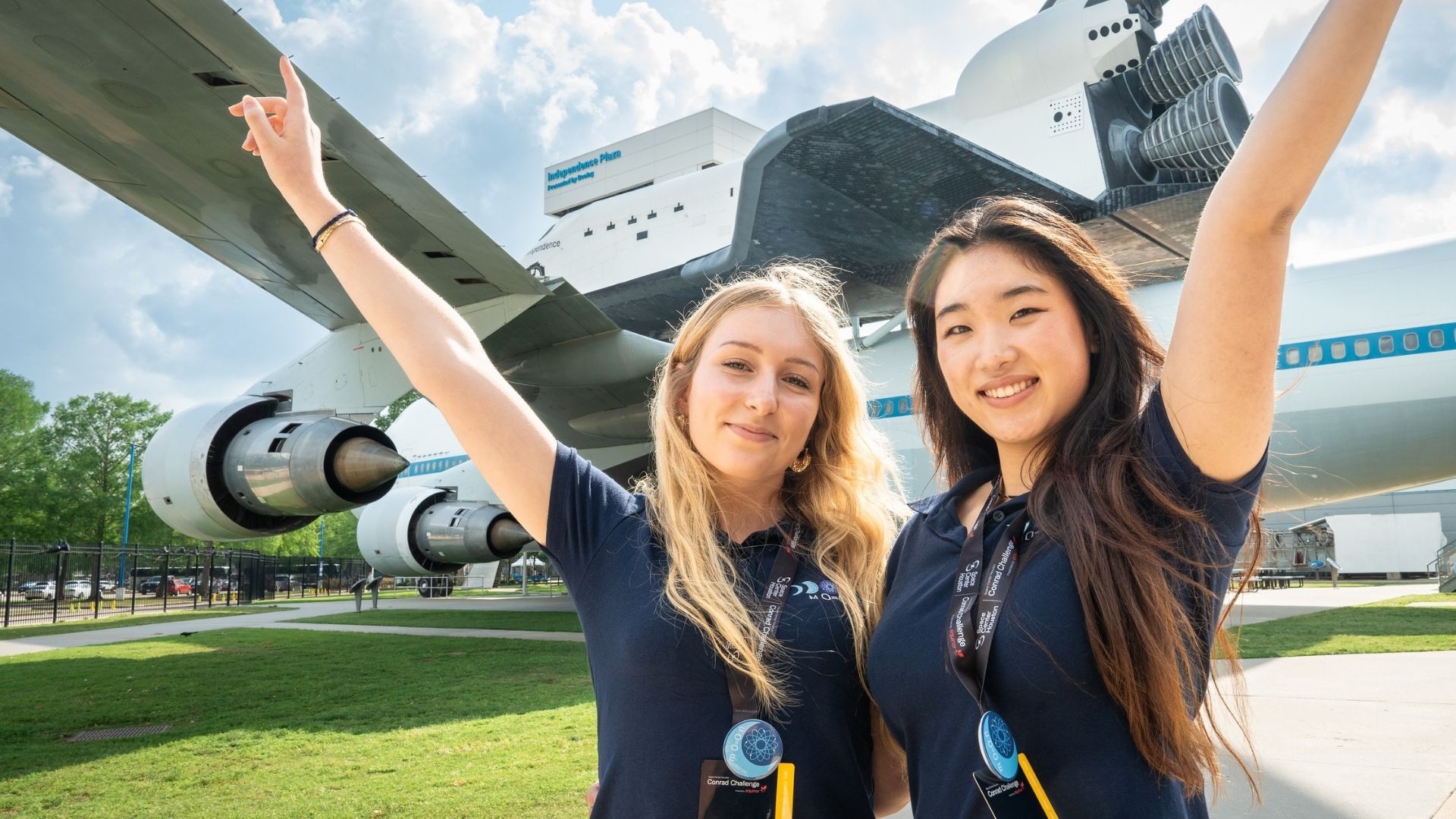
The Conrad Challenge is a team competition in which students aged 13 to 18 design a STEM innovation and the business plan behind it. Space Center Houston runs it through its Education Department in Houston, Texas, and Equinor is the presenting sponsor. Each cycle runs from August to April. The Challenge honors Charles "Pete" Conrad, the NASA astronaut who was the third person to walk on the Moon. His wife, former educator Nancy Conrad, founded the Conrad Foundation in 1999 to honor his life after his death. Space Center Houston says the 2026-2027 competition marks the Challenge's 20th anniversary of operation. Teams of 2 to 5 students work with an adult coach and enter one of five categories: The Water Challenge, Health and Nutrition, Energy and Environment, Cyber Technology and Security, and Aerospace and Aviation. The competition has three phases. The Activation Stage is free to enter. The Innovation Stage costs $499 per team. Invited finalists attend a four-day Innovation Summit at Space Center Houston, where they pitch to judges and show their work at a public expo. Space Center Houston reports 7,890 student competitors from 74 countries in the 2025-2026 competition.
The Conrad Challenge isn't a taught course. Students learn by building a project as a team over several months. Teams take an idea through to submissions such as an investor pitch, a team video, photos and a business plan. Finalists then turn the year's work into a Power Pitch with slides and present it on stage. Space Center Houston supports teams with a student guide, published rules and live online workshops. One example is Virtual Workshop #6, Innovation Insight: Communicating your Idea, on 10 December 2026. The rules keep the coach's role limited. A coach can guide students but can't create any submitted element or have too much influence on the concept design. Any material a team uses, including output from AI tools, has to be properly cited.
Space Center Houston calls the Conrad Challenge one of the world's most highly regarded global STEM innovation and entrepreneurship competitions. That's the organizer's own description. Its reach is easier to check. Space Center Houston reports 7,890 student competitors and 1,578 innovations from 74 countries in 2025-2026, and it publishes lists of Innovation Summit awardees going back to 2008. Equinor presents the competition, and United Airlines was the travel partner for the 2025-2026 trip prize.
Our take
In Succeed's view, the Conrad Challenge suits teams who want to take one idea a long way. Between August and April, students build a product concept, a business model and a pitch. The strongest teams then present in person at Space Center Houston. That's real entrepreneurial work, and because the first stage is free, a team can test its idea before paying anything. The costs grow as a team advances. The Innovation Stage costs $499 per team. The Innovation Summit costs $499 per attendee, and that doesn't include travel or accommodation. Space Center Houston offers financial aid to qualifying teams, with a separate deadline for each stage. Teams that go far also give up some privacy. Space Center Houston posts the names, photos and product of teams that complete the Innovation Stage, and US finalist teams have to file a provisional patent application. The 2025-2026 prizes included an all-expenses-paid trip, patent support and scholarships. The Conrad Challenge site doesn't say how universities view the competition. We'd suggest entering for the experience of building and pitching something real, and treating any award as a bonus.
Who should choose them
This may suit you if you're 13 to 18 and want to build a product and a business plan with one to four teammates over several months. It fits students who are comfortable pitching and answering judges' questions in English, because all submissions must be in English. Your team should have an idea that fits one of the five categories: water, health and nutrition, energy and environment, cyber technology and security, or aerospace and aviation. Families should be ready for the $499 Innovation Stage fee or plan to apply for financial aid.
Who it may not suit
Who should skip it: students who want a solo project, because every team needs at least two members. It's also a poor fit if you want to keep your idea completely private. Anything presented at the Innovation Summit counts as public, and the press and sponsors may attend. Finalists also need to be able to travel to Houston in April and cover travel and accommodation on top of the $499 Summit fee, unless they get financial aid.
Houston · 13–18 years
Cost: $499