Duke University Pre-College Programs
Durham, United States
About Duke University Pre-College Programs
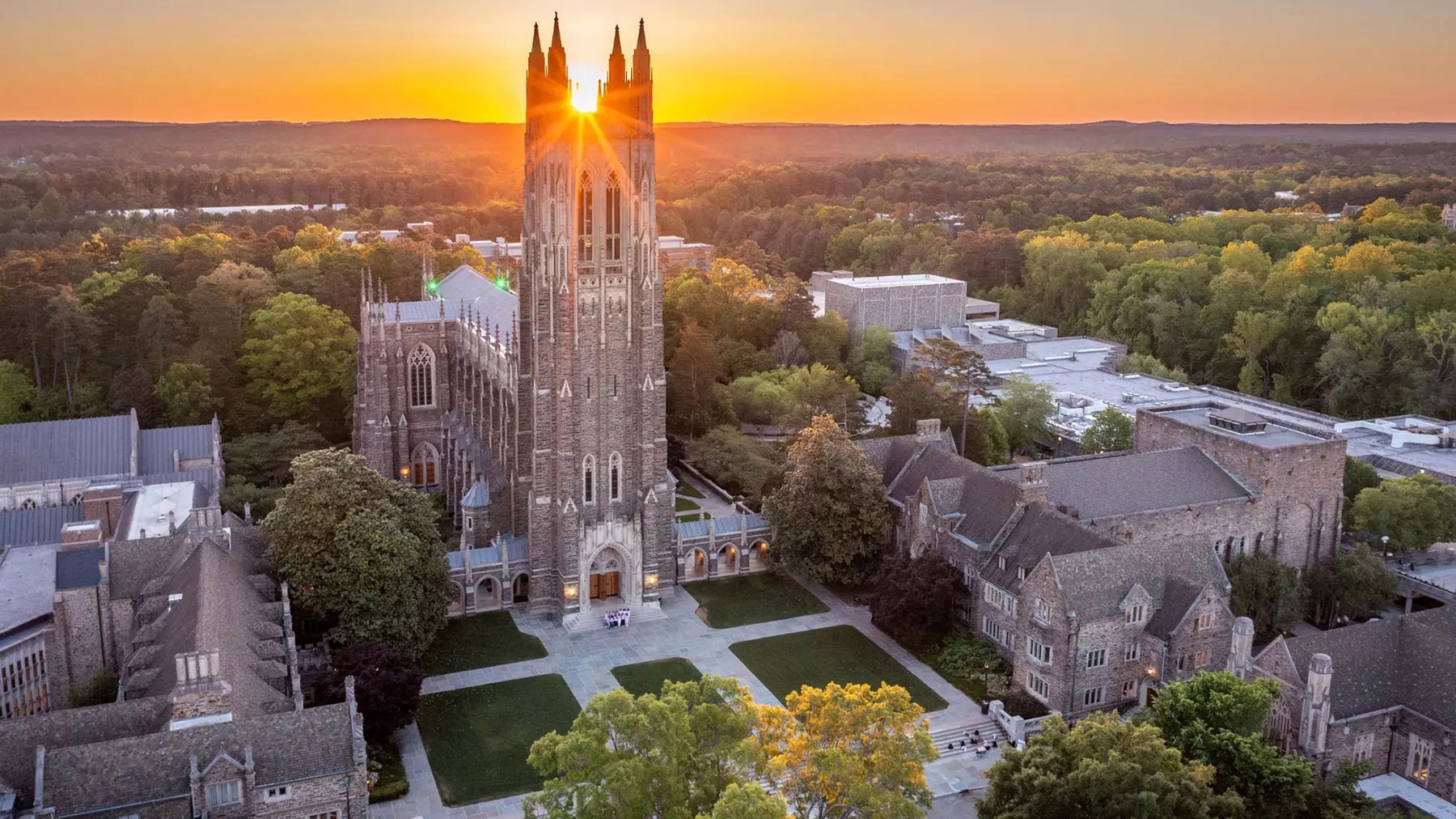
Duke University Pre-College Programs runs in-person summer courses on Duke's main campus in Durham, North Carolina, for students in grades 6 to 12. It's part of Duke University's Office of the Provost. For 2027 there are three 12-day sessions: 12 June to 23 June, 27 June to 8 July and 12 July to 23 July. Duke says it won't offer online courses in 2027. High school courses cover business, engineering, law, medicine, psychology and the liberal arts, with titles such as Nursing, Machine Learning & AI and Criminal Law. Middle school courses include Aerospace Engineering, Forensic Science and Mock Trial. Every course ends in a capstone project that students present at the end of the session. All high school students live on campus. Middle school students can either live on campus or commute. Duke sets the 2027 fee at $6,300 for residential students and $4,550 for middle school commuters, and registration opens in December 2026. Families should also know who runs the program day to day. Duke states that all aspects of Duke University Pre-College are managed by EngageU, a third-party organization that runs programs such as the National Student Leadership Conference.
Teaching style
Classes mix lectures with hands-on work, and each course builds toward a capstone project. Duke says the primary instructors are current Duke Ph.D. and graduate students, faculty or alumni. Each primary instructor teaches one class block a day. Teaching assistants (TAs) run the rest, including simulations, research time, lab experiments and case studies. Some courses, such as Introduction to Medicine, may be taught by a team of guest lecturers. The days are long. Classes run from 9:00 AM to 12:15 PM and from 1:45 PM to 4:45 PM. Each session has 8 full days and 2 morning-only days, and some classes fall on weekends. Residential students follow a set schedule from 9:00 AM to 9:00 PM. Duke says attendance is mandatory for everything except designated social events. Evenings and weekends can include leadership workshops, talks on college applications and off-campus trips. Each session ends with final presentations. Instructors, TAs and classmates give feedback on each project, and parents aren't invited. Duke notes that course descriptions are preliminary and may change as instructors finish their syllabi.
Reputation & Succeed take
Duke Pre-College's appeal rests mainly on Duke University's name and campus. Duke calls itself one of the nation's leading universities. Its accreditor, the Southern Association of Colleges and Schools Commission on Colleges (SACSCOC), accredits the university, but the pre-college pages don't say the summer courses earn college credit. Duke also states that EngageU, a third-party organization, manages all aspects of the program. Duke describes EngageU as having over 30 years of experience running programs such as the National Student Leadership Conference. The site shows two short student testimonials. Duke chose them, so they aren't independent reviews.
Our take
In Succeed's view, Duke Pre-College is a good fit for a motivated student who wants a structured taste of university life on a major campus. It's priced to match. The 2027 residential fee is $6,300 for 12 days, and Duke doesn't give scholarships to individual students. The primary instructors are Duke Ph.D. and graduate students, faculty or alumni, so don't expect every class to be led by a professor. EngageU, an outside organization, runs the program day to day. We'd suggest choosing it for the subject, the capstone project and the campus experience rather than for a credential. Duke doesn't say the program carries credit or affects admission to Duke.
Who this provider suits
Who should choose them
This may suit you if you're in grades 6 to 12, have a GPA of 3.0 or higher, and want to try a field like nursing, law or engineering before college. It works well for students who enjoy teamwork and presenting, because every course ends with a capstone that you present to instructors and classmates. It also suits families who want a closely supervised stay, since residential students follow a full schedule and staff meet flights at Raleigh/Durham International Airport (RDU). Middle school students who live near Durham can commute, which costs $4,550 instead of the $6,300 residential fee.
Who it may not suit
Who should skip it: students who need college credit or a transcript, since Duke's pre-college pages don't offer either. It's also hard to afford if you need financial aid and aren't connected to one of Duke's partner scholarship organizations, because Duke doesn't give scholarships to individual students. High school students can't commute, since all high school courses are residential. The 9:00 AM to 9:00 PM schedule with mandatory attendance leaves little free time. If you're hoping for an online option, Duke isn't offering one in 2027. Parents who want to watch the final presentations should know they aren't invited.
Accreditations & Recognition
Southern Association of Colleges and Schools Commission on Colleges (SACSCOC)
Contact
Frequently asked questions
Programs by Duke University Pre-College Programs
 Program
High School Summer Courses
Organized by Duke University Pre-College Programs
Dates
June to July 2027, 3 sessions
Location
Durham
Duration
12 days