
Duke University Pre-College Programs Middle School Summer Courses
by Duke University Pre-College Programs
- 2027 program
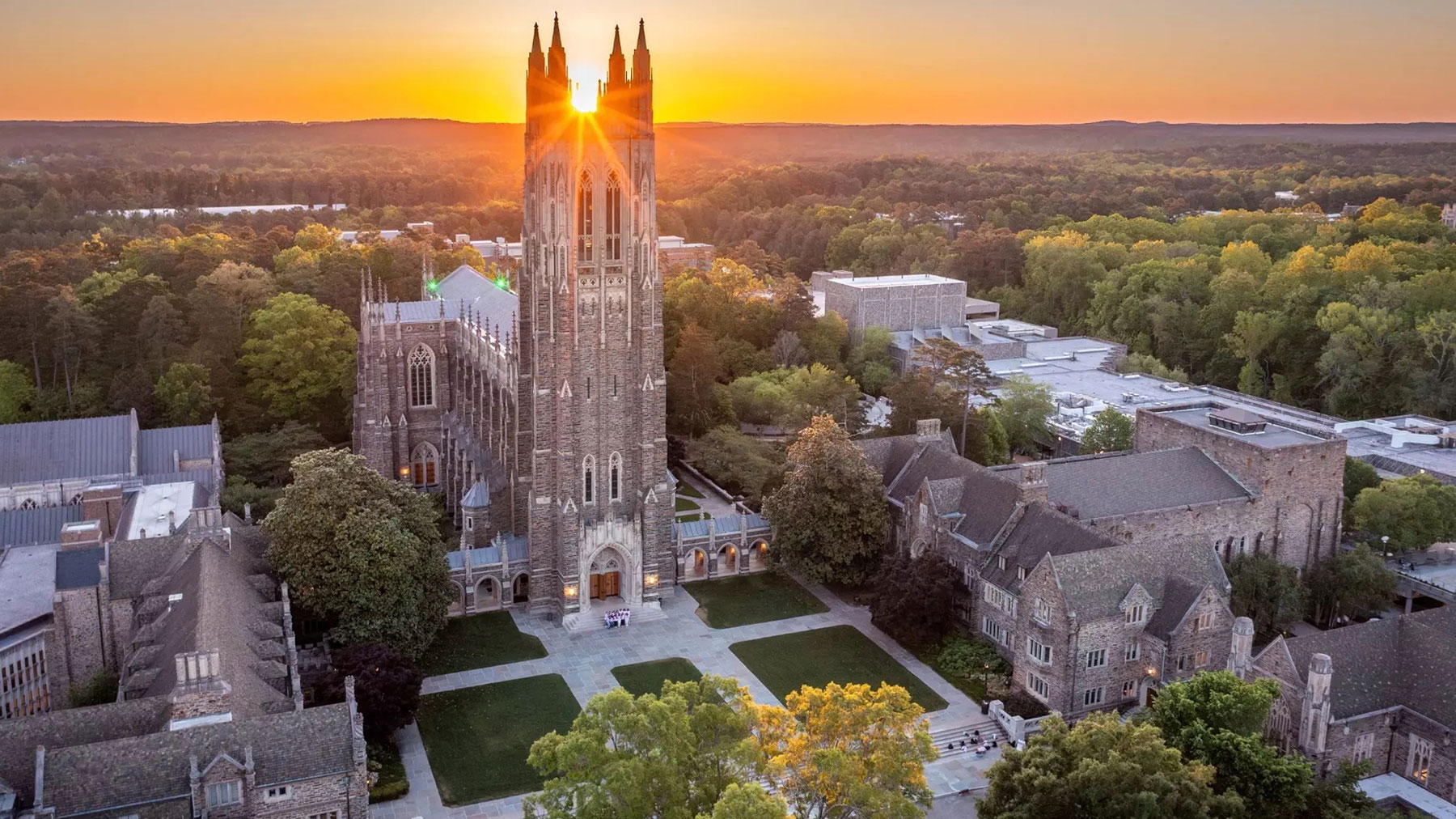
Middle schoolers spend 12 days on Duke University's East Campus in Durham, North Carolina, taking one course such as Forensic Science, Mock Trial, Animation or Understanding DNA in morning and afternoon class blocks. Each course builds to a capstone, like a startup pitch or a short animated film, which students present on the last day. Students who are 13 by the start of their session can live in the dorms, with evening activities and outings. Younger students have to commute, and older students can also choose to commute if they live nearby.
 Sean Stevens · Sources
At a glance
Official facts · checked 11 Nov 2026- DatesOfficial
- 2027: 12 to 23 June, 27 June to 8 July, 12 to 23 July
- Who can applyOfficial
- Current grade 6 to 8 students (middle school program). At least 11 years old by the session start date to attend. Non-US citizens must demonstrate English proficiency and hold a B-2 tourist visa
- Total costOfficial
- 2027: $6,300 residential, $4,550 non-residential
- Format and placeOfficial
- In person, Duke University East Campus, Durham, North Carolina
- Length
- 12 days
- Included / budget separately
- Included: accommodation, meals (All meals included for residential students at the East Campus Dining Hall, lunch included for commuters). Separately: airport shuttle $45 each way, Early arrival or late departure stay $120 per night, English proficiency interview $130 (if used), On-campus Tdap and Meningococcal ACWY vaccines, typically $150 to $250 (if needed)
- Deposit and refunds
- Deposit $500. Cancel within 30 days of enrolling and before 1 April 2027: full refund, with no cancellation fee
- Financial aid
- Partial or full scholarships for low-income and first-generation students, identified through local and state partner scholarship organizations
- Apply by
- Rolling admissions
- Cohort and selectivity
- Programs are typically about 50% full by 1 March, and most sessions and courses are waitlisted by 1 April
- Credit or certificate
- Not published
Succeed's assessment
Should you apply?
SucceedIn short
Why it's worth it
Every course builds to a capstone that students present on the final day, from a full mock trial to a startup pitch. The days mix classes with field trips, guest speakers and visits across campus, so a younger student gets a real taste of university life.
What it asks of you
Boarders follow a mandatory schedule from 9:00 AM to 9:00 PM for 12 days straight, including class on at least one weekend morning, and every student needs to bring a laptop.
Who should skip it
Anyone who needs their summer to count for credit, because Duke Pre-College runs these courses as non-credit enrichment.
A catch for parents
Parents aren't invited to the final presentations or the closing ceremony, so don't plan a trip around watching the capstone.
What does a typical class day look like?
Class days are split into two blocks, 9:00 AM to 12:15 PM and 1:45 PM to 4:45 PM, and each 12-day session has eight full class days and two with morning class only. Duke Pre-College's sample day, based on its summer 2026 middle school session, starts with breakfast in the East Campus dining hall at 7:45 AM, with lunch at 12:30 PM and dinner or an evening field trip at 5:00 PM. From 6:15 PM to 9:00 PM, boarders have leadership sessions, an evening activity and a check-in with their resident advisor (RA).
Because the session runs 12 days in a row, it always includes a weekend, and there's class on at least one weekend morning. A break day with no class comes mid-session and usually falls on the weekend. In past years it has meant group outings to Bowlero and Frankies of Raleigh. Every course also includes at least one off-campus field trip tied to its subject. The last morning is given over to capstone presentations, followed by a closing celebration and departure that afternoon.
Commuters are dropped off at 8:30 AM and picked up at 5:00 PM, or at noon on half days, with lunch included. They may occasionally be asked to join their project team on Zoom after dinner when a final presentation needs more work.
Who teaches the courses?
Each course is led by a current Duke Ph.D. or graduate student, a faculty member or an alum, who is there for one of the two class blocks each day. Teaching assistants (TAs) run daily simulations, lab experiments, research time and case studies. Duke Pre-College requires instructors to have a Duke affiliation, and TAs must have studied, or be studying, a subject related to their course. Any course may be taught by a team of guest lecturers from the Duke community and local industry rather than a single instructor.
Guest speakers add a practitioner's view. In 2026 they included Dr. Michael Tomasello, a professor of psychology and neuroscience, along with a veterinarian and Duke Athletics' director of sports nutrition. The 2027 lineup will depend on who's available. Duke Pre-College doesn't publish class sizes beyond saying students work in small groups with dedicated TAs.
Who can enroll?
There's no selection round, because Duke Pre-College opens registration to anyone who meets its rules and fills places while space lasts. The middle school courses are for students currently in grades 6 to 8 who have finished at least one year of middle school and will be 11 by the first day of their session. To live on campus, students must be 13 by that date, so younger students can only commute. Duke Pre-College says students must have a GPA of 3.0 or higher to do well in its courses, and some courses ask you to upload a prerequisite document at checkout.
Students who aren't US citizens need a B-2 tourist visa, which is a cost to check with the US government. They must also show English proficiency in one of three ways.
School
Evidence that you attend an international high school where classes are taught in English.
Test score
At least 90 on the TOEFL (4.5 for tests taken after 20 January 2026), 7.0 on the IELTS or 115 on the Duolingo English Test.
Interview
An oral interview with Duke's English for International Students program, which costs $130.
What does it really cost?
A residential place costs $6,300 and a commuter place costs $4,550 for the 12-day session. The residential fee covers housing and all meals. Both options include classes, supplies, guest speakers, field trips and activities, and commuters get lunch. Travel to Durham isn't covered, and neither are spending money, laundry or meals off campus. The optional extras are the airport shuttle from Raleigh-Durham at $45 each way and $120 a night for arriving early or leaving late. Students who haven't had the Tdap or meningococcal ACWY vaccine can get it at the Duke Student Health Center when they arrive. The fee will be announced in April 2027, and Duke Pre-College says it's typically $150 to $250.
Enrolling takes a deposit of $500 if you sign up by 1 April 2027, or $1,500 after that. Duke Pre-College calls the deposit non-refundable, but you can still get a full refund if you cancel within 30 days of enrolling and before 1 April. The rest of the fee can be paid in full or in monthly installments charged to your card. It all has to be paid 30 days before your session starts, or the student is dropped from the course. After that first 30 days, the cancellation fee rises with the date, from $500 if you cancel by 1 April 2027 to all the tuition you've paid if you cancel on or after 2 May.
Duke Pre-College has no scholarship application of its own. Instead, it works with local and state scholarship organizations that pick out low-income and first-generation students for partial or full scholarships.
| When you cancel | Cancellation fee |
|---|---|
| Within 30 days of enrolling (before 1 April 2027) | $0, full refund |
| By 1 April 2027 | $500 |
| 2 April to 1 May 2027 | $1,500 |
| 2 May 2027 or later | 100% of tuition paid |
How are middle schoolers looked after?
Boarders live in supervised dorms with key or card access, and their teaching assistants double as resident advisors who live on the same floors. During the day, students go through classes and activities in small groups, each with a dedicated TA, and each evening ends with an RA check-in.
The program follows Duke's Youth Protection policy, so every adult who works with students completes training on working with minors each year and a Duke background check at least every three years. On arrival day, staff meet students who've booked the airport shuttle in baggage claim at Raleigh-Durham International Airport between 10:00 AM and 3:00 PM, so flights need to land by 3:00 PM. Middle schoolers are also the only Duke Pre-College students who can ask staff to escort them as unaccompanied minors.
How do you secure a place?
There's no fixed deadline, since applications are taken while space lasts, but Duke Pre-College says programs are typically about half full by 1 March and most sessions and courses are waitlisted by 1 April. You enroll through its online registration, which opens for 2027 in December 2026.
Add your student to the 2027 information request list to get an email when registration opens in December 2026.
Register online, choosing a session, a course and whether to board or commute, and pay the deposit by credit or debit card, or email precollege@duke.edu to pay by check.
If your first-choice course is full, the application asks for a second choice. You'll be enrolled in that course and put on the waitlist for your first choice.
If a whole session is full, a deposit puts you on its waitlist, and that deposit is fully refunded if no place opens or you remove your name.
Upload proof of the immunizations North Carolina law requires to the student portal by 1 June 2027.
Arrive on the first day of your session for registration between 1:00 PM and 4:00 PM EDT.

Sean
Founder, Succeed
Talk it through with Sean
Want to talk it through?
“I can help you compare the programs you're considering, think through the practicalities and work out what makes sense for you.”
20 minutes · No obligation to enroll
What should you do next?
Frequently asked questions
Sources
- Duke Pre-College (Middle School Courses)
provost.duke.edu · Official page
- Duke Pre-College Middle School Sample Schedule (PDF)
dukeprecollege.org
- Duke Pre-College (FAQs)
provost.duke.edu
- Duke Pre-College Programs
provost.duke.edu
- Minors/Non-Employees in Work Areas Policy
safety.duke.edu
- EU-DUKE Info Request Form
fs21.formsite.com
- Youth in Duke Programs
forms.hr.duke.edu
- Ready to Lead? Enroll for Your NSLC Program Today
dukeprecollege.org
Not ready to decide yet? Keep it for later.