
Residential Session 1
20 June-2 July 2027
Dates pending approval.

by Boston University Pre-College Programs
Summer Challenge combines introductory academic seminars, hands-on projects, and final presentations with a taste of college life at Boston University.
Request your Program Guide. We'll email it within 24 hours.
or let us know if .
What Succeed checks
We review public program details such as eligibility, age range, cost, duration, location, format, accommodation, meals and application timing.
What Last verified means
Last verified is the latest date Succeed checked the public details shown on this page. Program dates, prices and availability can still change.
How official sources are used
Succeed uses official provider information where available, then rewrites it into a student-facing summary for comparison and planning.
Why some dates are reference dates
If the current cycle is not available, Succeed may show the latest verified cycle dates so you can understand typical timing.
Succeed is independent from this provider unless a partnership is clearly stated.
Current status
Upcoming
Eligibility
Rising sophomores, juniors, and seniors
Age range / Year group
Ages 15-18
Location / Region
Boston, Massachusetts, United States
Cost
$5,245; $3,989
Duration
2 weeks
Format
In-person
Summer Challenge lets students explore two academic interests through introductory seminars taught by experienced college instructors.
Lectures and discussions lead into individual work, group projects, and final class presentations, with organized activities adding a taste of college life.
It suits curious students who want to test possible fields of study and practice learning alongside new peers.
Summer Challenge is Boston University Summer Term's introductory academic program built around two noncredit seminars. Students choose one morning and one afternoon subject, then learn through lectures, discussions, individual and group work, projects, and field trips.
The seminar catalogue spans health and life sciences, business, law and politics, technology and engineering, communication and media, and humanities. Campus activities and an admissions workshop complement the academic work, while each seminar concludes with a class presentation.
Choosing two introductory seminars makes it useful for comparing academic interests before specializing.
Seminars typically contain 10-30 students, supporting interaction with experienced college instructors.
Final presentations give students a concrete reason to organize and communicate what they learn.
A certificate and evaluations from both instructors provide a record of participation and academic engagement.
The admissions workshop connects the campus experience with practical preparation for college.
Curious students who want to explore two subjects, participate in discussion and projects, and experience a structured college community.
You need college credit or prefer an unstructured vacation, since seminars, assignments, and many organized activities require participation.
Summer Challenge can be worthwhile if you want to compare possible academic interests and practice college-style learning with instructor support. The two-seminar structure, projects, and presentations give the experience more substance than a campus visit alone.
Its main limitation is that introductory, noncredit study serves exploration rather than advanced specialization or credit accumulation. Families should weigh that benefit against the program fee and the residential rules, including mandatory activities and curfew.
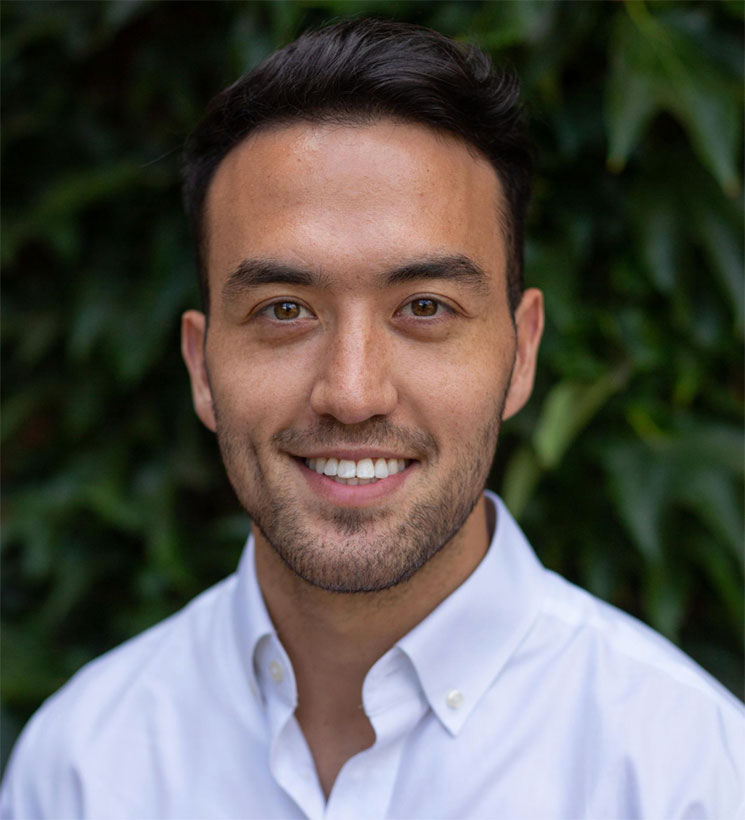
Sean
Founder, Succeed
Talk it through with Sean
“I can help you compare the programmes you're considering, think through the practicalities and work out what makes sense for you.”
20 minutes · No obligation to enrol
A practical overview of cost, accommodation, meals, dates and provider details to review before deciding.
Cost and what is included
$5,245; $3,989; includes Tuition, textbooks, and academic materials., All sponsored program activities., Residential housing and 19 meals per week., Commuter lunch Monday through Friday..
Accommodation
BU dorms; 2-3 students per room
Meals
19 weekly; commuter weekday lunches
Supervision or safety information
Residence halls have 24-hour security, full-time BU residential staff, and live-in program assistants. Residential curfew is 11 pm Sunday through Thursday and midnight Friday and Saturday.
Provider details
Review the Boston University Pre-College Programs provider page and official sources before making a final decision.
Dates and logistics
2 weeks; Boston, Massachusetts, United States.
What to check before committing
Confirm current dates, payment terms, travel arrangements, cancellation rules and what is included with the provider.
Compare this program with similar options before deciding on dates, cost, format and fit.
Compare with similar programsEffort level
Moderate to high for an introductory program.
Best started
Allow 4-6 weeks to prepare application materials and several months before your chosen session for international travel planning.
Main challenge
Sustaining academic effort while adapting to a new social and campus routine.
Choose two seminars whose activities match what you want to explore.
Gather your transcript and draft the 500-750-word personal statement before submitting.
Arrange passport, English proficiency, and health documentation early if required.
Prepare a laptop or tablet and any equipment specified for your selected seminars.
Useful if
You want to test subject interests and practice greater independence.
You take two introductory seminars and work toward a final presentation in each. Between classes, assignments, academic workshops, and organized activities give you experience of both college study and campus life.
Choose one morning and one afternoon seminar.
Attend lectures and contribute to discussions.
Complete individual work, group tasks, and subject-specific projects.
Participate in academic workshops and organized campus activities.
Present your work to each seminar class.
Receive a certificate of completion and evaluations from both instructors.
Residential Session 1
20 June-2 July 2027
Dates pending approval.
Commuter Session 1
21 June-2 July 2027
Dates pending approval.
Residential Session 2
11-23 July 2027
Dates pending approval.
Commuter Session 2
12-23 July 2027
Dates pending approval.
Residential Session 3
25 July-6 August 2027
Dates pending approval.
Commuter Session 3
26 July-6 August 2027
Dates pending approval.
Applications open
17 December
| Milestone | Date | Timezone | Status | |
|---|---|---|---|---|
Residential Session 1 | 20 June-2 July 2027 | Local | Upcoming | |
Commuter Session 1 | 21 June-2 July 2027 | Local | Upcoming | |
Residential Session 2 | 11-23 July 2027 | Local | Upcoming | |
Commuter Session 2 | 12-23 July 2027 | Local | Upcoming | |
Residential Session 3 | 25 July-6 August 2027 | Local | Upcoming | |
Commuter Session 3 | 26 July-6 August 2027 | Local | Upcoming | |
Applications open | 17 December | Local | Date not confirmed |
Enter sophomore, junior, or senior year in fall 2027.
Be at least 14 for residential participation.
Submit the application personally.
Provide required transcripts and a personal statement.
International applicants provide a valid passport copy.
Provide English proficiency scores unless English is your native language.
Commuters stay with family or an approved adult aged 18+.
Have medical or health insurance.
Program fee
$3,989; $5,245 — 2026 commuter and residential totals, respectively.
Funding or discounts
What's included
Tuition, textbooks, and academic materials., All sponsored program activities., Residential housing and 19 meals per week., Commuter lunch Monday through Friday.
Use the program's How to Apply page to access the online application.
Complete the application yourself using accurate student and parent or guardian contact details.
Upload your full transcript, including fall 2026 grades and Grade 8 results if currently in Grade 9.
Submit a 500-750-word personal statement explaining why you want to attend.
Upload passport and English proficiency documents if required.
Pay the nonrefundable $75 application fee by credit card and submit.
Monitor your Applicant Portal and email the office when uploading additional materials.
After admission, respond within one week and complete the Participation Agreement and deposit steps if attending.
Next step with Succeed
or let us know if .
Succeed replies first, usually within a working day
The program covers the following focus areas.
Health and life sciences
Explore psychology, anatomy and physiology, medicinal chemistry, infectious diseases, neuroscience, or nutrition.
Business, law, and politics
Study business plans, criminal justice, economics, finance, international politics, or the US court system.
Technology and engineering
Practice programming concepts or investigate electrical engineering through lighting technologies and experiments.
Communication and media
Develop reporting, communication projects, or an original photography portfolio.
Humanities
Explore creative writing, film and literature, philosophical debates, or original drawings and paintings.
Curriculum may be adjusted based on participant interests and current developments.
A typical day during the program.
Attend your first seminar for two hours.
Attend your second seminar after lunch.
Organized activities use the 3-5 pm or evening blocks, with weekend events too.
The residential timetable reserves this block for assignments.
Experienced college instructors teach the introductory seminars, with small classes supporting individual attention. Both seminar instructors provide evaluation letters after the session.
Seminars typically have 10-30 students.
Bathrooms are communal, and roommate requests are not accepted.
After completing this program, participants often pursue:
Receive a certificate of completion.
Receive evaluation letters from both seminar instructors.
Build presentation experience through two final class presentations.
Create subject-specific work such as a writing or photography portfolio.
Learn college-application strategies through the admissions workshop.
The program does not award college credit.
Summer Challenge takes place at Boston University in Boston, with campus libraries, dining halls, and residence halls forming part of the experience. Organized activities introduce the city, while campus free time can include the BU Beach overlooking the Charles River.
Off-campus free time requires a companion, staff notification, and compliance with program boundaries.
Compare these options if you prefer a broader online experience or a more focused subject program.
Online study spanning humanities, science, and social sciences
Best for
Students seeking academic exploration from home
Online academic study across business, computing, writing, and science
Best for
Students comparing online academic subjects
Explore how Italian companies achieve global excellence
Best for
Students prioritizing business over broad exploration
Save this program in Succeed to compare it with similar programs, dates, costs and formats in one place.
Compare with other programsContent reviewed by
Co-founder, Succeed | Founder, Immerse Education (2012–2026)
Sean works at the intersection of academic enrichment, program quality and university preparation, with expertise in evaluating pre-university experiences for ambitious secondary school students.
Succeed uses official provider information where available, but keeps this public page focused on comparison and planning inside Succeed.
Official program pages reviewed
Eligibility and application requirements checked
Session dates reviewed
Historical fees distinguished
Scholarship provision checked
Housing and supervision reviewed
We use source material to verify core facts, then show older cycle dates as reference when a current cycle is not available. Always check current application instructions before applying.
Summer Challenge
by Boston University Pre-College Programs
May qualify for the £300 Succeed Programme Award.
Get the full picture before you decide
Request your Program Guide. We'll email it within 24 hours.
No account needed to compare programmes.