Summer High School Academic Program for Engineers (SHAPE)
Applications open
In person in New York, engineering and AI, ages 14 to 18, from $6,241.
16 Dec 2026 · From $6,241 · 14-18 · New York · In-person
by Stanford Pre-Collegiate Studies
You apply for up to three courses from a catalog of more than 85, on topics from artificial intelligence and engineering to philosophy and creative writing, and if you're admitted you study one of them live online with a small class for two weeks. Classes meet for two hours every weekday, with one to three hours of independent work a day on top. There are no grades or credit, and you finish with a certificate of completion and a written evaluation from your instructor.
 Sean Stevens · Sources
Get the key facts by email
The dates, costs and how to apply, then 2 reminders: 18 Feb (2 weeks before) and 1 Mar (3 days before).
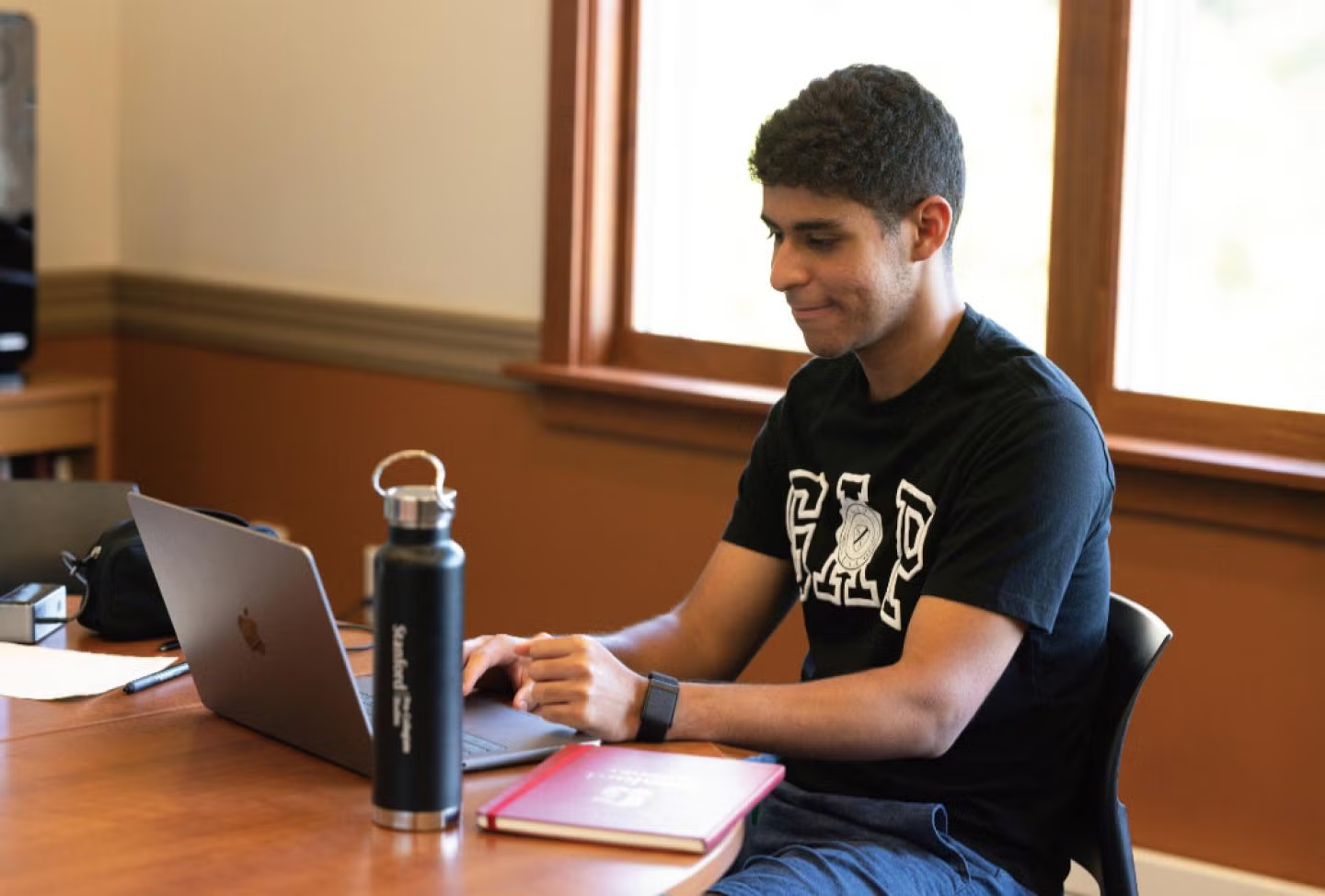
Why it's worth it
You spend two weeks in a small live class on a single subject, taught by an instructor who built the course around their own research, and need-based aid, including full awards, is open to international families as well as US ones.
What it asks of you
Your full attention at fixed Pacific Time hours, which can mean classes late at night or before dawn depending on where you live, and a proper application with transcripts, a work sample and a teacher recommendation.
Who should skip it
Students who want to live and learn on a campus, because every part of this program happens on a screen. The Summer High School Academic Program for Engineers (SHAPE), run by Columbia University Pre-College Programs, is in person, with fees from $6,241.
Each course meets live on video for two hours every weekday, Monday to Friday, and class time is built around real-time discussion with your instructor and classmates. Every course runs in one of two blocks. In the morning block, class runs from 8:00 to 10:00am Pacific Time with optional office hours until 11:00am, and in the afternoon block it runs from 4:00 to 6:00pm with office hours until 7:00pm. The block comes with the course, so work out the times in your own time zone before you rank a course.
Attendance is strict. Stanford Pre-Collegiate Studies expects you at every class with your camera and microphone on, and missing more than one class can cost you the certificate of completion. Homework is set daily to prepare for the next class and might be readings, problem sets, presentations or projects. Recordings of your class stay available until the end of August.
Optional student life events mostly run between 12:00 and 2:00pm Pacific Time and are recorded where possible. They include guest speakers, college essay and college life workshops, a panel of undergraduates and usually a talk from Stanford's undergraduate admission office, and each session ends with a virtual closing ceremony that families can join.
Computer
You need daily access to a computer that runs current browsers and software, since phones and tablets aren't recommended.
Connection
A reliable broadband connection that handles video calls, and Stanford Pre-Collegiate Studies strongly recommends plugging in with an ethernet cable.
Camera and audio
A webcam for daily participation, plus headphones or a headset so your microphone doesn't cause echo.
Space
A quiet room where you're comfortable being on camera with instructors and classmates.
Most instructors are Stanford University affiliates, chosen by Stanford Pre-Collegiate Studies for their expertise and their experience teaching students in this age group. They're active researchers who design their own courses around their specialty and newer research in it, and classes average 16 students.
Instructors work on contract, so you won't get their contact details before the program starts. Because the courses aren't graded, the curriculum can change from year to year, and you'll get a syllabus or course overview when the course begins. No reading or assignments are required beforehand, although some instructors get in touch early if they want you to read or get hold of something.
You leave with a certificate of completion, a course profile describing your work in class and a written evaluation from your instructor. The courses are ungraded and carry no credit, so nothing appears on a school transcript.
Stanford Pre-Collegiate Studies is direct about college admissions. Stanford's undergraduate admissions process is separate and independent from the program, and taking part doesn't guarantee admission. In its view, what counts on a college application is what you learned and how you grew, not the fact that you attended.
You can apply if you're in grade 8, 9, 10 or 11 when you submit, but many courses take only part of that range and Stanford Pre-Collegiate Studies makes no exceptions to grade limits. Admission is selective and every application is read as a whole, with reviewers weighing your grades, the work sample each course asks for and why you want to come. There's no GPA or test-score cutoff, and Stanford Pre-Collegiate Studies doesn't publish an acceptance rate or cohort size.
You can rank up to three courses, but you'll be admitted to one at most, chosen as the best fit for your preferences, your preparation and the space available. You can't switch courses afterward, and listing more courses doesn't improve your chances.
Test scores
They're optional and won't decide the outcome. If you send one, it must be from an accepted test such as the SAT, ACT, PSAT, SSAT, ISEE or an AP exam, taken no earlier than September 2024.
English
You need to be fluent in English, but TOEFL and IELTS (English proficiency tests) aren't required and shouldn't be uploaded.
Translations
Transcripts and recommendations must be in English or translated, with the original and the translation in one uploaded file, and the translation doesn't need to be official.
Your own words
You write every answer yourself, while parents only review and sign, and misrepresentation can lose you the offer.
Past participants
Preference goes to students who haven't attended before, though returning students can apply for a course they haven't taken.
Plan on $3,250 in tuition plus the $65 application fee, and up to $100 more if your course needs readers or textbooks, so about $3,415 at most before any aid. The classes are online, so there's no housing or travel to add. Tuition has to be paid in full, because Stanford Pre-Collegiate Studies doesn't offer installment plans.
The application fee and the program deposit aren't refundable, with one exception. If you applied for aid and weren't given enough to attend, you get the deposit back when you decline. Withdrawing before the program starts takes a written request by email, requests after the refund deadline get nothing back, and leaving partway through brings no refund either. It's worth confirming the deposit amount and the refund deadline before you pay.
Need-based aid, partial or full, is open to US and international families, and applying for it doesn't affect your admissions decision, although Stanford Pre-Collegiate Studies describes the aid as limited. Families file the Ravenna Financial Aid Parents' Financial Statement (school code 200189) by 11 March 2027, pay a $60 nonrefundable fee unless they qualify for a waiver, and upload their 2025 tax or income documents by 18 March 2027. International families also complete an International Student Financial Aid Profile form and translate any documents that aren't in English.
Applications go through the Summer Institutes admissions page, and there's a single round with no extensions.
Read the applicant privacy notice with a parent or guardian, who has to submit the application with any student under 18.
Once the application opens in early December 2026, create an account in the student's legal name.
Rank up to three courses from the 2027 catalog and prepare the work sample each one asks for.
Upload unofficial transcripts covering fall 2025 through fall 2026 and pay the $65 fee by credit card, or ask for a fee waiver.
Check that at least one teacher recommendation has arrived, since chasing it is your job, and submit everything by 11:59pm Pacific Time on 4 March 2027, because nothing can be changed afterward.
Decisions arrive by email in early May 2027 and can't be appealed.

Sean
Talk it through with Sean
“I can help you compare the programs you're considering, think through the practicalities and work out what makes sense for you.”
In person in New York, engineering and AI, ages 14 to 18, from $6,241.
16 Dec 2026 · From $6,241 · 14-18 · New York · In-person
In person in Cambridge, broad STEM subjects, ages 14 to 18, from £6,995.
Deadline: Not announced yet · From £6,995 · 14-18 · Cambridge · In-person
Save this program in Succeed to compare it with similar programs, dates, costs and formats in one place.
Compare with other programsspcs.stanford.edu · Official page
summerinstitutes.spcs.stanford.edu
summerinstitutes.spcs.stanford.edu
summerinstitutes.spcs.stanford.edu
summerinstitutes.spcs.stanford.edu
summerinstitutes.spcs.stanford.edu
summerinstitutes.spcs.stanford.edu
summerinstitutes.spcs.stanford.edu
Facts checked against the official page on 11 Nov 2026
Editor: Sean Stevens
Succeed has no commercial relationship with Stanford Pre-Collegiate Studies.
Spot an error? Report it