
In-person guitar seminar in Los Angeles, ages 15 to 18, from $8,130.
Deadline: Not announced yet · From $8,130 · 15-18 · Los Angeles · In-person
Acting is a three-week course in Brown University's Summer@Brown pre-college program in Providence, built around scene work from real plays. You analyze and rehearse scenes with classmates, practice voice, movement and improvisation, and try mock auditions, with several in-class presentations and a final presentation open to the public. In 2026 it met on weekday afternoons from 22 June to 10 July, and students could live on campus or commute.
Get the key facts by email
The dates, costs and how to apply, all in one place.
Why it's worth it
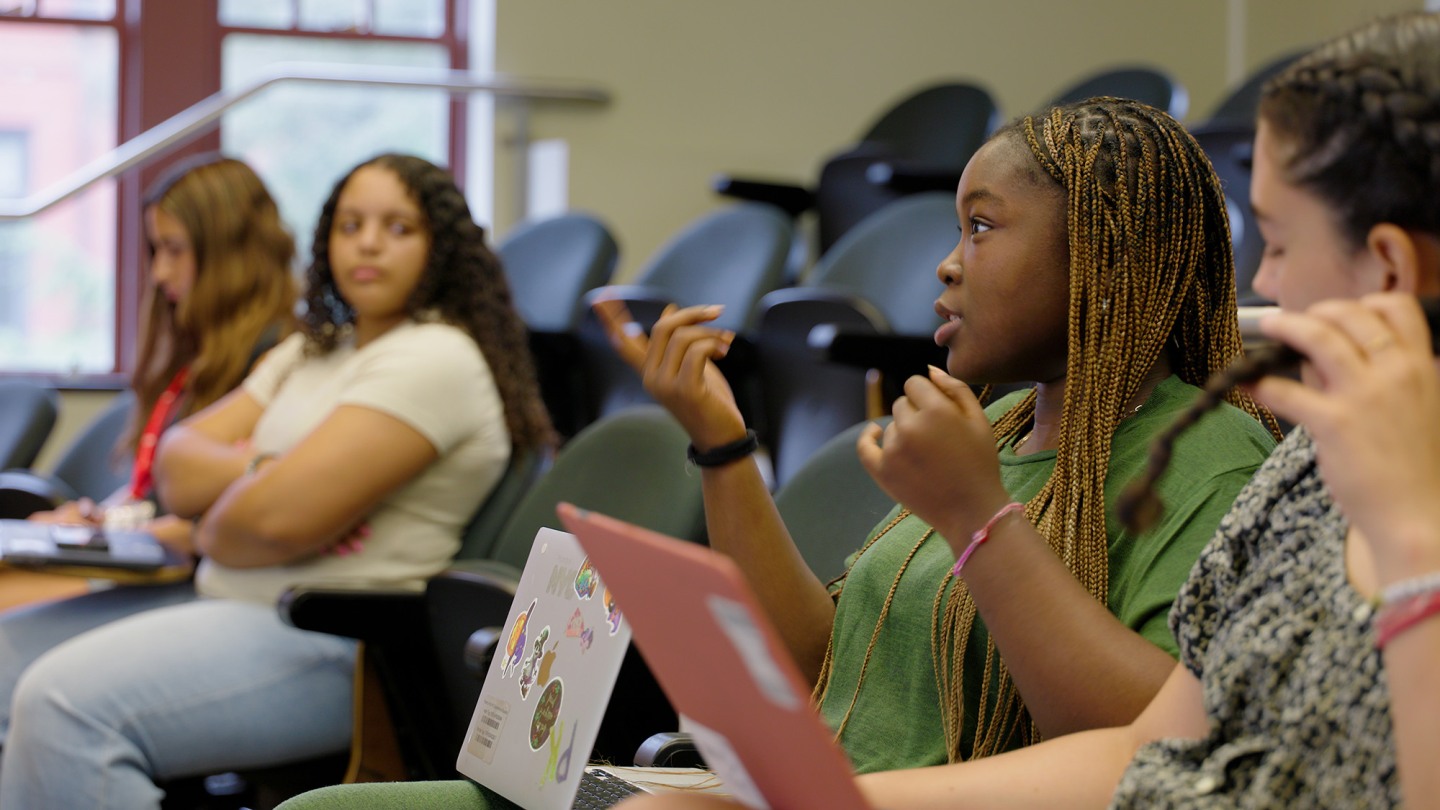
It's a studio course where every class involves acting, with scenes from plays by writers who may include Branden Jacobs-Jenkins, Julia Cho and Kenneth Lonergan, mock auditions and a final presentation the public can watch. Brown is clear that beginners are as welcome as experienced actors, and doing it on campus alongside students from other courses gives you a real trial run at college life.
What it asks of you
Brown requires you at every class and expects daily work outside it, much of it rehearsing with your scene partners. The bigger ask is money, since the 2026 residential fee topped $8,000 before travel to Providence.
Who should skip it
Students who want acting to fill their whole day, because the class takes up an afternoon block and the rest of the day is homework, rehearsal and optional activities that you organize yourself.
In summer 2026 Acting met every weekday from 12:15 to 3:05 p.m., so your mornings were your own and your afternoons started in the studio. Each class mixes acting exercises with scene work, you give each other feedback as you go, and there are several in-class presentations before the final one, which is open to the public.
The work doesn't stop when class ends. Brown expects 2 to 3 hours of out-of-class work a day, and for this course that includes rehearsing scenes with classmates, so you'll be fitting rehearsals around other people's plans. Residential students eat three meals a day in the dining halls and attend residence hall meetings two or three times a week. Around those fixed points Brown runs free workshops on things like time management and college applications, social events and excursions to places such as local beaches, all of which you can join or skip.
The 2026 section was taught by Janett Bass and Constance Crawford. Brown doesn't say what their backgrounds are or how big the class is, so if either matters to you, ask a Program Advisor.
Brown says much more about the approach. Most of the work is realistic performance, drawing on techniques from Uta Hagen, Robert Lewis, David Ball and Sonia Moore, among others, with improvisation, voice and bodywork alongside. Voice work draws on readings from Patsy Rodenburg, and the collaborative side on writers such as Augusto Boal and Keith Johnstone. Instructors also hold office hours, which Brown encourages you to use to talk through your work.
In 2026 anyone finishing grades 9 to 12 and aged 14 to 18 by 14 June 2026 could apply, and the course itself needs no acting experience. You apply to Brown's Pre-College Program as a whole rather than to one course, and Brown reviews applications holistically, weighing grades, motivation, interests and English. It says not every applicant is admitted, and decisions usually arrive within 15 business days of a complete application.
Admission doesn't hold you a place in Acting. Once admitted, you pay a $500 non-refundable deposit and then enroll yourself, and courses fill as students sign up, so a full course means joining a waitlist. In 2026 self-enrollment for on-campus courses closed three weeks before each course started.
Essay
250 to 500 words on one of two prompts, either a school subject you can't get enough of or a time you tried something new.
Grades
All grades from the current and previous school year, in English. Unofficial transcripts, report cards or a portal screenshot showing your name are accepted.
Recommendation
Optional, but Brown strongly suggests one if you'll be under 15 on 14 June 2026 or have any grades of C or below.
English test
International students whose first language isn't English send TOEFL iBT or Duolingo English Test scores. Brown says successful applicants generally score at least 130 on Duolingo, or at least 5.5 on a TOEFL iBT taken from January 2026 (105 on an earlier one).
Fee
$80 and non-refundable, although eligible students at U.S. schools, such as those who qualify for free or reduced-price lunch, can ask for a waiver.
In 2026 the course cost $8,372 if you lived on campus and $6,416 if you commuted. The residential price was made up of a $5,948 course fee, $1,182 for housing, $1,128 for meals and a $114 wellness fee, and it covered your room, three meals a day and the fitness center and pool. Commuters paid the same course fee plus a $468 commuter fee, and got one dining hall meal a day, the fitness center and free rides on RIPTA, Rhode Island's public transit, with a Brown ID, but no room.
On top of that came the $80 application fee and an $80 accident insurance plan that was compulsory for international students and for U.S. students without health insurance. Travel to Providence, any required course materials and spending money are extra, and paying the balance by card adds a processor fee of 2.95% for U.S. cards or 4.25% for international ones. Activities and excursions are included.
Need-based Sibley Scholarships are open to U.S. citizens, permanent residents and certain other U.S. residents, and are awarded first come, first served until the money runs out. Students at Providence Public School District schools who complete the scholarship form by its deadline and are admitted get a full scholarship. Brown offered no merit aid and no scholarships for international students in 2026.
The $500 deposit is never refunded unless Brown cancels your course and you don't switch to another one. If you withdrew in writing, Brown refunded what you'd paid on a sliding scale set by the date of your withdrawal, which for 2026 courses starting 22 June ran as follows.
| Written withdrawal (2026) | Refund of payments made |
|---|---|
| On or before 15 June | 100%, less the $500 deposit |
| 16 to 23 June | 80% |
| 24 to 27 June | 50% |
| After 27 June | None |
Residential students live in Brown residence halls with trained Student Life staff, including Resident Assistants who live alongside them. Every night they check in face to face with staff by 10 p.m. and stay on their floor until 6 a.m., and if a student isn't accounted for at curfew, staff call the parents. Staff are on call 24 hours a day while the program runs, and the full rules are in Brown's Handbook of Pre-College Policies.
Outside class and curfew, students get real freedom. They can travel anywhere in Rhode Island without supervision or parental permission, while leaving the state needs a form from a parent at least 24 hours ahead. Staying away overnight needs the same notice and is allowed only for reasons such as family circumstances, religious commitments or a rare opportunity. Parents can't enter residence halls except to move students in and out, and families arrange all travel to and from campus on the assumption that students arrive and leave without help.
Health care
Brown Health Services is open weekdays from 8 a.m. to 4 p.m., a nursing line runs around the clock, and medical emergencies generally go to Hasbro Children's Hospital in Providence.
Campus safety
Brown's own police department patrols campus 24/7, blue light emergency phones sit across campus, and students can call Protocall, a 24/7 mental health hotline.
Rooms
Single, double or triple rooms, with roommates usually within a year of age. Roommate requests aren't honored.
Vaccinations
In-person students must show proof of required immunizations, including MMR, Tdap, meningococcal, chickenpox and hepatitis B.
If you complete the course successfully, you get a digital Certificate of Completion and, because Acting runs two weeks or longer, a Course Performance Report. That report is your instructor's assessment of your work, normally with comments on how you engaged and a short narrative, and in 2026 Brown scheduled both for September. Attendance is required, and missing classes can cost you the certificate.
You don't get credit, a grade or a transcript. Brown also says its Pre-College Program isn't a recruiting route into Brown undergraduate admission. What you take away in practice is experience of mock auditions and a clearer sense of what makes good audition material, along with voice and public-speaking techniques practiced in class.

Sean
Talk it through with Sean
“I can help you compare the programs you're considering, think through the practicalities and work out what makes sense for you.”
In-person guitar seminar in Los Angeles, ages 15 to 18, from $8,130.
Deadline: Not announced yet · From $8,130 · 15-18 · Los Angeles · In-person
In-person art program in St Andrews, ages 13 to 18, from £8,650.
Deadline: Not announced yet · From £8,650 · 13-18 · St Andrews · In-person
In-person art program in Pittsburgh, ages 16 to 18, from $12,631.
01 Mar 2027 · From $6,400 · 16-18 · Pittsburgh · In-person
Save this program in Succeed to compare it with similar programs, dates, costs and formats in one place.
Compare with other programscatalog.precollege.brown.edu · Official page
precollege.brown.edu
precollege.brown.edu
precollege.brown.edu
precollege.brown.edu
precollege.brown.edu
precollege.brown.edu
Facts checked against the official page on 10 Nov 2026
Editor: Ben Stacy
Succeed has no commercial relationship with Brown Pre-College Programs.
Spot an error? Report it