

Architecture High School Course
Applications open
Succeed has a commercial partnership with this provider.
Architecture
21 Feb 2027
From $3,298
14-18
Berkeley
In-person
by Columbia University Pre-College Programs
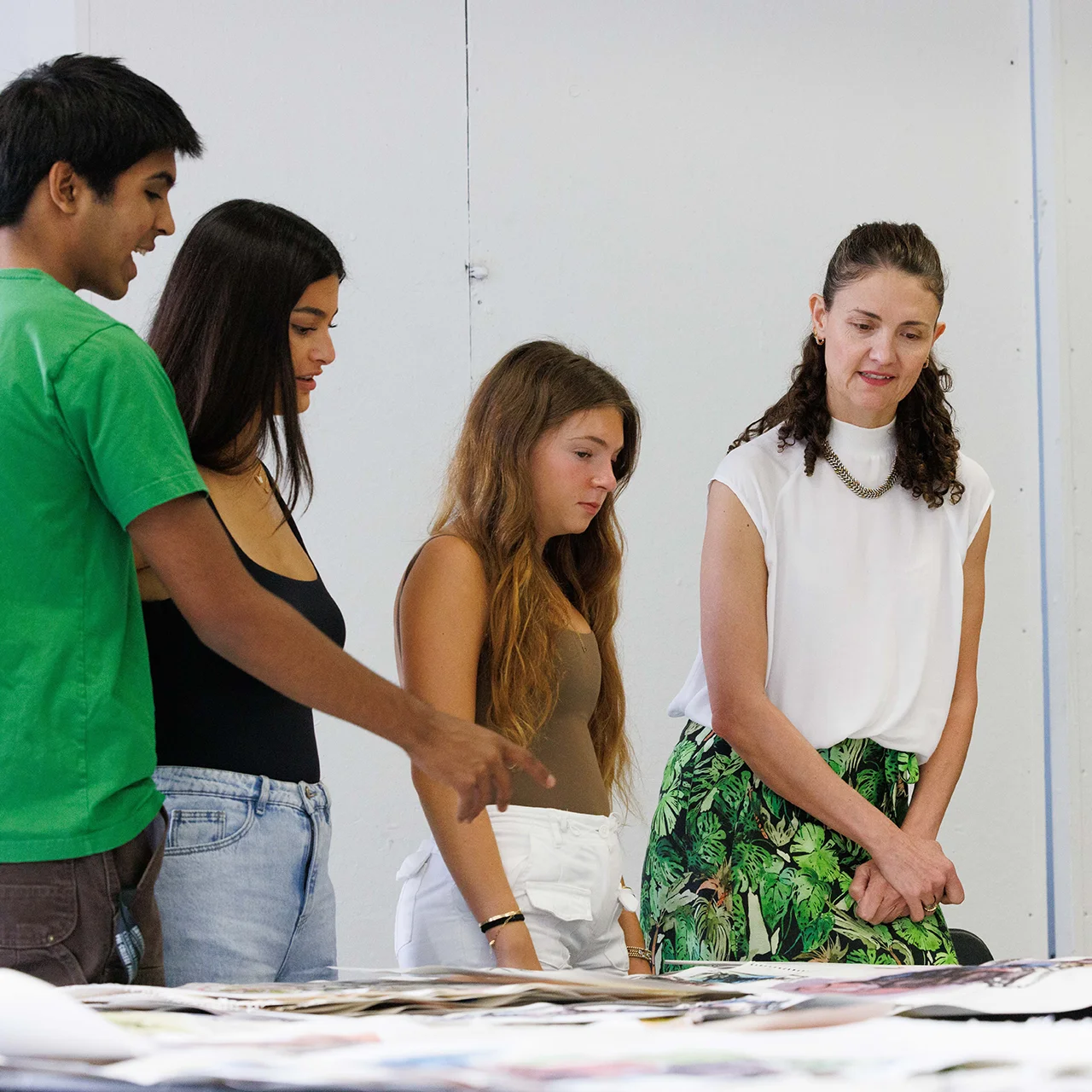
Over five weekdays on Columbia's campus in New York City, you take one design project from abstract form-making through rounds of instructor and peer critique to a finished architectural or spatial design proposal. Along the way you learn the hand-drafting, model-making and drawing methods architects use, and you leave with a project that can form the basis of a portfolio. The course runs within Columbia's NYC Commuter Summer program, so you travel in each day for a morning class block and an afternoon one.
Get the key facts by email
The dates, costs and how to apply, then 2 reminders: 18 Mar (2 weeks before) and 29 Mar (3 days before).
Succeed's assessment
In short
Why it's worth it
In five days you take one project through repeated critiques, from abstract forms to a finished design proposal, using the hand-drafting and model-making methods architects rely on. That's a concrete way to find out whether architecture suits you, and you come away with real work to show for it.
What it asks of you
About four hours of class a day plus, Columbia says, an hour or two of homework a night, and missing more than one class in a one-week session costs you the certificate. With no housing or meal plan, daily travel and lunches are on you.
Who should skip it
Students who'd have to come from far away with no family in the area, because the course runs only as a commuter program and Columbia requires commuters to live with a supervising family member or family friend, never in a hotel, Airbnb or hostel.
Getting in isn't the same as getting this course
Columbia admits you to the commuter program, and you only register for a course after paying the deposit. Courses often fill before the deadline and there's no waitlist, so an early application gives you the best chance at a seat.
Class runs Monday to Friday in two blocks of just under two hours, and the section you register for sets your times. Section 001 meets 9:10 to 11:00 a.m. and 1:10 to 3:00 p.m., while Section 002 meets 11:10 a.m. to 1:00 p.m. and 3:10 to 5:00 p.m., all Eastern Time.
The two-hour gap between blocks is for lunch and campus activities, and Columbia's sample commuter schedules fill the later afternoon with Master Class Moments, where instructors talk about their specialties, and college workshops. Commuters can stay for early evening events but must leave campus by 6:30 p.m. Monday to Thursday, and they can join Friday evening events with a parent's permission. There's no meal plan, so lunch comes from the campus dining halls, which serve vegetarian, vegan, kosher and halal food, or from places nearby.
The week starts with check-in at Lerner Hall on 21 June 2027, between 7:00 and 8:30 a.m. if your class starts at 9:10, or between 9:00 and 10:30 a.m. if it starts at 11:10.
You leave with a finished architectural or spatial design proposal that Columbia says can form the basis of a portfolio, along with practice in hand-drafting and model-making. If you complete the course, you also get a Columbia University Certification of Participation and an evaluation letter in which your instructor comments on your effort, participation, progress and potential in the field. Both are usually ready to download from your applicant portal by mid-October.
There are no grades and no college credit. Columbia suggests asking your school counselor to add the two documents to their recommendation letter when you apply to college.
Students entering grades 9 to 12, or their first year of college, can take this course, and international students are welcome to apply. Columbia calls admission selective but sets no minimum GPA and doesn't ask for SAT or ACT scores, so your application has to show you have the background, motivation and maturity to keep up. Non-native English speakers don't need to send test scores, although Columbia expects English at about the level of 90 on the internet-based Test of English as a Foreign Language (TOEFL) or 6.5 on IELTS.
Alongside the $95 fee, you send an unofficial transcript, a recommendation from a current teacher, a second one from a school counselor or administrator, which commuter applicants must provide, and answers to two short questions. Columbia publishes no acceptance rate or class size, and decisions arrive three to five weeks after your file is complete.
The week costs $2,883, Columbia's estimate for summer 2027 pending Board of Trustees approval, and that covers the course along with activities, health services and technology fees. On top of it come the $95 application fee, a $75 course fee that Columbia's Summer 2026 fees list gives for this course, and about $75 of basic studio supplies the course page asks you to buy before class. That's roughly $3,130 in all ($2,883 + $95 + $75 + $75), before daily travel and lunches.
A $1,000 deposit, due when you're accepted, holds your place and counts toward the total, but it's never refunded. The balance is due by 11 June 2027, there's no payment plan, and paying by card adds 2.85% on a domestic card or 4.25% on an international one. Withdraw by 17 June 2027 and you get everything back except the deposit, but after that date you owe the full cost.
Need-based aid covers 25% to 50% of the program cost, though not the fees, for US citizens and permanent residents living in the United States or its territories. You have to flag that you're applying for aid before you submit the application, the aid deadline is 10 February 2027, and the limited funds go out on a rolling basis.
Commuters are on campus only by day, and Columbia keeps them within set limits. Its 2025 commuter guide says students must stay between 110th and 120th Streets and between Amsterdam Avenue and Riverside Drive, keep out of Riverside and Morningside Parks, and use the subway only to get home. Attendance is taken in both class blocks, and parents are expected to tell the Student Services Office about any absence.
Columbia's Public Safety department runs Columbia University EMS, 24-hour guard booths and safety escorts, and Columbia suggests the main gates at 116th Street on Broadway or Amsterdam for daily pick-up because they're close to a public safety kiosk. Instructors have had background checks and Protection of Minors training, and program staff are New York State mandated reporters. Every student needs their own medical insurance, since Columbia offers no plan. Students and parents also sign the Community Standards, and breaking them normally means dismissal on a first offense, with no refund.
Applications go through Columbia's summer programs application.
Create an account, choose NYC Commuter Summer Session AA, and list this course among your top two choices.
If you need financial aid, say so in the application before you submit, because it can't be added afterward.
Submit by 1 February 2027 to qualify for early course registration, or by the general deadline of 1 April 2027.
Expect an emailed decision three to five weeks after all your materials are in.
If you're admitted, pay the $1,000 deposit, then submit proof of immunization and the enrollment forms, including the commuter eligibility verification.
Register yourself for the course and the section you want once your holds clear, with early registration starting 3 March 2027 and general registration on 17 March 2027.

Sean
Founder, Succeed
Talk it through with Sean
“I can help you compare the programs you're considering, think through the practicalities and work out what makes sense for you.”
20 minutes · No obligation to enroll
Succeed has a commercial partnership with this provider.
Succeed has a commercial partnership with this provider.
Save this program in Succeed to compare it with similar programs, dates, costs and formats in one place.
Compare with other programsprecollege.sps.columbia.edu · Official page
precollege.sps.columbia.edu
precollege.sps.columbia.edu
precollege.sps.columbia.edu
precollege.sps.columbia.edu
precollege.sps.columbia.edu
Facts checked against the official page on 11 Nov 2026
Editor: Ben Stacy
Succeed has no commercial relationship with Columbia University Pre-College Programs.
Spot an error? Report it
Not ready to decide yet? Keep it for later.