
In person in Milan, ages 15 to 18, from €2,950, several sessions.
Deadline: Not announced yet · From €2,950 · 15-18 · Milan · In-person
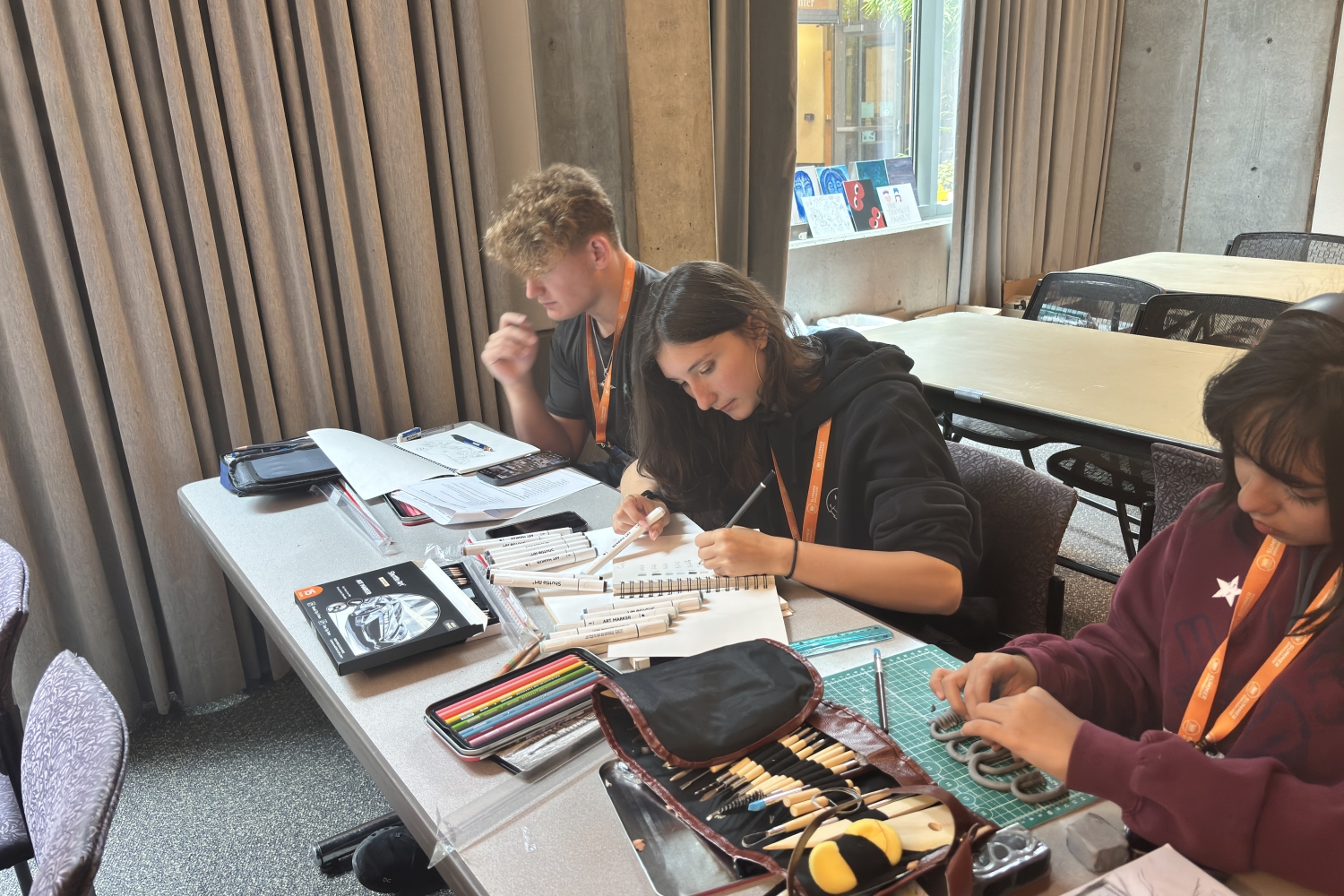
Over two weeks at Barnard College in New York or on the Berkeley campus in California, you take one architecture course. It's made up of nine three-hour morning studio classes in which you take a design from hand sketches to digital scale models. Afternoons add visits to architecture firms, guest speakers and college-prep workshops, and you finish with a portfolio of your final presentation. Summer Springboard runs the course, and you can either live in the dorms or commute.
Get the key facts by email
The dates, costs and how to apply, then 2 reminders: 2 May (2 weeks before) and 13 May (3 days before).
Why it's worth it
The instructors are the draw. Barnard's two sessions are led by a Cooper Union architecture professor and a designer who teaches at Columbia's architecture school, and Berkeley's by a San Francisco architect with more than 30 years of experience, while past groups have toured firms such as KPF Architects in New York and Feldman Architecture in the Bay Area.
What it asks of you
Mostly money and two weeks of your summer. A residential place costs more than $6,300 once the mandatory fees are added, while the academic bar is modest: Summer Springboard asks for a 3.0 GPA and a completed 8th grade.
Who should skip it
Students who already draw and build models seriously and want a substantial studio project, because nine morning classes only leave room for an introduction, with afternoons split between the course, college-prep workshops and recreation. Students who need credit should know these campuses award none.
The architecture course takes up your mornings, meeting from 9am to noon on five days in the first week and four in the second, for nine three-hour sessions in all. Sessions that start on 5 July 2027 (Barnard's Session 1 and Berkeley's Session 4) begin on a Monday because of the holiday, so classes run Tuesday to Friday that first week and Monday to Friday the next.
Afternoons are shared with the rest of the program. From 1:30pm you're on Academics in Action, which covers course excursions, guest speakers and instructor-led project work, or a recreational activity, and from 3:30pm on College Readiness Workshops, the True You reflection sessions or more Academics in Action. Over the two weeks you pick two 90-minute workshops from Speaking with Confidence, Mastering Money, Developing Leadership and Prepping for College & Career. Past architecture groups at Barnard visited Obra Architects, KPF Architects, Transsolar and Bone-Levine, while Berkeley groups went to Siegel & Strain Architects, Aidlin Darling Design and Feldman Architecture.
Commuters head home between 5pm and 5:15pm, while residential students have dinner at 6pm, clubs or evening activities at 7pm and night checks at 10:30pm. Weekend excursions are included for residential students, and the trips Summer Springboard lists include Top of the Rock and a Circle Line boat tour in New York, or a San Francisco scavenger hunt and an amusement park day from Berkeley.
At Barnard, the session you pick decides who teaches you. Session 1 is led by Guido Zuliani, a registered architect since 1982 and a Distinguished Professor in Architecture at the Cooper Union, whose projects include a design commission for a railway station in Pompei and a 150,000-square-foot residential building in Milan. Session 2 is taught by Emma Sumrow, an architectural designer who teaches at Columbia University's Graduate School of Architecture, Planning, and Preservation and at the New Jersey Institute of Technology, and who previously worked at Bernard Tschumi Architects.
Berkeley's instructor is Dave Kesler, a San Francisco architect with more than 30 years of experience who runs his own firm, Dave Kesler Architecture, which has designed over 200 projects. Summer Springboard doesn't publish a class size, though it says morning classes break into small groups by course.
You leave with a portfolio of your final presentation, including hand drawings and digital scale models. At Barnard the project is a proposal for a new downtown building, taken from first sketches to computer-assisted designs, and at Berkeley the course ends with a project on mimetic design at Inspiration Point in Tilden Regional Park.
Every student also gets a completion certificate and a letter of recommendation from their instructor. There's no college credit at either campus. Summer Springboard pitches the portfolio as material for architecture or design applications, but how much weight it carries is up to each college.
Getting in depends on meeting Summer Springboard's requirements, since courses fill first come, first served rather than by competition. You need to have finished 8th grade by the start date and to have a 3.0 GPA or the local equivalent, and students who graduated from high school that spring can enroll too. International students prove their English through a phone interview or a minimum score of 490 on the paper TOEFL or 60 on the iBT, Cambridge PET with Distinction or FCE at grade C, or 450 in SAT Reading and Writing.
The application includes short-answer essay questions and signed agreement forms. It takes about 30 minutes, the student has to be there to complete it, and a decision comes within 5 to 7 business days. After the first wave closes on 21 February 2027, and again after 18 April 2027, some programs close and move to a waitlist, and enrollment ends on 16 May 2027. Students with a health condition may be asked for medical documentation, and Summer Springboard points out that it isn't a therapeutic program.
With the mandatory $250 Architecture supplement and the starting $99 application fee, a residential place comes to $6,347 at Barnard and $6,647 at Berkeley, and a commuter place to $3,647 at either campus. Those totals use the tuition Summer Springboard charges for applications made by 30 November 2026. Tuition rises on 1 December 2026, and the new figures haven't been published. The application fee also goes up, to $149 after 21 February 2027 and $199 after 18 April 2027.
Residential tuition covers all meals, your room, the course and weekday and weekend excursions. Commuter tuition covers lunch, the course, excursions and programming from 9am to 5:15pm on weekdays, and weekend excursions cost $125 a day on top. Flights, health insurance and airport transfers are extra, with group transfers at $95 each way.
You pay a $600 deposit and the application fee when you apply. If you apply before 10 March 2027, the balance falls due in three installments on 10 March, 10 April and 10 May, and payments after 10 May carry a $150 late fee. Summer Springboard refunds all tuition except the application fee if you cancel before 1 March. From 2 March it keeps the deposit, from 2 April you get 75% of tuition back, after 1 May 25%, and after 1 June nothing. An optional $699 Tuition Protection Plan, bought when you apply, lets you cancel for any reason up to the start day and get back everything you've paid except the $699 itself. Need-based scholarships cover up to 30% of residential tuition or 60% of commuter tuition, though never the deposit or application fee.
Summer Springboard staff live on every residence floor at both campuses, and other staff, including the Campus Director at Barnard, live in the dorms or on campus and are available 24 hours a day for emergencies. At Barnard, students must also be in their rooms after 10pm.
At Barnard you live in gender-separated suites, in a single or shared room with a shared bathroom, inside access-controlled dorms patrolled by Barnard Security 24 hours a day. At Berkeley you share a room without air conditioning in a freshman residence hall, on a gender-segregated floor with 24-hour security and electronic keys. You eat breakfast in a dining hall there and other meals at local restaurants, and staff supervise all Berkeley excursions. Summer Springboard expects students to manage their own medication, and most Code of Conduct breaches mean being sent home at the family's expense with no refund.

Sean
Talk it through with Sean
“I can help you compare the programs you're considering, think through the practicalities and work out what makes sense for you.”
In person in Milan, ages 15 to 18, from €2,950, several sessions.
Deadline: Not announced yet · From €2,950 · 15-18 · Milan · In-person
Career-focused architecture and design in London, ages 15 to 18, from £3,745.
Deadline: Not announced yet · From £3,745 · 15-18 · London · In-person
Five days in New York, 21 to 25 June 2027, from $2,883.
01 Feb 2027 · From $2,883 · 14-18 · New York · In-person
Save this program in Succeed to compare it with similar programs, dates, costs and formats in one place.
Compare with other programsOfficial page
link.summerspringboard.com
link.summerspringboard.com
summerspringboard.com
summerspringboard.com
summerspringboard.com
summerspringboard.com
summerspringboard.com