
Business & Economics
Deadline: Not announced yet
From $6,300
14-18
Durham
In-person
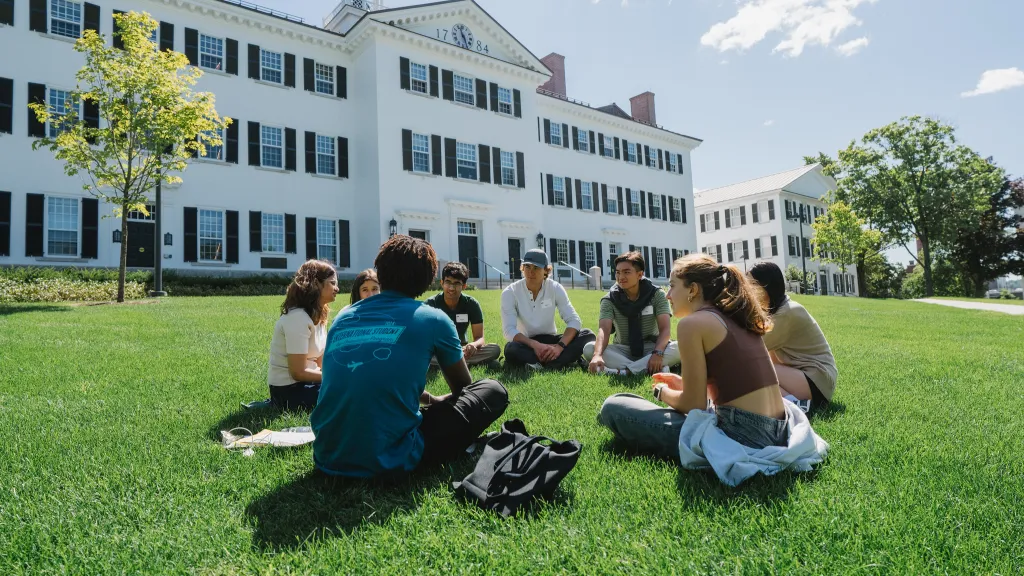
Dartmouth Precollege runs two-week, noncredit summer courses for high school students across six sessions in summer 2027, and each student takes one course per session. Classes take up about five hours a day and are taught mostly by Dartmouth faculty, lecturers and graduate scholars. Most courses end in a team project or presentation. Most courses meet on Dartmouth's Hanover campus, three introductory courses open to 14-year-olds are taught at Kimball Union Academy in nearby Meriden, and a few spend part of the session at a mountain lodge.
 Sean Stevens · Sources
Succeed's assessment
In short
Why it's worth it
You spend two weeks on a single subject, at about five hours of class a day, and most courses build to something real, such as a company valuation, a UN Security Council simulation or a clean energy plan presented to a panel. Dartmouth also links its levels, so a 14-year-old can start with an introductory course at Meriden and qualify for an advanced course in a later summer.
What it asks of you
Residential tuition starts at $8,299 for two weeks before travel, and Dartmouth offers no financial aid for on-campus courses. Advanced courses also expect prior experience in the subject, such as a related class, club or activity.
Who should skip it
Students who need credit or a grade for their transcript, because the courses are noncredit and what you take home is a certificate of completion and a short written evaluation from your instructor.
Your course isn't guaranteed to run
Each course needs at least 10 students and is confirmed by 1 March 2027, and once the session begins you can't switch to a different course.
Dartmouth takes rising 9th to 12th graders aged 14 to 18 at the time of the program who have finished 8th grade and haven't yet graduated, from the US and abroad, homeschoolers included. Your age decides where you can study, because 14-year-olds can only take the three introductory courses at Kimball Union Academy, which are Business Foundations, Introduction to Engineering and Foundations in Medicine, and none of them has a prerequisite.
On the Hanover campus, some courses need no background while advanced ones such as Research & Lab Work in Medicine or The Genetic Basis of Human Disease expect a related course, club or extracurricular, and finishing one of the Meriden courses counts. Spanish Language Intensive asks for Spanish II. Admission is competitive and Dartmouth places you in the course it judges the best fit, although it publishes no acceptance rate, and children of Dartmouth alumni get no preference.
Class runs from 9 a.m. to noon and from 2 to 4 p.m. on weekdays, with breakfast from 7 a.m. and a long lunch in between, and the afternoon block is mostly project work with your instructor and course assistants. After class come workshops and clubs, then dinner, and evenings are for homework, activities run by residential staff or just hanging out before a curfew that's set at orientation.
On Saturdays residential students go on a staff-led trip, which might be a ball game or museums in Boston, while Sundays are looser, with time for campus, downtown Hanover or a hike on the Appalachian Trail. Commuters arrive between 8 and 8:30 a.m. and can stay for clubs until 6 p.m. and evening activities until 8:30 p.m., but weekend trips aren't included. At Meriden it's lights out at 10 p.m., and a few courses in Sessions 4 and 6 spend several days at the AMC Highland Center or at Moosilauke Ravine Lodge, which has no wifi or cell service.
Most instructors are Dartmouth affiliates, from faculty and senior lecturers to alumni, postdoctoral scholars and advanced PhD students, and each one designs their own course. A few are named. Professor Kimberly Rose Clark, a senior lecturer in Psychological and Brain Sciences, teaches Applied Behavioral Economics, Dr. Ansley Booker of Dartmouth NEXT leads STEM Accelerator, and Astrobiology is taught by a NASA scientist. Many courses bring in guest speakers too, such as former State Department officials from the Dickey Center in Conflict Resolution and International Negotiation.
Residential tuition starts at $8,299 for the two weeks and commuter tuition at $4,999, with the exact price depending on the course and when you apply. Residential tuition covers housing, three meals a day, activities, weekend excursions, linens and laundry, while commuter tuition includes lunch each weekday but not weekend trips.
On top of that come the $100 application fee, which isn't refunded, plus travel, spending money and any course supplement. Students who live outside the US also pay an international registration fee of $379 if residential or $239 if commuting, which covers medical insurance and, for residential students, airport transfers. Dartmouth offers no financial aid for on-campus courses, although you can ask Summer Discovery, its enrollment partner, to waive the application fee.
Once you're admitted you pay a deposit of $1,900 if you enroll before 31 January 2027, $2,500 from 1 February and $3,500 from 1 April, and the balance is due by 1 April 2027. Paying by credit card adds 3.5%. Canceling gets more expensive as summer approaches, as the table shows.
| If you cancel | What you get back |
|---|---|
| Before 1 February 2027 | Everything except the $100 application fee and any optional travel protection insurance |
| 1 February to 1 April 2027 | Everything except a fee equal to your deposit |
| 1 April to 1 May 2027 | Everything except a $3,500 fee or your deposit |
| 1 May to 1 June 2027 | Everything except a $4,500 fee |
| After 1 June 2027 | Nothing |
A camp nurse lives in one of the program residences, and staff drive students to medical care when they need it and keep families informed. Students live in undergraduate residence halls with boys and girls on separate floors or in separate buildings, only residents and staff can get in, and guests aren't allowed. In free time you can move around a mapped Home Area covering parts of campus and downtown Hanover, but leaving it or using athletic facilities means going with a staff member or being checked out by an approved parent, who has to ask at least 24 hours ahead.
At Meriden the staff ratio is 1:8, with staff living in the dorms. Summer Discovery, which runs the residential side, sets out its approach in its safety and security principles.
Applications go through Dartmouth's enrollment partner, Summer Discovery, which also handles payment.
Pick your session and only the courses you'd actually attend, since listing more doesn't improve your chances.
Fill in the application with your course choices and short answers about your interests, upload a grade report or transcript, and pay the application fee.
If you're an international student, show your English through test scores, a transcript from an English-taught international school or a video interview.
Submit by 11:59 p.m. Eastern on 15 December 2026 for the early priority round, 27 January 2027 for the regular round or 23 March 2027 for the extended round, and after 1 May places go to applicants while they last.
Expect a decision within two weeks, then accept and pay your deposit within 10 days of the offer.

Sean
Founder, Succeed
Talk it through with Sean
“I can help you compare the programs you're considering, think through the practicalities and work out what makes sense for you.”
20 minutes · No obligation to enroll
Save this program in Succeed to compare it with similar programs, dates, costs and formats in one place.
Compare with other programsprecollege.dartmouth.edu · Official page
summerdiscovery.com
precollege.dartmouth.edu
precollege.dartmouth.edu
precollege.dartmouth.edu
precollege.dartmouth.edu
precollege.dartmouth.edu
precollege.dartmouth.edu
Not ready to decide yet? Keep it for later.