
Business & Economics
Deadline: Not announced yet
From $6,300
14-18
Durham
In-person
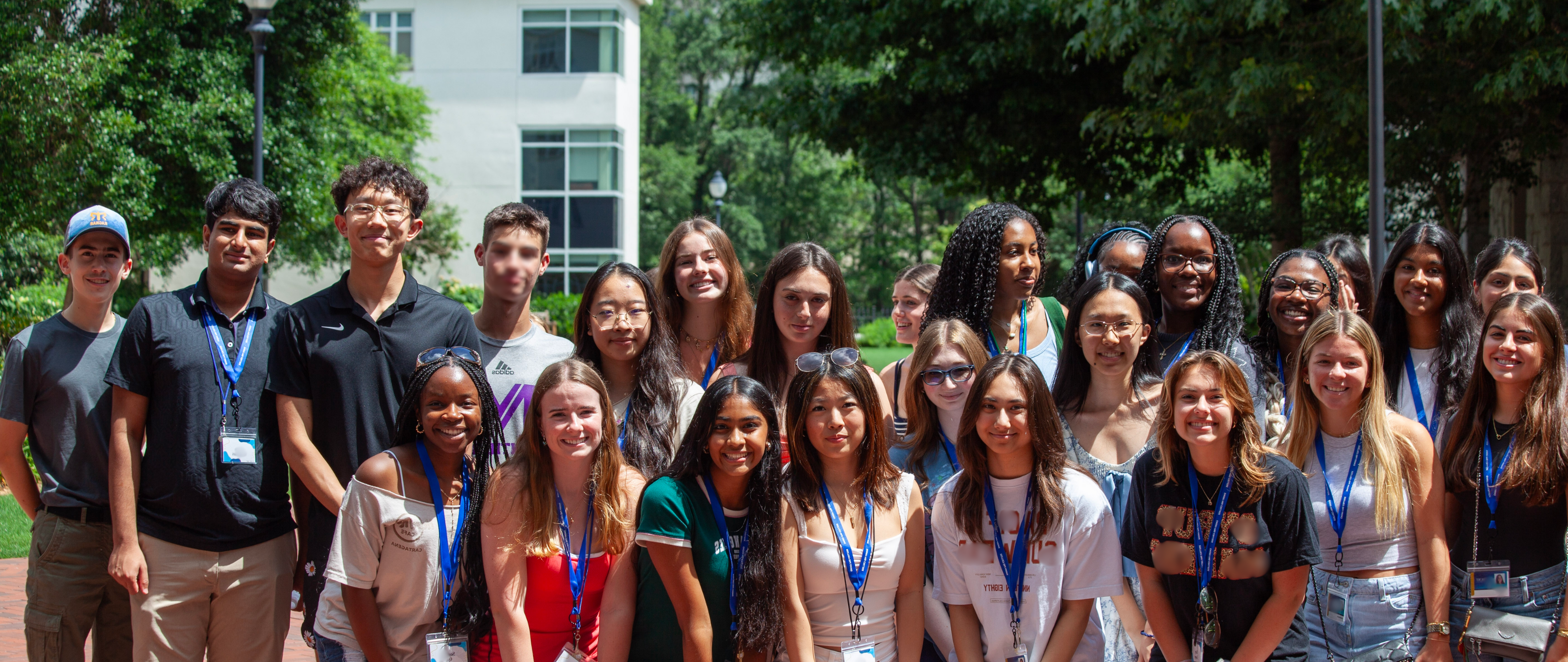
The Emory Pre-College Program puts 10th and 11th graders in a single noncredit, college-level course on Emory's Atlanta campus for two weeks, taught by Emory instructors. Class meets every weekday morning, and the rest of the day goes to college-prep workshops, optional activities and trips around Atlanta. You can live in a residence hall, or commute if you live in metro Atlanta, and you finish with a Satisfactory or Unsatisfactory grade, a written assessment and a certificate of completion.
 Sean Stevens · Sources
Get the key facts by email
The dates, costs and how to apply, then 2 reminders: 19 Apr (2 weeks before) and 30 Apr (3 days before).
Succeed's assessment
In short
Why it's worth it
You take a real college-level course from Emory instructors in a class that averages 14 students. Afternoon workshops with Emory students, faculty and staff then walk you through what to look for in a college, so you test-drive the coursework and think through the bigger decision at the same time.
What it asks of you
Homework varies by course and can take up to several hours a day on top of morning class. Emory requires attendance at all classes and program activities and won't enroll you unless you can be there for the whole course. Families outside metro Atlanta can only choose the residential option, so the residential fee plus travel is the real cost.
Who should skip it
Students who want their summer work to earn credit. Emory's Summer College is its credit-bearing option, with six-week courses graded A to F alongside Emory undergraduates, although students from outside metro Atlanta take those courses online.
Emory says each noncredit course is led by a member of its faculty. Classes average 14 students, and your classmates are all high school students.
Each session enrolls about 100 to 150 students, and Emory offers more than 30 two-week courses. The 2026 list included Human Physiology, U.S. Law Unlocked and Psychology of Social Media as well as Astrophysics, Branding and Marketing, and Archaeological Investigation: Pompeii and Herculaneum, though the 2027 list may change. Course pages name the instructor. Human Physiology, for example, was taught in 2026 by Dr. Iain Shepherd, and its course description promised work with an Anatomage table to explore anatomy, along with listening to heart sounds and taking blood pressures.
Emory can cancel a course if too few students enroll, and it will try to place you in a comparable one.
Class runs from 9:00 to 11:30 a.m. every weekday, and that's also when any course field trips and lab experiments take place. After lunch comes Emory Exploration from 1:00 to 2:30 p.m., a mix of college 101 workshops and sessions on degree paths, with Emory undergraduates, graduate students, faculty and staff.
From 2:30 to 5:30 p.m. you have free or study time, with optional activities and Eagle Excursions to places such as the Georgia Aquarium and World of Coca-Cola. After dinner, the 8:00 to 11:00 p.m. slot brings optional movie screenings and outings such as a Braves or Atlanta United game. Saturday is a full day out in the Atlanta area and Sunday is usually more relaxed. Tickets, transportation and meals on these outings are included for everyone.
Commuters can head home at 2:30 p.m., although Emory encourages them to stay for the evening and weekend activities. Emory says students spend their free time studying and finishing assignments as well as going on trips. The schedule Emory publishes shows a typical day and may change.
You leave with a Certificate of Completion, a written assessment at the end of the program and a Satisfactory or Unsatisfactory grade for your course. You earn no college credit, and Emory says only credit-bearing courses affect a college GPA, so this grade won't.
Emory is also clear that taking part doesn't guarantee admission to Emory as a first-year or transfer student. In past years some instructors have assigned presentations, research projects and extra reading, so depending on your course you may come away with some work of your own as well.
To apply, you need to be in 10th or 11th grade when you complete the application, be at least 15 by the session start and have a GPA of at least 3.0. Ninth and 12th graders and high school graduates can't apply. Homeschooled students are welcome, as long as their recommender isn't a parent.
Emory reviews complete applications as they arrive, until classes fill or the deadline approaches, and emails a decision within three to five business days. It doesn't hold interviews.
The application
You pay a $75 fee and fill in questionnaires that include your course choice and an alternate course. If your first choice is full, you'll be enrolled in the alternate.
Transcript
Send an official or unofficial high school transcript. Emory won't accept report cards in its place.
Recommendations
You need two, from teachers or a school counselor, and never from a parent or family member. A parent or guardian also completes a consent form.
Test scores
PSAT, PreACT, SAT or ACT scores are optional for this program.
International applicants
Anyone who isn't a US citizen or permanent resident applies as an international student, even if they attend a US high school. Students whose first language isn't English must show fluency with 700+ on SAT Evidence-Based Reading and Writing or 30+ on ACT English, or failing that TOEFL iBT 104, TOEFL ITP C1 or IELTS 7.5. The Duolingo English Test is also accepted, and Emory says competitive applicants usually score above 130 out of 160. All international applicants also send an English writing sample, and their deadlines are earlier. If your visa needs a consulate appointment, Emory advises applying by 1 May. It doesn't issue I-20s, so you'd travel on a B-2 visa or through the Visa Waiver Program.
Emory says it will publish 2027 prices by mid-November 2026, so until then the 2026 fees are the best guide. In 2026, two weeks cost $5,510 living on campus or $3,925 commuting, and four weeks cost $11,020 or $7,850. The residential price covers your residence hall room, all your meals in the dining halls, your course and every activity and excursion. Commuters get the same course and trips but pay for any meals they eat on campus, plus parking if they drive.
There are some extras on top: a $75 application fee (waived for returning students and foundation scholars), lab fees of $25 to $75 for some courses and books of up to $50. Accepted students pay a $350 deposit, which counts toward the total but isn't refundable, and paying it by card adds a 3% convenience fee. International students should also have health insurance and may need a visa or travel authorization, so check those costs with the official sources.
Partial, need-based financial aid is available to US citizens and permanent residents once they're accepted, with a 1 March deadline. Awards cover part of tuition, never all of it, and Emory advises holding off on the deposit until your award arrives.
Cancel two weeks or more before your session
Under Emory's 2026 refund policy, students who canceled in writing got their tuition back, but Emory kept the $350 deposit, the application fee and program fees.
Withdraw by the second day of class
With the program director's approval, students who withdrew got 50% of tuition back, minus the $350 deposit.
Resident Advisors, who are current Emory undergraduates, supervise residential students and help them with their studies. You live in an air-conditioned room in Turman Hall or Hamilton Holmes Hall with a roommate assigned in advance. Only students with an access card can enter the halls, and Emory Police are always available in an emergency.
Curfew is 11:00 p.m. on weeknights and midnight on weekends. Residential students can leave campus only in supervised groups on Emory transportation, and they can't ride in a car driven by another student. Before arrival, every student on campus must meet Emory's immunization requirements, including a meningococcal vaccine for those living in the halls. A parent or guardian completes the required health and consent forms, and every student attends a mandatory online orientation.

Sean
Founder, Succeed
Talk it through with Sean
“I can help you compare the programs you're considering, think through the practicalities and work out what makes sense for you.”
20 minutes · No obligation to enroll
Save this program in Succeed to compare it with similar programs, dates, costs and formats in one place.
Compare with other programsprecollege.emory.edu · Official page
precollege.emory.edu
precollege.emory.edu
precollege.emory.edu
precollege.emory.edu
precollege.emory.edu
precollege.emory.edu
precollege.emory.edu
Not ready to decide yet? Keep it for later.