
Business & Economics
Deadline: Not announced yet
From $6,300
14-18
Durham
In-person
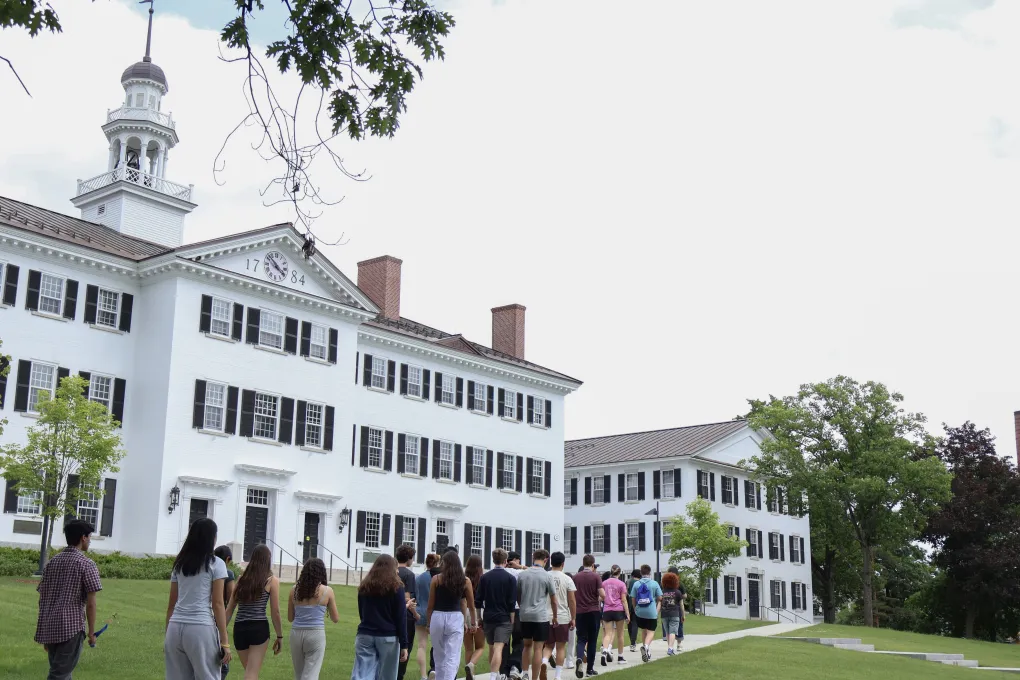
Precollege Summer Scholars brings high school students to Dartmouth's campus in Hanover, New Hampshire, for two weeks in a single intensive, college-level course designed and taught mostly by Dartmouth faculty, staff and alumni. Courses range from business and engineering to medicine, AI, psychology and law, and many build toward a group project or presentation at the end. Six sessions run between 27 June and 13 August 2027, and you can either live in a residence hall or commute each day.
 Sean Stevens · Sources
Succeed's assessment
In short
Why it's worth it
You spend about five hours a day on a single course that its instructor designed around their own field. Many courses end with work you present or put into practice, such as a public company valuation in Business Foundations, a UN Security Council simulation, or a clean energy plan for a town that the class pitches to a panel of guests.
What it asks of you
A residential place starts at $8,299 for two weeks before any travel, and the pace is intense. Dartmouth says missing one day of class is like missing several weeks of a regular semester course, and you can't switch to a different course once the program begins.
Who should skip it
Families who can't cover the cost themselves, because Dartmouth offers no financial aid for its on-campus programs, and students who need credit, since the courses aren't graded and you leave with a certificate of completion and a short instructor evaluation.
Rising 9th to 12th graders who are 14 to 18 during the program can apply, as long as they've finished 8th grade and haven't graduated from high school, and US, international and homeschooled students are all welcome. Younger students should note one limit: 14-year-olds can only take the Summer Scholars in the Meriden Valley courses (Business Foundations, Introduction to Engineering and Foundations in Medicine), which run in Sessions 1 and 3 at Kimball Union Academy, a short drive from Dartmouth, rather than on the Hanover campus.
Dartmouth calls the selection competitive and places each admitted student in the course that best fits their interests and academic readiness, but it publishes no acceptance rate or cohort size. Children of Dartmouth alumni get no preference.
Course prerequisites
Several courses ask for prior experience, for example biology and medicine experience through a course, club, extracurricular activity or precollege program for Research & Lab Work in Medicine, and Spanish II for the Spanish Language Intensive.
English for international students
You can show proficiency with standardized test scores, a transcript from an international school that teaches its core curriculum in English, or by asking for a video interview.
Course minimums
Session 1 courses need at least 10 students each and are confirmed by 1 March 2027, and Dartmouth says courses in the other sessions are subject to change.
On weekdays you're in class from 9 a.m. to noon and again from 2 to 4 p.m., which comes to about five hours a day with the same instructor and group. Dartmouth says the afternoon block is for assignments and projects under the instructor's supervision, sometimes with course assistants. Times shift slightly between Monday-Wednesday-Friday and Tuesday-Thursday days.
Session 4 field courses
Applied Neuroscience and The Science of Hard Choices spend part of 23 to 25 July 2027 at the AMC Highland Center in the White Mountains, with shared bunkrooms and bathrooms.
Session 6 field courses
Creative Writing in the Great Outdoors and The Psychology of Happiness move to Dartmouth's Moosilauke Ravine Lodge for the final week, where there's no wifi or cell service, although staff can make contact in an emergency.
Breakfast runs from 7:00 to 8:50 a.m. and lunch from 12:10 to 1:50 p.m. After class there are co-curricular workshops or activities from 4:30 to 5 p.m., and evenings are for homework, an activity run by the residential staff or just time with friends. On Saturdays the residential team takes residential students on a field trip, which might be a baseball game or museums in Boston, depending on the weather. Sundays are looser, with time to catch up on work, explore Hanover or hike part of the Appalachian Trail.
Commuters join the full academic day, arriving with an approved guardian between 8:00 and 8:30 a.m. and being signed out between 4:00 and 9:00 p.m., depending on whether they stay for clubs (4:30 to 6:00 p.m.) or evening activities (7:30 to 8:30 p.m.).
A two-week residential place costs from $8,299 and a commuter place from $4,999, with the exact figure depending on the course and when you apply, so check the application site for the current price. The residential fee covers instruction, housing, dining and campus services, while commuter tuition includes lunch each day on a preloaded Dartmouth dining card but not breakfast, dinner or weekend trips.
On top of that you pay a $100 application fee, which is never refunded, although you can ask for a waiver from Summer Discovery, the company that handles applications and payments for Dartmouth. Students who live outside the United States also pay a non-refundable international registration fee of $379 residential or $239 commuter. It covers US health insurance with a deductible and a letter to support a visitor visa, plus airport transfers for residential students. Flights are extra, and any visa fee is something to check with the US government. Card payments carry a 3.5% surcharge, while e-checks from a US bank are free.
To accept a place you pay a deposit of $1,900 if you enroll before 31 January 2027, $2,500 from 1 February to 1 April, or $3,500 plus the full balance from 1 April to 1 June. If you enroll before 1 April, the balance is due by 1 April 2027. Cancellations must go to Summer Discovery in writing, and the later you cancel, the more you lose.
| When you cancel | What you lose |
|---|---|
| Before 1 February 2027 | The application fee and any optional travel protection insurance, with the rest refunded |
| 1 February to 1 April 2027 | A fee equal to the deposit paid |
| 1 April to 1 May 2027 | $3,500, or the deposit paid |
| 1 May to 1 June 2027 | $4,500 |
| After 1 June 2027 | Everything, with no refunds |
Summer Discovery runs the residential side, with a team of counselors overseeing life in the halls and instructional and program staff supervising students throughout the day. A nurse is attached to the program and lives in one of the residences, staff drive students to medical facilities when needed, and families must supply medical information and permission for staff to arrange care.
Students don't get the freedom college students have. They can't leave a set Home Area, which covers parts of campus and downtown Hanover, or use athletic facilities without a staff member, and the curfew time is given at orientation. Parents can check a student out on evenings or weekends with 24 hours' notice.
Rooms
Boys and girls live on different floors or in different buildings, and roommates are matched from a profile you fill in during the spring, with friend requests honored only when both ask.
Building access
Residence halls need a campus ID or code, and guests aren't allowed inside.
Medical disclosure
Summer Discovery's terms require full disclosure of medical, psychological and emotional conditions and medications, and failing to disclose can lead to dismissal with no refund and the family paying for the trip home.
Applications go through the Dartmouth X Summer Discovery site, and you can't edit most of it after you submit, so check everything first.
Pick your session and only the courses you'd actually attend, listing more than one if you apply in the rolling period in case a course fills.
Fill in your personal details, course preferences and short answers about your interests, upload a grade report or transcript and pay the $100 fee.
Submit by 11:59 p.m. Eastern on 15 December 2026 for Early/Priority, 27 January 2027 for Regular or 23 March 2027 for Extended, or after 1 May 2027 on a rolling basis while space lasts.
Expect a decision within two weeks, or within one week in the rolling period if space remains.
Accept and pay the deposit within 10 days of your offer, or pay the full fee within a week if you're admitted in the rolling period.
Pay the remaining balance by 1 April 2027 if you enrolled before then.

Sean
Founder, Succeed
Talk it through with Sean
“I can help you compare the programs you're considering, think through the practicalities and work out what makes sense for you.”
20 minutes · No obligation to enroll
Save this program in Succeed to compare it with similar programs, dates, costs and formats in one place.
Compare with other programsprecollege.dartmouth.edu · Official page
precollege.dartmouth.edu
precollege.dartmouth.edu
precollege.dartmouth.edu
precollege.dartmouth.edu
precollege.dartmouth.edu
precollege.dartmouth.edu
precollege.dartmouth.edu
Not ready to decide yet? Keep it for later.