
High School Summer Scholars Program
Applications open
01 Mar 2027 · From $4,075 · 16-17 · St. Louis · Hybrid
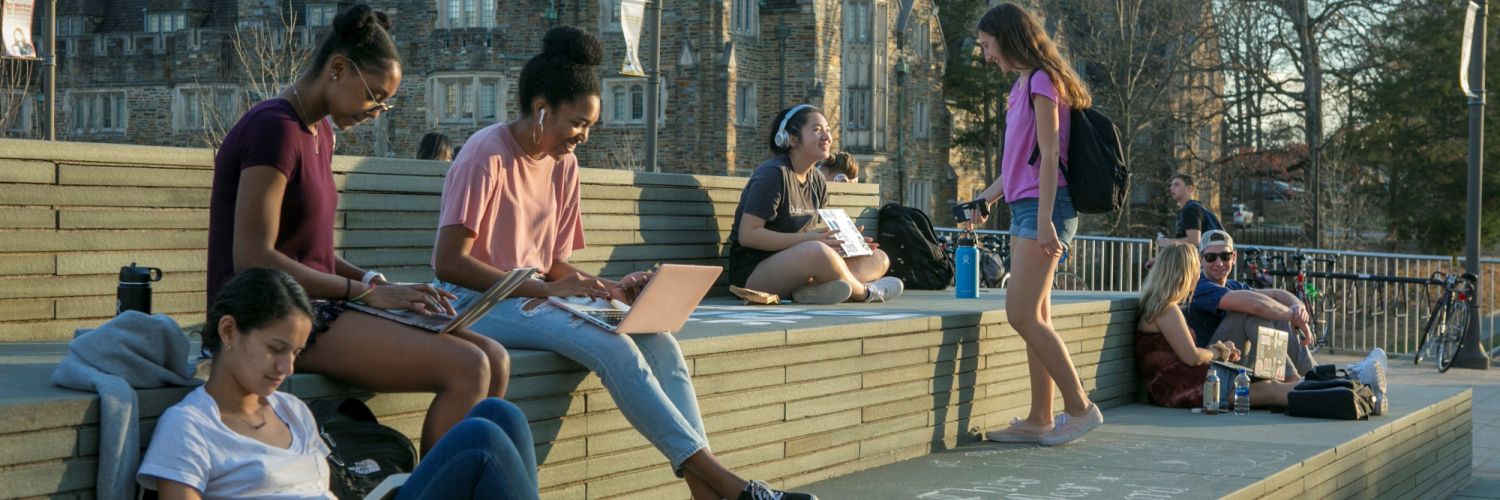
Duke High School Summer Scholars puts rising juniors and seniors into a regular six-week Duke undergraduate course for college credit, where they learn alongside Duke students and are taught by Duke faculty. You can take the course online from anywhere, or in person on Duke's campus in Durham, North Carolina, if you live within driving distance. Around the course, the cohort gets orientation, college-readiness seminars, academic advising, a panel of current Duke students and an on-campus lunch with faculty.
Get the key facts by email
The dates, costs and how to apply, all in one place.
Why it's worth it
This is a regular Duke course with a real grade on an official transcript, not a class built for high schoolers. You also get the support Duke undergraduates use, including the Academic Resource Center and the Thompson Writing Program.
What it asks of you
Duke wants the course to be your top priority for the six weeks, since it's a full undergraduate course taught at an accelerated pace, and it warns that students who juggle several commitments often struggle. Fitting it around a summer job or another program will be hard.
Who should skip it
If you live beyond driving distance of Durham and want a summer on a college campus, this isn't it. High schoolers can't live in Duke housing while taking a course, so for you it would be an online class taken from home.
Duke opens a selection of its six-week Term 2 courses to students in 10th or 11th grade during the 2026-27 school year, as long as they'll be 16 by 28 June 2027. Duke makes no exceptions to the age rule. High schoolers can take only regular, non-lab courses, and only those on Duke's list for high school students.
Where you live decides the format. In-person classes are only for local commuters who live within driving distance of Duke, so everyone else, international students included, takes the course online. Duke checks your transcript against each course's prerequisites, so choose a course you're already prepared for.
English test scores
If English isn't your first language and you don't study in a country where English is the main language, you need a Duolingo English Test score of 125 with subscores, an IELTS band score of 7 or an internet-based TOEFL score of 90. Scores must date from 1 August 2024 or later.
Online classes meet live at set times in Eastern Time, and the time listed for each course is when you'll join your instructor and classmates on camera. Some courses are asynchronous, with few or no live meetings, and Duke marks those in the course descriptions. If you live overseas, check each meeting time against your own time zone before you choose. If you're studying online, also make sure the course has no required in-person part.
You'll need a computer with a webcam, a microphone, headphones or speakers, reliable internet and a Duke email account. All course communication goes through Canvas or your Duke email. The online version isn't any lighter than the in-person one, and Duke warns that students who expect an online course to take less of their time often struggle.
Duke hasn't announced 2027 tuition yet. In 2026, one regular course cost $3,145, plus a one-time $120 transcript fee due the first time you take a Duke course, so a first-time student paid $3,265 in all. The transcript fee also covers unlimited official transcripts for life. Duke offers no scholarships or financial aid to high school students taking its credit courses.
You pay the Duke University Bursar's Office directly, and it doesn't accept credit cards. In 2026, the Term 2 bill came out on 15 May and payment was due 12 June. If a balance is still unpaid on the last day of drop/add, you'll be dropped from the course.
You have only the first three days of the term to change your mind. If you officially drop through the Summer Session office by 11:59 p.m. on 30 June 2027, you owe nothing, but simply skipping class doesn't count as dropping. After that, you owe the full tuition and transcript fee, with no refund, even if you withdraw. You can withdraw only for compelling reasons and with the Summer Session academic dean's permission, by 26 July 2027, and a withdrawal leaves a W on your transcript.
You leave with a grade for a Duke undergraduate course on an official Duke transcript, which the Duke University Registrar issues once your instructor submits final grades. Whether that credit counts toward a degree is up to the college you go on to attend. Duke notes that some colleges cap how many credits earned before enrollment they'll accept, although a course can often still be used for placement. Check the transfer policy at the colleges on your list.
Duke is clear that taking part has no bearing on admission to Duke itself. The program is separate from undergraduate admissions and gives no preferential consideration.
Duke's instructions for high school applicants are on its How to Apply page.
Choose your course first from Duke's list of credit options for high school students, checking its meeting times, prerequisites and whether it's online or in person.
Start the online application when it opens on 1 March 2027.
Upload a resume in any format that shows your academic accomplishments and extracurricular activities.
Write a three-paragraph personal statement on why you want this particular course and how it supports your academic or personal goals.
Add a recent transcript or report card with your fall 2026 grades (an unofficial copy is fine), English test scores if you need them and, if you like, AP or other test scores.
Submit everything by 14 June 2027, because Duke reviews only complete applications.
If you're admitted, you and a parent or guardian sign Duke's Participation Agreement, which covers its conduct and online safety rules.

Sean
Talk it through with Sean
“I can help you compare the programs you're considering, think through the practicalities and work out what makes sense for you.”
01 Mar 2027 · From $4,075 · 16-17 · St. Louis · Hybrid
04 Jan 2027 · From $6,276 · 15-18 · New York · Hybrid
06 Jan 2027 · From $7,500 · 16-18 · New Haven · In-person
Save this program in Succeed to compare it with similar programs, dates, costs and formats in one place.
Compare with other programssummersession.duke.edu · Official page
summersession.duke.edu
summersession.duke.edu
summersession.duke.edu
summersession.duke.edu
summersession.duke.edu
summersession.duke.edu