
Biology
Deadline: Not announced yet
From £5,795
13-24
Cambridge
In-person
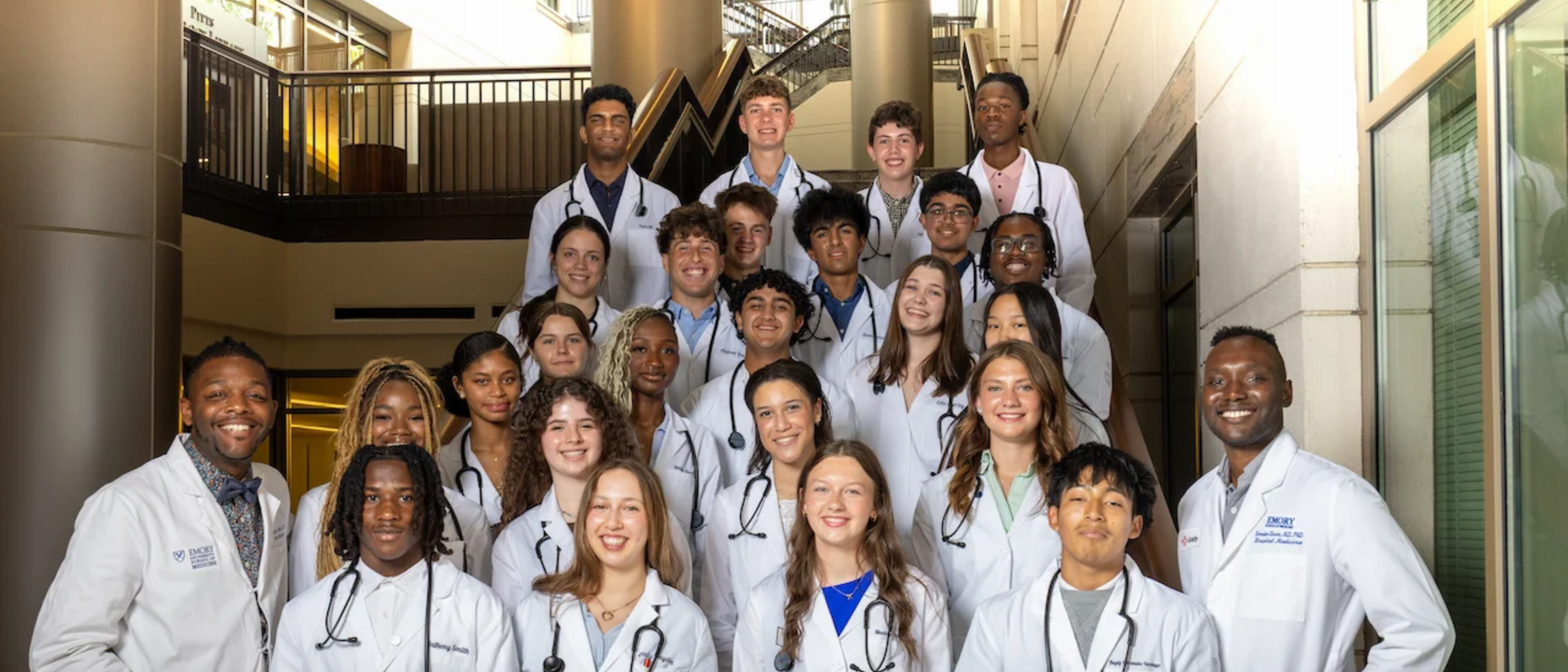
Over three weeks on Emory University's Atlanta campus, you take one noncredit course, From Science to Medicine, taught by two Emory physicians. Mornings cover the core sciences behind medicine, such as anatomy and physiology, and afternoons move into case studies, hands-on activities and site visits to Emory Clinics, Grady Hospital and simulation labs. You can live in a residence hall or commute from metro Atlanta, and the course starts with a White Coat Ceremony.
 Sean Stevens · Sources
Get the key facts by email
The dates, costs and how to apply, then 2 reminders: 18 Jan (2 weeks before) and 29 Jan (3 days before).
Succeed's assessment
In short
Why it's worth it
Two practicing Emory physicians lead the classes and workshops, and site visits take the class to Emory Clinics, Grady Hospital, simulation labs and imaging centers, so you see clinical work up close and not only in a classroom.
What it asks of you
Three full weeks in Atlanta, with attendance required at every class and activity and homework that Emory says can take up to several hours a day. Living on campus cost $8,264 in 2026.
Who should skip it
Students who want college credit from their summer, because the course is noncredit, graded Satisfactory or Unsatisfactory, and has no effect on a college GPA. It's also out of reach for anyone who needs full funding, since Emory doesn't award full-tuition scholarships.
You can apply if you're in 10th or 11th grade when you fill in the application, will be at least 15 by the first day and have a GPA of at least 3.0. The Institute adds its own prerequisite: you need to have finished biology and chemistry or be taking them now, and they have to show on your transcript.
The application asks for a $75 fee, online questionnaires, a high school transcript (report cards don't count) and two recommendations, one from a science teacher and one from your guidance counselor. Test scores are optional, and a parent or guardian has to give consent. Homeschooled students can apply as long as the recommender isn't a parent. Anyone who isn't a US citizen or permanent resident applies as an international student and adds an English writing sample and an English test score. If English isn't your primary language, Emory accepts any of the following as proof of fluency.
There are only 25 seats. Every applicant hears on the same day, 9 February 2027, and Emory then enrolls admitted students as they pay the deposit, until the seats are filled or the deposit deadline arrives.
SAT or ACT
A 700 or higher on SAT Evidence-Based Reading and Writing, or 30 or higher on ACT English.
An English test, if your SAT or ACT score falls short
TOEFL iBT 104, TOEFL ITP C1 (TOEFL ITP Plus C1 for students in mainland China) or IELTS 7.5.
Duolingo English Test
Also accepted, and Emory says competitive applicants usually score above 130 out of 160.
Classes run Monday to Friday, with a morning session from 9:00 to 11:30 and an afternoon session from 1:00 to 3:00. Mornings cover the science, for example a session in Introduction to Human Anatomy and Physiology on the pathways of the nervous system, while afternoons are where you work through medical case studies, do hands-on activities in groups and go on site visits.
Breakfast, lunch and dinner are in the campus dining hall. From 3:00 to 5:30 the time is yours to study, rest or join small group trips, and from 7:00 to 11:00 there's organized evening programming such as movie nights, field trips and sports.
Two assistant professors at the Emory School of Medicine teach the classes and lead the workshops. Dr. Isaiah Rolle is a vascular neurologist at Grady and Emory hospitals and associate director of Emory's neurology residency program, with a PhD in neuroscience and a DO (doctor of osteopathic medicine) degree. Dr. Brandon Dixon is an internal medicine physician in Emory's Division of Hospital Medicine, with a PhD in physiology and an MD. He has written more than 25 peer-reviewed papers on stroke and cardiovascular disease.
With only 25 students in the cohort, you're taught by the same two physicians for the full three weeks, and Emory says the site visits also put you in front of residents and fellows.
If you complete the program, you leave with a Certificate of Achievement, a personalized letter of recommendation and a gift Emory calls the Medical School Tool Kit. The certificate shows you finished the Institute, but it isn't college credit.
Emory is clear that taking part doesn't guarantee admission to Emory University, and it goes no further than saying a pre-college program may strengthen an application to selective universities.
Emory says its 2027 prices will be published by mid-November 2026. In 2026 the Institute cost $8,264 for residential students, with housing and a dining hall meal plan included, and $5,874 for commuters, who buy their own meals on campus. Both prices included the athletic and health and wellness fees, and excursions with their transportation.
On top of tuition comes a $75 application fee. The $350 deposit due on acceptance counts toward the total rather than adding to it, but you won't get it back if you pull out. Emory charges a lab fee of $25 to $75 on select noncredit courses, books cost up to $50, and getting to Atlanta is up to you. The Emory employee courtesy scholarship doesn't apply to this course.
Need-based scholarships cover part of tuition, never all of it, and only accepted students who are US citizens or permanent residents can apply, by 1 March. The timing is the catch. The Institute's deposit deadline is 16 February 2027 and seats fill as admitted students pay, yet Emory tells families relying on aid not to pay the deposit before their award arrives. Once an award is made, the deposit is due within 10 business days of the award letter. If you need aid, send the aid application as soon as you hear on 9 February.
Residential students live in Turman Hall or Hamilton Holmes Hall, where Residence Life staff assign roommates and Resident Advisors who are current Emory students supervise the halls. Only students with an access card can get into the building, and Emory Police are on call. Residential students can leave campus only in supervised groups on Emory-provided transportation, never as passengers in another participant's car. Commuters can visit friends in the halls until curfew, which is 11pm on weeknights and midnight on weekends.
Before arrival, everyone who'll be on campus has to meet Emory's immunization rules, and a parent or guardian completes the required forms, including a treatment agreement. Students living on campus also need a meningococcal ACWY dose given after age 16, so check this with your doctor early.

Sean
Founder, Succeed
Talk it through with Sean
“I can help you compare the programs you're considering, think through the practicalities and work out what makes sense for you.”
20 minutes · No obligation to enroll
Succeed has a commercial partnership with this provider.
Succeed has a commercial partnership with this provider.
Save this program in Succeed to compare it with similar programs, dates, costs and formats in one place.
Compare with other programsprecollege.emory.edu · Official page
precollege.emory.edu
precollege.emory.edu
precollege.emory.edu
precollege.emory.edu
precollege.emory.edu
precollege.emory.edu
precollege.emory.edu
Not ready to decide yet? Keep it for later.