
Summer study across social and political sciences
Deadline: Not announced yet · From £6,295 · 14-18 · Cambridge · In-person
Britain: Institutions, Power & People is a two-week, face-to-face module in King's College London's Undergraduate Summer School that asks what Britain's place is in the 21st century. You study government and devolved powers, the legal system, the monarchy, class, migration, protest, the media and the colonial past through lectures, seminars, workshops and off-campus visits. It's assessed by an oral exam worth 40% and an individual essay worth 60%, and it's open to university students and graduates aged 18 and over.
Why it's worth it
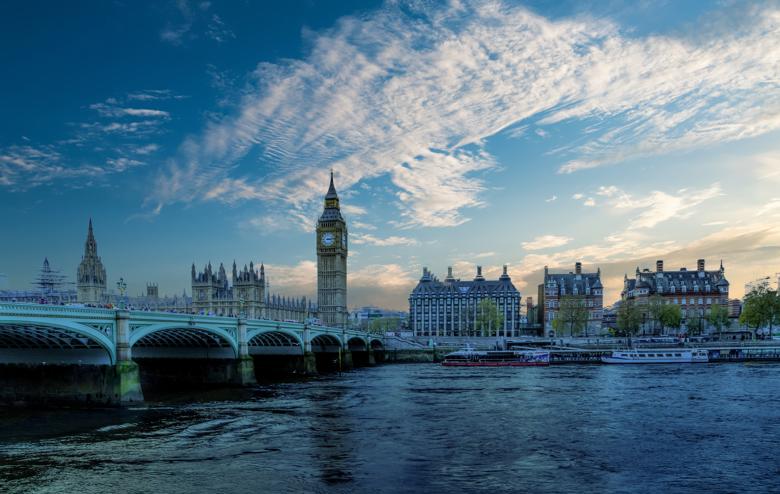
The module pulls politics, law, sociology and history into one question about what Britain means today, and it's taught and assessed to the same standard as King's term-time modules. Parliament and the Royal Courts of Justice are a few minutes' walk from the Strand campus, which suits a course about how the country is run.
What it asks of you
King's budgets 45 contact hours and 105 hours of independent study, so the two weeks will be full, and you have to attend at least 80% of classes to pass. You're also paying to live in London, not just for the course.
Who should skip it
Students aged 18 who haven't started university and would join through King's School Leaver Pathway. It's audit only, with no formal credit or transcript, which takes away the graded mark that gives this module most of its value.
You need to be 18 or older when the course starts and to be studying for an undergraduate degree, have studied for one or be about to start one, although King's also accepts relevant professional experience beyond education. It describes the summer school as aimed at students who've completed at least one year of university.
King's also asks for an average grade of a 2:1 (an upper second-class average), or a 3.3 GPA on a 4.0 scale, and says a 3.0 may be considered depending on your year of study, degree and the strength of your application.
Degree taught in English
A transcript showing English as the language of instruction can stand in for a test certificate, although King's may still ask for evidence.
Test scores
Otherwise King's accepts certificates such as IELTS 6.5, TOEFL iBT 79, Duolingo 120, TOEIC 685 or Cambridge Advanced grade C, among others on its list.
Just turned 18
School leavers who are 18 can join instead through King's School Leaver Pathway, a separate route that runs on an audit basis.
Partner and exchange students
Applicants from King's partner institutions don't pay the application fee, and students nominated by their own university can apply through a separate summer exchange route.
Classes run Monday to Friday across the two weeks, and you'll usually be on campus for four to five hours a day, in either a morning block from 9:00 to 13:00 or an afternoon block from 14:00 to 18:00. King's releases the final timetable up to one week before the start. Within those hours the module mixes interactive lectures, seminars and tutorials with case studies, workshops and group presentations, and it includes off-campus visits.
Outside class there's a social program, included in the fee apart from travel. Past events include a welcome reception, a Westminster walking tour, an outdoor cinema, a comedy show and a Wimbledon watch party, as well as pub quizzes and guest lectures. The rest of the day is yours, although the reading and essay will claim a good share of it.
It can, but your own university decides. King's rates the module as equivalent to 15 King's credits, 7.5 ECTS or 4 US credits, and if you attend at least 80% of classes and meet the assessment requirements, you get a mark on its Record of Agreed Results (transcript) plus a certificate on completion. Ask your study abroad office or adviser whether they'll accept it before you enroll.
Grades are confirmed by a King's assessment board that usually meets in early September, and the transcript arrives within a month of that meeting through an outside service called GradIntelligence. The mark uses the UK grading scale, which may not match your university's. If you attend but audit the assessments, you may receive a certificate of attendance rather than a mark.
Tuition alone is £2,650, or £3,690 with a single en-suite room at King's Great Dover Street Apartments, and both come with a non-refundable £65 application fee, so you're looking at £2,715 or £3,755 before food and travel. King's labels these as 2026 tuition fees alongside its 2027 dates, so confirm the figure for summer 2027 before you pay.
Tuition covers teaching, course materials, campus wi-fi, use of the library and other facilities, a certificate on completion and the social program, apart from travel to events. The residential package adds your room, with linen and towels provided. Meals aren't included either way, and neither are flights, getting around London or the trip from the airport, which you arrange yourself. Overseas students may need a Standard Visitor visa or an ETA (electronic travel authorization), so check that cost with the UK government.
King's asks for the full fee when you accept your offer and doesn't allow installments.

Sean
Talk it through with Sean
“I can help you compare the programs you're considering, think through the practicalities and work out what makes sense for you.”
Summer study across social and political sciences
Deadline: Not announced yet · From £6,295 · 14-18 · Cambridge · In-person
Summer exploration of philosophy, politics and economics
Deadline: Not announced yet · From £5,995 · 16-18 · Cambridge · In-person
Online study of politics, international relations and leadership
Deadline: Not announced yet · From £595 · 15-18 · Online · Online
Save this program in Succeed to compare it with similar programs, dates, costs and formats in one place.
Compare with other programsOfficial page
kcl.ac.uk
kcl.ac.uk
kcl.ac.uk
kcl.ac.uk
kcl.ac.uk
kcl.ac.uk
kcl.ac.uk
Facts checked against the official page on 3 Nov 2026
Editor: Ben Stacy
Succeed has no commercial relationship with King's College London.
Spot an error? Report it