MIT Beaver Works Summer Institute Remote Sensing for Disaster Response Summer Course
by MIT Beaver Works Summer Institute
- 2027 program
- Online
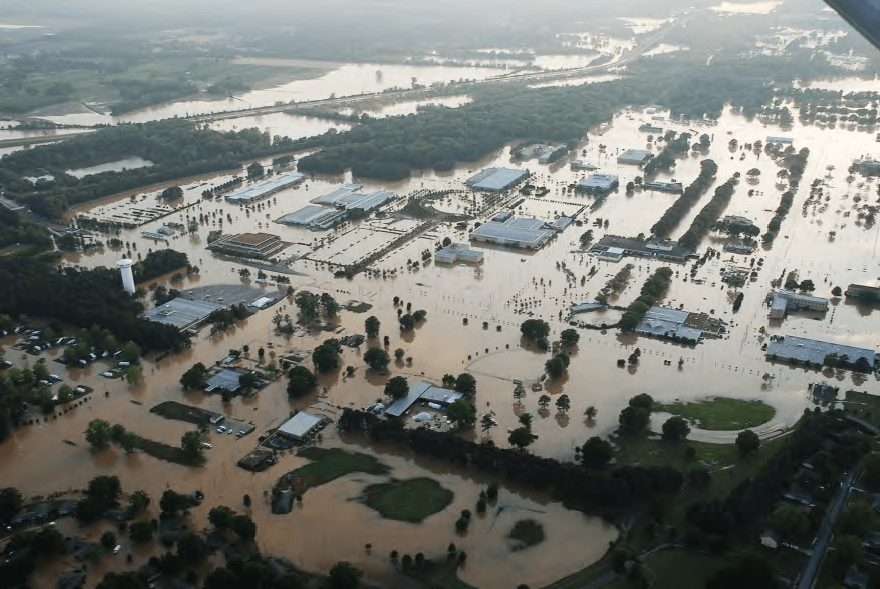
Remote Sensing for Disaster Response is a four-week summer course at MIT's Beaver Works Summer Institute (BWSI), taught live on Zoom. You work in a team and use Python to process satellite and aerial imagery, analyze geospatial data with geographic information systems (GIS) and classify images with machine learning. The course ends with a simulated hurricane that runs over several days, where your team predicts impacts, plans evacuations, routes supplies and gives a one-hour press conference. Before you can be considered, you complete a free, self-paced online prerequisite course, and your grade in it counts toward selection.
 Sean Stevens · Sources
At a glance
Official facts · checked 27 Nov 2026- 2027: 5 July to 1 August
- In 10th or 11th grade when applying (no current seniors, college students or students below 10th grade)
- 2027: $3,000
- Online
- Length
- 4 weeks
- Included / budget separately
- Not published
- Deposit and refunds
- Not published
- Financial aid
- Tuition-free for families with income and assets under $200,000 (with typical assets), verified through Clarity only after the student is accepted
- Apply by
- 2027: 31 March (Summer application), 2 April (Teacher or mentor recommendation)
- Cohort and selectivity
- Enrollment is competitive, and BWSI weighs final grades from the online prerequisite course heavily. It publishes no cohort size or acceptance rate
- Credit or certificate
- Downloadable certificate for passing the online prerequisite course
- Official page
- bwsi.mit.edu/bwsi-course-listing/remote-sensing
Get the key facts by email
The dates, costs and how to apply, then 2 reminders: 19 Mar (2 weeks before) and 30 Mar (3 days before).
Should you apply?
SucceedWhy it's worth it
The multi-day hurricane simulation asks your team to turn image analysis into evacuation decisions, supply routes and a public briefing. That ties the coding to decisions with real consequences, and the guest speakers from emergency management agencies and first responders bring the practitioners' view.
What it asks of you
The work starts months before July. The free prerequisite course goes live on 1 February 2027, BWSI says it can take several weekends, and your grade in it weighs heavily in selection. If you get in, expect a full working day on Zoom, five days a week.
Who should skip it
Students with a July job, family trip or another program, because the sessions fill every weekday for four weeks and BWSI requires you at the final presentation on 1 August 2027.
How do the Zoom sessions run?
The summer course runs live on Zoom from Monday to Friday, 5 July to 1 August 2027, with class hours of 10am to 6pm Eastern Daylight Time (EDT). BWSI says some classes may shift their hours for students in other US time zones, which matters on the West Coast, where 10am EDT is 7am.
Days mix course material, case studies, guest lectures and small-group projects. The summer work is done in teams, while the prerequisite course is done alone. It all builds toward the final project, a simulated hurricane that runs over several days. Your team predicts storm impacts, makes evacuation decisions, analyzes post-storm aerial imagery, writes routing algorithms to get supplies to shelters and finishes with a one-hour press conference on its response. Virtual students present at BWSI's closing showcase on 1 August 2027 over the webcast, and BWSI requires every student to attend. BWSI describes the weekly plan below as a rough outline.
Week 1: Introduction to GIS
A Python refresher, then pandas, geopandas and geographic information systems, plus framing research questions and working with open-source tools and data.
Week 2: Analysis of Geospatial Data
Classifiers and data science, spatial analysis and networks, and how to find and handle geospatial data sources.
Week 3: Introduction to Image Processing
Image fundamentals and metadata, multispectral imaging and analyzing satellite images.
Week 4: Image Classification and Decision Making
Classifying images by their contents, an introduction to optimization and data-driven decision making.
Who teaches the course?
The instructor is Dr. Amy Xiao, a technical staff member at MIT Lincoln Laboratory. She holds a BS in biomedical engineering from Johns Hopkins University and a PhD in biological engineering from MIT, and her own research develops methods to detect pathogens in environmental samples. She's also listed as the instructor of the 2026 online prerequisite course, so you'll know her material before the summer.
The course also brings in guest lecturers from academia, emergency management agencies, government, first responders and non-governmental organizations (NGOs), who BWSI says give real-world perspectives on disaster problems. BWSI doesn't publish a class size or staff ratio.
Who gets a place on the summer course?
To be considered, you need to be in 10th or 11th grade when you apply, live in the US and attend a high school physically in the US, and stay in the US for the whole program. BWSI says accepted students are generally finishing their junior year. Home-schooled students follow the same process. Current seniors, college students and students below 10th grade can't apply for the summer, although anyone can take the online prerequisites.
Selection is competitive, and BWSI says your final grade in the online prerequisite course is an important part of its decision. The progress percentage shown on the platform doesn't count. Grades are curved within each course, so if the top score is only 50%, BWSI takes that into account. If you don't complete the minimum amount of the course, BWSI says you're unlikely to be accepted. It also looks for technical ability through your recommendation, test scores, coursework and grades. Taking extra online courses doesn't improve your chances.
You list a first and second choice on the application, and accepted students are placed in one course only, so a place at BWSI doesn't guarantee you a place in Remote Sensing. BWSI doesn't publish how many students it accepts.
What does the summer course cost?
The summer course is free if your family's income and assets come to less than $200,000, and $3,000 if they're above that. BWSI charges the same fee for its virtual and in-person courses, and since Remote Sensing runs on Zoom there's no housing to pay for. The online prerequisite course is free for everyone.
Nothing is checked until you're accepted. If you choose the under-$200,000 option on your application, BWSI verifies income and assets through Clarity, an online service that imports your prior-year tax documents from the IRS and typically takes 20 minutes or less. Families asking for a fee waiver complete Clarity too. BWSI says its review weighs income, assets and available liquidity and leaves out some portions of assets. If you're paying, the payment link comes in the confirmation email after you accept your place, and the fee is due by 6 June 2027.
How do you apply?
BWSI sets out the full process on its summer program application page.
Self-register for the 2027 online prerequisites (no nomination needed), and you'll receive a unique ID once registrations are approved in late January.
Start the Remote Sensing prerequisite course when online courses go live on 1 February 2027, and join its Piazza forum for questions.
Watch for the summer application, which BWSI emails to eligible registered students in March.
Submit it by 31 March 2027 with three short essays of up to 500 words each, honors and awards in up to 200 characters, your weighted GPA, a first and second course choice, and a parent's details and electronic signature. BWSI grants no extensions.
Make sure your teacher or mentor, who must be over 18, submits a recommendation by 2 April 2027.
BWSI notifies applicants on 3 May 2027. Accepted students return their forms by 17 May 2027 and finish the online course by 18 June 2027, although BWSI says exact dates depend on the course.
What do you leave with?
You leave with experience of a full team disaster-response exercise and a presentation given at BWSI's closing showcase, which is streamed on a public webcast. Passing the online prerequisite earns a certificate you can download from the course's Progress tab until the course closes at the end of the year. BWSI doesn't mention academic credit or a certificate for the summer course itself.
BWSI says its sponsors offer internships the following summer to selected students who attended, and it names BAE Systems, Raytheon Intelligence and Space, and MITRE as planning to offer them to alumni. Only selected students get these, so treat an internship as a possibility rather than part of the package.

Sean
Talk it through with Sean
Want to talk it through?
“I can help you compare the programs you're considering, think through the practicalities and work out what makes sense for you.”
What should you do next?
Frequently asked questions
More from MIT Beaver Works Summer Institute
- Autonomous Air Vehicle Racing
- Autonomous Underwater Vehicles Challenge
- Basics of ASICs Summer Course
- Build A CubeSat Challenge
- BWSI Middle School Program
- Cyber Operations Summer Course
- E-Textiles and Wearable Technology Summer Course
- Embedded Security and Hardware Hacking Summer Course
- Medlytics
- Microelectronics and Hardware Development Summer Course
- Serious Games Development with Artificial Intelligence Summer Course
- Unmanned Air System-Synthetic Aperture Radar Summer Course
More programs to explore
- Deep Dive: AI + MedicineVeritas AI
- iResearch Institute Summer Research ProgramiResearch Institute
- Introduction to Machine LearningStanford Pre-Collegiate Studies
- Computer Science Online Research ProgrammeImmerse Education
- C# Coding and Game Development with UnityiD Tech
- Online Research Program – Encryption and CybersecurityImmerse Education
- Brown Pre-College OnlineBrown Pre-College Programs
- Python Coding & AI AgentsiD Tech
Sources
- Remote Sensing – Beaver Works Summer Institute @ MIT
bwsi.mit.edu · Official page
- BWSI Summer Courses – Beaver Works Summer Institute @ MIT
bwsi.mit.edu
- Application for Summer Program – Beaver Works Summer Institute @ MIT
bwsi.mit.edu
- FAQ – Beaver Works Summer Institute @ MIT
bwsi.mit.edu
- 27/28 Clarity Family Application Guide
drive.google.com
- Remote Sensing For Disaster Response 2026
learn.bwsix.edly.io
- Dr. Amy Xiao
learn.bwsix.edly.io
- BWSI - Online Student Registration Form 2027 - Intellistack
mit-bwsi.formstack.com