MITES Semester
by MITES
- 2027 program
- Online
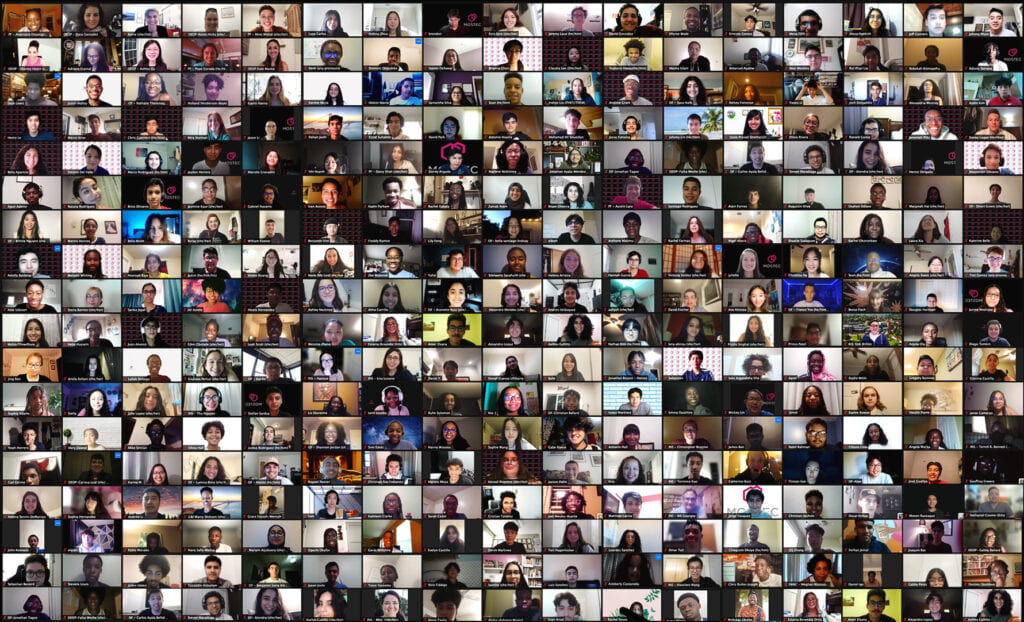
MITES Semester, formerly MOSTEC, is a free six-month online program from MIT. You apply in 11th grade, and the program runs from the summer before senior year through December. From late June to early August, you take two courses in live evening classes. One is a project-based STEM course such as Machine Learning or Astrophysics, and the other is a core course in Calculus, Physics, Computer Science or Science Writing and Communication. You then present a team project at a closing symposium. From August to December, the program drops to a few hours a week of webinars, small-group mentoring and college application help.
 Sean Stevens · Sources
At a glance
Official facts · checked 27 Nov 2026- 2026: 22 June to 6 December
- In 11th grade or equivalent at the time of application. Public, private and homeschooled students. U.S. citizen or permanent resident with a current green card (visas do not qualify)
- 2026: Free
- Online
- Length
- Six months (June to December)
- Included / budget separately
- Not published
- Deposit and refunds
- Not published
- Financial aid
- Not published
- Apply by
- 2027: 1 February (Student application), 15 February (Recommendations)
- Cohort and selectivity
- Selection is holistic, with no minimum GPA and optional test scores, and some applicants are placed on a waitlist. MITES publishes no acceptance rate. 365 students across MITES Semester and MITES Saturdays (2021)
- Credit or certificate
- Written qualitative evaluation from each instructor (no grades or credit)
- Official page
- mites.mit.edu/discover-mites/mites-semester
Get the key facts by email
The dates, costs and how to apply, then 2 reminders: 1 Feb (2 weeks before) and 12 Feb (3 days before).
Should you apply?
SucceedWhy it's worth it
You get two rigorous STEM courses and college application help that runs into the fall of senior year, when you're actually applying. That help includes essay reviews and mock interviews, an undergraduate mentor stays with your small group the whole way, and none of it costs anything.
What it asks of you
MITES expects 25 to 30 hours a week over the summer, 15 to 20 of them on assignments. That's close to a part-time job, even though the live sessions stay in the evening. The fall drops to 3 to 5 hours a week, which fits more easily around senior year.
Who should skip it
Students who want something new on their transcript, because MITES gives no formal grades and no high school or college credit. What you get out of it is the learning, the project and a written evaluation from each instructor.
How do the live evening classes run?
All the live sessions happen in the evening, Eastern time, and MITES expects you to attend them at set times each week. During the STEM Immersion Phase, from late June to early August, every required session falls between 5 and 10 pm ET, with no classes or webinars on Fridays or Saturdays. Classes meet Monday to Thursday, and events and webinars run on Sundays from 8 to 10 pm ET, although exact times vary.
Assignments, work with your team on the final project and meetings with your mentor fit around those sessions at varying times, and office hours and Slack are there when you get stuck. From August to December, live sessions move to 8 to 10 pm ET on no more than three evenings a week, for cluster meetings and webinars. If you're on the West Coast, a 5 pm ET start is 2 pm Pacific, so some summer sessions will fall in the afternoon.
Who teaches and mentors you?
Each course has its own part-time, remote instructor who designs the curriculum, and MITES requires a bachelor's degree for these teaching roles. Across all its programs, MITES says its staff range from undergraduates to tenured professors, and many are MITES alumni.
Outside class, you're placed in a cluster of about 15 students led by an Online Facilitator. The facilitator runs your weekly cluster meetings and tracks how engaged everyone is. You also meet in a small group with an undergraduate mentor, and that mentoring continues through every phase of the program.
What are the selectors looking for?
MITES looks for a clear interest in science and engineering and a strong academic record, and it judges the whole application rather than cutoffs. There's no minimum GPA. Test scores are optional, but MITES strongly encourages them, and they have to be uploaded by the deadline. Your interest in STEM should come through in your extracurriculars, short answers and recommendations.
The program exists to serve students who are underserved in STEM, and MITES says all eligible applicants are evaluated equitably, regardless of race or ethnicity. MITES doesn't publish an acceptance rate for MITES Semester. It served 365 students across MITES Semester and MITES Saturdays in 2021, and it keeps a waitlist.
One rule is easy to overlook. You can't live in or travel outside the U.S. and its territories while the program runs, so a family trip abroad between June and December is a problem. Admitted students may also be asked to prove citizenship or permanent residency with a birth certificate, passport or green card, and visas don't count.
Backgrounds MITES strongly encourages
Students underrepresented in science and engineering, students from low-income families, students who'd be the first in their family to attend college, and students from families without science or engineering degrees.
Schools MITES strongly encourages
High schools with low admission rates to top colleges, especially rural or mostly minority schools.
What do you leave with at the end?
You leave with a written evaluation from each instructor, a team project you've presented at the MITES Semester Symposium, and a fall's worth of help with your college applications. You won't get formal grades or any high school or college credit.
The evaluation describes your strengths, your growth areas and what you contributed to the class. MITES encourages students to send it with college applications as supplemental material, but each college decides how much weight to give it.
How do you apply?
Applications go through the MITES portal at mites.slideroom.com, which handles MITES Semester and MITES Summer together.
Create an account on the portal and choose whether you want to be considered for MITES Semester, MITES Summer or both.
Add your course history and an unofficial transcript with your 9th- and 10th-grade grades, plus first-quarter 11th-grade grades if you have them, along with any test scores you want to include.
Write six short answers of up to 300 words each (the final prompt, about why MITES fits you, allows up to 400 words) and list your extracurricular activities.
Name three recommenders, one math or science teacher, one humanities teacher and one school counselor or administrator, and submit everything by 11:59 pm PST on 1 February 2027.
Make sure your recommenders complete the online form by 11:59 pm PST on 15 February 2027, because MITES doesn't accept letters and treats an application without them as incomplete.
Look out for an email decision in mid to late April, then complete the enrollment forms, which may include proof of citizenship.
What should you do next?
Frequently asked questions
More programs to explore
- Roblox Developer: Lua Coding and Game DesigniD Tech
- IRIS Astrophysics CourseIndigo Research
- STEM Online Pre-College ProgramCase Western Reserve University Pre-College Programs
- Genomics and Bioinformatics Online SeminarPenn Arts and Sciences High School Programs
- Nova AI Product LaunchNova Scholar Education
- Artificial Intelligence Online CourseStanford Pre-Collegiate Studies
- Applications of Machine LearningHorizon Academic Research Program
- Frontiers in PhysicsStanford Pre-Collegiate Studies
Sources
- MITES Semester – Mites
mites.mit.edu · Official page
- MITES - SlideRoom - Login
mites.slideroom.com
- Join our team – Mites
mites.mit.edu
- By the numbers – Mites
mites.mit.edu
- Discover MITES – Mites
mites.mit.edu
- Apply to MITES! – Mites
mites.mit.edu
- Apply to MITES Semester and MITES Summer – Mites
mites.mit.edu
- MITES Semester and MITES Summer FAQs – Mites
mites.mit.edu