MITES Summer
by MITES
- 2027 program
- Free
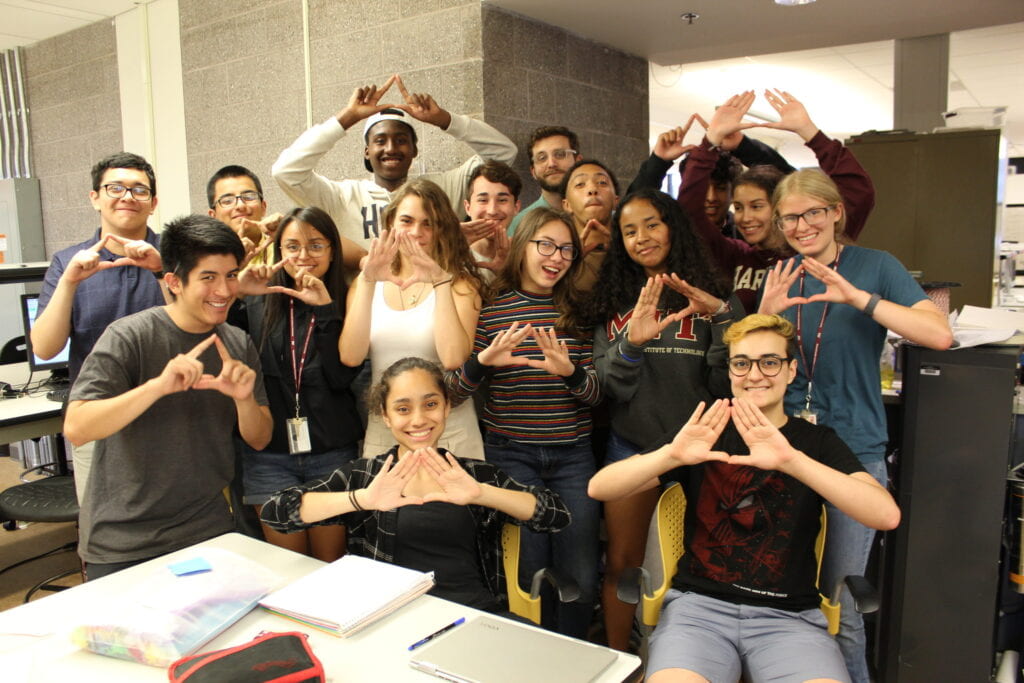
MITES Summer is a six-week residential program at MIT for rising high school seniors. You live in the MIT dorms and take five courses: math, life sciences, physics, humanities and a project-based STEM elective. Weekdays run from 9 am to 5 pm, and evenings and weekends are for homework, social events and trips around Boston. Lab tours and college admissions counseling run alongside the classes, and the summer ends with a Final Symposium where you present a hands-on project.
 Sean Stevens · Sources
At a glance
Official facts · checked 26 Nov 2026- 2027: Not announced yet. 2026: 20 June to 31 July
- In 11th grade or equivalent at the time of application. Public, private or homeschooled students. US citizen or permanent resident with a current green card (visas do not qualify)
- Free
- In person, MIT dormitories, Cambridge, Massachusetts
- Length
- Six weeks
- Included / budget separately
- Included: accommodation, meals (Provided free). Separately: Transportation to and from MIT
- Deposit and refunds
- Not published
- Financial aid
- Not published
- Apply by
- 2027: 1 February (Student application and recommender names), 15 February (Recommendations)
- Cohort and selectivity
- MITES reviews applications holistically and keeps a waitlist, with no minimum GPA and test scores optional. It publishes no cohort size or acceptance rate
- Credit or certificate
- Written evaluation from each instructor (no grades or high school or college credit)
- Official page
- mites.mit.edu/discover-mites/mites-summer
Get the key facts by email
The dates, costs and how to apply, then 2 reminders: 1 Feb (2 weeks before) and 12 Feb (3 days before).
Should you apply?
SucceedWhy it's worth it
MITES covers classes, housing and food, and the summer includes admissions counseling, lab tours and a written evaluation from every instructor. The program is also built around students from underserved backgrounds, and that focus shapes both who gets in and the community you'd be part of.
What it asks of you
It's a full-time summer. On top of 9 am to 5 pm weekdays, MITES says students report about six hours of homework each weekday and four to six on each weekend day, with midterms in week 3 and finals in week 6. Getting to and from Cambridge is the one cost a family covers.
Who should skip it
Students who need their summer to earn credit toward graduation or a college transcript, because MITES gives no grades or credit at all, only qualitative evaluations.
What does a typical week look like?
Weekdays run from 9 am to 5 pm with a lunch break, and MITES's sample week shows how full they are. On Monday, Wednesday and Friday you'd have life science, calculus and physics back to back in 90-minute blocks, then a two-hour STEM project course from 3 pm. Tuesday and Thursday open with humanities and fill the rest of the day with recitations for each science, a writing tutorial, a community meeting, a scholarships workshop and a tour such as the MIT Media Lab.
Evenings are for office hours and homework, with admissions counseling fitted in on Tuesday. The sample Saturday has an MIT Museum tour, a beach afternoon and a cluster meeting, and Sunday is left for rest, study and exploring Boston and Cambridge.
Who teaches the classes?
Each course has an instructor backed by a teaching assistant. MITES requires instructors to hold an undergraduate degree, and they range from graduate and PhD students to working scientists, engineers, mathematicians and high school teachers, with many staff being MITES alumni themselves. Teaching assistants have finished at least one year of college, and they run the recitations, office hours and tutoring behind each class.
Project courses change with the instructor who designs them, so past electives such as Architecture, Engineering Design, Machine Learning, Genomics and Electronics may not be offered in your year.
How are students looked after on campus?
Every student lives in the MIT dorms for the full six weeks, even those who live near Boston, and supervision is built around that. Each residential teaching assistant acts as a residential advisor in the dorm and leads a cluster of 8 to 12 students, while live-in Residential Life Leads are on call through the evenings and nights. MITES looks for people with residential life and crisis-management experience for that role.
Two program facilitators also live in the dorms and make sure staff and students follow MIT's guidelines for programs with minors. All staff are at least 18, and every job offer depends on passing a background check. Meals are provided along with housing.
What do you leave with?
You leave with a written evaluation from each instructor and a finished project, but no grades or credit. Even with homework and exams, MITES gives no formal grades and no high school or college credit. Each instructor instead writes a qualitative evaluation of your strengths, areas for growth and contributions to the class, and MITES encourages students to send these with college applications as supplemental material. How much weight a college gives them is up to that college.
Your elective also ends in a hands-on project, which you present at the Final Symposium to the wider MIT community.
How are applicants chosen?
Selection is holistic, so there's no minimum GPA, and test scores are optional, although MITES strongly encourages sending them. It looks for a demonstrated interest in science and engineering, a strong academic record and students who are motivated and focused on growth, which it judges through your transcript, short answers, activities and recommendations.
The program exists to serve underserved students. MITES strongly encourages applicants who are underrepresented in science and engineering, come from low-income families (qualifying for free or reduced lunch can show this), would be the first in their family to attend college, come from families without science or engineering degrees, or attend high schools that send few students to top-tier colleges, especially rural or predominantly minority schools. Every eligible applicant is evaluated regardless of race or ethnicity, and one short answer asks directly why a program for underserved students is right for you.
Homeschooled students can apply too, and they should ask people outside their family for recommendations. A visa doesn't count toward eligibility, so you need US citizenship or a current green card. MITES doesn't publish how many students it admits, but it does keep a waitlist.
How do you apply?
Applications go through the MITES portal at mites.slideroom.com, and there's no application fee.
Create an account with an email address you check regularly. The same form covers MITES Semester, and if you tick both programs you'll be offered a place in one at most and can't switch.
Enter your course history and upload an unofficial transcript with your 9th and 10th grade results and first-quarter 11th grade grades if you have them, plus any SAT, PSAT, ACT, AP or ACT Aspire/PLAN scores.
Write six short answers of up to 300 words each (the question on why you fit MITES allows 400) and fill in your extracurricular activities.
Name a math or science teacher, a humanities teacher and a school counselor or administrator as recommenders, and submit everything by 11:59 pm PST on 1 February 2027.
Make sure all three recommenders submit the online form by 11:59 pm PST on 15 February 2027, because MITES doesn't accept letters and your application is incomplete without them.
Watch your email for a decision in mid- to late April 2027, then complete the enrollment materials, which may include proof of citizenship or permanent residency.
What should you do next?
Frequently asked questions
More programs to explore
- Research in the Biological Sciences (RIBS)University of Chicago Summer Session
- Cell Biology Summer Science ProgramSummer Science Program
- Natural Sciences Summer CourseAtlas Summer Courses
- Academic Insights – Earth SciencesImmerse Education
- Emory Pre-College ProgramEmory Pre-College Programs
- Bio Bob: Genomes and EnvironmentsRidley College
- The Secret Life of the BrainVanderbilt Summer Academy
- Biomedical Research AcademyPenn Arts and Sciences High School Programs
Sources
- MITES Summer – Mites
mites.mit.edu · Official page
- MITES - SlideRoom - Login
mites.slideroom.com
- FAQs for prospective staff – Mites
mites.mit.edu
- Join our team – Mites
mites.mit.edu
- Apply to MITES! – Mites
mites.mit.edu
- Apply to MITES Semester and MITES Summer – Mites
mites.mit.edu
- MITES Semester and MITES Summer FAQs – Mites
mites.mit.edu