
Emory Pre-Med Institute
Applications open
Biology
01 Feb 2027
From $8,264
15-17
Atlanta
In-person
by Penn Arts and Sciences High School Programs
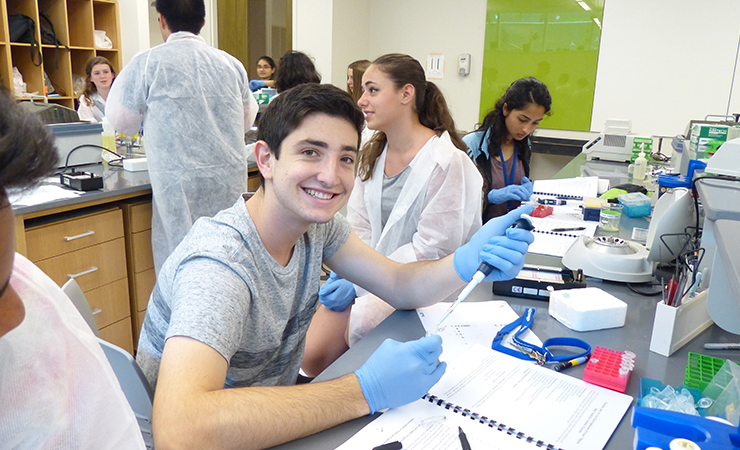
The Biomedical Research Academy is a three-week residential summer program on the University of Pennsylvania campus in Philadelphia for students in grades 9 to 11. Each weekday starts with lectures from the academy's directors and from guest scientists and clinicians at Penn, followed by a small-group journal club where you pick apart published research. Afternoons are spent in the lab, either running molecular biology experiments or analyzing DNA data in Python, and in the final days you present your journal club articles to the rest of the group.
 Sean Stevens · Sources
Get the key facts by email
The dates, costs and how to apply, all in one place.
Succeed's assessment
In short
Why it's worth it
Nine of the 13 afternoon labs are hands-on molecular biology in Penn's undergraduate teaching labs, and the daily journal club has a Penn researcher teaching you to read and critique published studies, which you then present to the group.
What it asks of you
You'll spend three weeks living on campus, with no commuter or online version, and Penn bars residential students from holding a job, doing research or an internship, or attending another program at the same time. The 2026 fee was $10,050 before travel, and Penn's only scholarships are a limited number for students at School District of Philadelphia public and charter high schools.
Who should skip it
Students looking for an independent research project to point to. The experiments, such as typing your own blood and analyzing a mock disease outbreak, are the same for everyone, and the main piece of work you produce is a journal club presentation on other scientists' papers.
Lectures start at 9 a.m. each weekday. In the 2025 schedule they ran until 10:50 a.m. Then came an hour of journal club, sometime between 11:10 a.m. and 1:10 p.m., and lab from 1:30 to about 4:30 p.m. Most mornings were two one-hour talks, many of them from Penn researchers, such as Dr. Cesar de la Fuente on discovering new antimicrobial peptides and Dr. Nancy Spinner on finding disease-linked mutations with genomics. The last Thursday and Friday were given over to student journal club presentations.
Of the 13 lab sessions, nine are wet lab, where you use PCR, gel electrophoresis and ELISA to work out your blood type, study gene expression in bacteria and analyze a mock disease outbreak. The other four are computational, where you analyze real biological data in Python, and you don't need any coding experience. Some lab materials are hazardous, so the dress code is strict: long pants, closed shoes and shirts with sleeves.
Outside class, the residential staff plan daily activities, such as trivia or arts and crafts nights during the week and off-campus trips on weekends to places like the beach or a Phillies game. Otherwise, Penn says, students are mostly studying or working on assignments.
Two co-directors run the academy, and Penn scientists come in to teach particular topics. Dr. Kieran Dilks earned his PhD at Penn in 2006 and was a postdoctoral researcher at Princeton before turning to teaching. He now teaches high school in Haddonfield, New Jersey, and is a part-time biology instructor at Penn. Ryan Dilks, the other co-director, has taught science at Cherokee High School since 1997 and holds a master's degree in teaching and learning.
Guest lecturers are scientists, clinicians and faculty from Penn's Department of Biology and School of Medicine, and the lineup changes each year. Journal clubs meet in small groups guided by a Penn researcher or faculty member, and Penn says its academies also use graduate and undergraduate teaching assistants. It doesn't publish a class size or staff ratio. In practice, that means experienced teachers lead the day-to-day work, and the research expertise comes through the guest talks and journal clubs.
Penn takes students in 9th to 11th grade who will have finished a year of high school biology before the academy starts, and it strongly advises a year of chemistry too. If you're still taking biology when you apply, send a report card or unofficial transcript showing at least one marking period, and if your course was Living Earth or Living Environment, include its course description so the admissions committee can review it.
Penn says a successful applicant has at least a 3.5 GPA, strong writing and recommendations, and a range of extracurricular interests, while test scores aren't required. Complete applications are reviewed in the order they arrive until the academy fills, and decisions can take up to six weeks. The 2026 academy reached capacity, so it pays to apply well before the deadline, although Penn does keep a waitlist once an academy is full.
International students are welcome. Because the academy is non-credit, Penn can't sponsor a student visa, so you'd need a tourist or B-2 visa, and Penn suggests international students apply by February to leave time for visa processing. Non-native English speakers need a TOEFL iBT score of 100, an IELTS score of 7 or a Duolingo English Test score of 130, unless they'll have attended an English-medium school for at least two years by the time they enroll.
Essays
Two essays of up to 400 words each, one on why this program fits your goals and one on two of your extracurricular activities, plus a third on your English background if you're a non-native speaker.
Transcript
Your full transcript from the previous school year, official or unofficial, along with a syllabus for your biology prerequisite course.
Recommendation
One letter from an adult who knows your work, written on their organization's letterhead and naming this academy.
No late additions
Penn won't accept extra materials once you've submitted unless the admissions committee asks, so upload everything first.
The 2026 fee was $10,050 for the three weeks. It covered teaching, a room in Penn housing, the meal plan, linens, gym access for students 15 and older, activities and trips, and supervision. Penn hasn't published the 2027 fee, and because the academy is fully residential, there's no commuter or online option.
On top of that you pay a $100 nonrefundable application fee, plus travel to Philadelphia, airport transfers, meals off campus, medical costs, laundry supplies and spending money. Students with a non-US permanent address also pay a mandatory, nonrefundable international registration fee to ESF Pre-College, Penn's residential partner, which includes health insurance with a deductible for the length of the program. International students should also check the cost of a B-2 visa with the US government. Penn says you don't need to buy any course materials, but you do need a laptop or tablet with administrator access so you can install software.
To hold a place you pay a $1,500 deposit. It counts toward the total but is never refunded and can't be moved to another Penn program. The balance is billed through PennPay, typically from early May and due by June, and anything paid late carries a 1.5% penalty and puts your place at risk. If you withdraw in writing by 15 May, Penn refunds everything except the deposit, but it makes no adjustment for arriving late or leaving early.
Penn offers no financial aid beyond a limited number of scholarships for Philadelphia residents at School District of Philadelphia public or charter high schools, which cover the program, housing, meals, activities and supervision but not travel or spending money. Families can pay with a 529 college savings plan.
ESF Pre-College runs residential life for Penn. It recruits and supervises the residential staff, organizes the evening and weekend program and helps look after students' health and safety on campus, and that supervision is included in the fee. Students live in Penn's residence halls, which is why they must be at least 13, and only those aged 15 or older can use the gym.
Within two weeks of admission, ESF sends enrollment instructions, and every residential student then has to register and complete its required paperwork through its online system, Bravo. If you need physical or academic accommodations, Penn says it makes efforts to meet reasonable requests with appropriate documentation, and you can ask about them at hsprogs@sas.upenn.edu.
You leave with a certificate of completion from Penn, not college credit, and there's no official University transcript, since only Penn's Pre-College Programs carry credit. A digital copy of the certificate is available from the program office, and once you've finished you can ask your Penn instructors for a letter of recommendation.
Your own piece of work is the journal club presentation on the research articles your group studied, given to your classmates in the final days. The skills come with you too: lab techniques like PCR, gel electrophoresis and bacterial transformation, some Python for analyzing biological data, and practice taking apart a published study.

Sean
Founder, Succeed
Talk it through with Sean
“I can help you compare the programs you're considering, think through the practicalities and work out what makes sense for you.”
20 minutes · No obligation to enroll
Succeed has a commercial partnership with this provider.
Save this program in Succeed to compare it with similar programs, dates, costs and formats in one place.
Compare with other programshs.sas.upenn.edu · Official page
hs.sas.upenn.edu
hs.sas.upenn.edu
hs.sas.upenn.edu
hs.sas.upenn.edu
hs.sas.upenn.edu
hs.sas.upenn.edu
hs.sas.upenn.edu
Not ready to decide yet? Keep it for later.