
The Science of Food, Nutrition and the Biological World
Applications open
Biology
12 Mar 2027
From $8,371
15-18
Los Angeles
In-person
by University of Chicago Summer Session
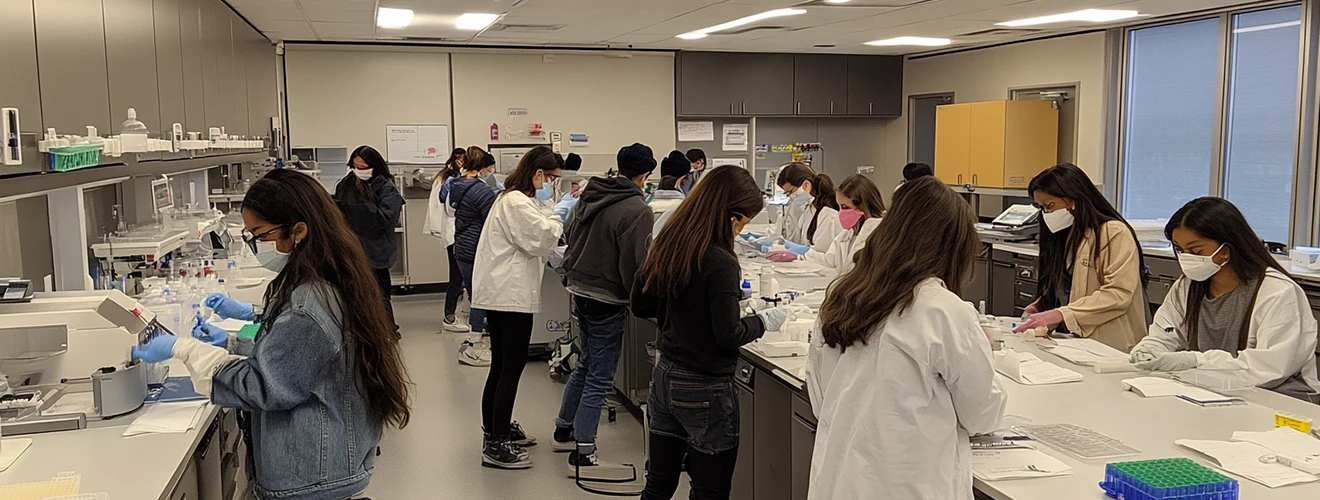
Research in the Biological Sciences (RIBS) is a four-week residential lab course at the University of Chicago for 10th and 11th graders. You spend the first two weeks training in basic molecular, microbiological and cell biology techniques and the rest of the course on your own independent project, as the course moves on to current molecular methods in areas such as genetics, developmental biology and cancer biology. It ends with a research forum where you present your results.
 Sean Stevens · Sources
Get the key facts by email
The dates, costs and how to apply, then 2 reminders: 30 Dec (2 weeks before) and 10 Jan (3 days before).
Succeed's assessment
In short
Why it's worth it
You spend full days in university lab facilities, and the second half of the course is your own project, presented at the end. That's much closer to doing research than a course built around lectures and demonstrations.
What it asks of you
You'll have four weeks of 9-to-5 days in the lab with weekly writing on top, and you have to live on campus the whole time, since Practicum students can't commute, even from Chicago. The fee is high, and aid covers only part of it.
Who should skip it
Students who've already spent serious time in a research lab, because the first two weeks are a survey of basic techniques before the project starts.
No switching once you start
Practicum students aren't allowed to change course during the summer, so if lab work turns out not to suit you, the only options are to stay or to withdraw.
Class runs from 9:00 am to 5:00 pm, Monday to Friday, and most of it happens in the lab, with lectures fitted in when an experiment needs background. Alongside the bench work you'll write something every week, keep a detailed lab notebook, read original research articles, give group presentations and attend a weekly lunchtime seminar given by research faculty.
Outside class you'll have homework, but residential staff also run daily activities across campus, Hyde Park and the rest of Chicago, from museum outings to baseball games, and many are free or low-cost. Meals are in the dining commons, which serves breakfast, lunch and dinner with vegetarian, vegan and gluten-free options.
You need to be in 10th or 11th grade, at least 15 years old, and to have taken high school biology. UChicago says students do best when they've completed a year of advanced biology with a strong grade, so that's the clearest thing your transcript can show. UChicago doesn't publish a class size or acceptance rate, and test scores are optional.
The application asks for:
Transcript
An unofficial transcript covering every high school year so far, plus a grade report for current courses if they aren't on it yet.
Two essays
Why you chose this course and how it connects to your interests and plans (up to 500 words), and your most rewarding academic project or experience (up to 250 words).
Writing sample
A typed essay or research paper in English that shows your teacher's grade and comments. Lab notes aren't accepted, so it has to be expository prose.
Recommendation
One letter from a teacher in a subject related to the course.
Parent sign-off
Your parent or guardian gets a confirmation email, and UChicago won't review your application until they complete it.
Applications go through UChicago Summer Session's application page.
The 2027 application opens in December, and you can list up to four course choices in order, although you'll be admitted to only one.
Submit everything, including the financial aid section if you need aid, by 13 January 2027, which is the only deadline for RIBS.
Ask your recommender early, because UChicago won't review your application until at least one letter arrives.
Decisions for this round come out in mid-March.
If you're admitted, accept and pay the $1,000 deposit within seven days, then pay the rest of the fee within four weeks of admission or lose your place.
The 2026 fee for RIBS was $15,200, and a 2027 price hasn't been published yet. That one fee covers tuition, your residence hall room and dining-hall meals, and it includes accident and sickness insurance for the four weeks. On top of it you pay the $75 application fee (waived if you apply for aid), travel to and from Chicago, any required course materials and spending money for outings. International students should also budget for visa costs.
Need-based aid is partial only. In 2026, depending on eligibility and available funds, it could bring the fee down to $7,600 for families with household income under $125,000 and to $3,800 for those under $80,000. Awards go first-come, first-served, and you have to request aid in the application with your parents' tax documents, because UChicago can't award it after a decision.
The $1,000 deposit and the application fee are never refunded if you withdraw. In 2026 the rest of the fee could be refunded on written request until 4 May 2026, with nothing back after that, so settle your summer plans before that point in the cycle.
You leave with a letter grade (A to F) and 200 UChicago units of credit, which UChicago counts as two undergraduate courses, or 6.6 semester hours, recorded on an official UChicago transcript. UChicago notes that college applications, including the Common App, will require you to submit that transcript, so the grade travels with you. Whether another university accepts the credit is up to that university, and it won't count toward graduation if you later enroll at UChicago.
You also leave with your own project results, presented at the closing research forum. And once you reach your final year of high school, having completed the program makes you eligible for UChicago's binding Summer Student Early Notification option, an early decision route that returns a decision within three weeks of a complete application, so it only makes sense if UChicago is your first choice.
Residential Assistants, many of them current UChicago undergraduates or recent alumni, live on the same floor as students, and the Residential Director and assistant directors can be reached by students and families 24 hours a day. In 2026, students under 18 lived in Woodlawn Residential Commons in single or double rooms, with a front desk staffed around the clock and an ID check at the entrance.
Students must be inside the residence hall from 10:00 pm to 6:00 am and sign in with their RA each night, and repeated curfew violations can lead to dismissal. Alcohol and drugs fall under a zero-tolerance rule, so a student found with them, or even around them, faces immediate dismissal. Four-week students can use Student Health Services, with an on-call doctor after hours and the University of Chicago Medical Center on campus. If a student has to leave for health reasons, a parent or guardian must collect them within 48 hours, at the family's cost.

Sean
Founder, Succeed
Talk it through with Sean
“I can help you compare the programs you're considering, think through the practicalities and work out what makes sense for you.”
20 minutes · No obligation to enroll
Succeed has a commercial partnership with this provider.
Save this program in Succeed to compare it with similar programs, dates, costs and formats in one place.
Compare with other programssummer.uchicago.edu · Official page
summer.uchicago.edu
summer.uchicago.edu
summer.uchicago.edu
summer.uchicago.edu
summer.uchicago.edu
summer.uchicago.edu
summer.uchicago.edu
Not ready to decide yet? Keep it for later.