
Application deadline
29 January 2026
International applicants.

An immersive laboratory research experience where students use CRISPR in yeast to investigate cell-cycle genes and connect findings to human health.
See Succeed's assessment of the programme, who it may suit, the estimated total cost, what applying involves and what is still to confirm.
or let us know if .
What Succeed checks
We review public program details such as eligibility, age range, cost, duration, location, format, accommodation, meals and application timing.
What Last verified means
Last verified is the latest date Succeed checked the public details shown on this page. Program dates, prices and availability can still change.
How official sources are used
Succeed uses official provider information where available, then rewrites it into a student-facing summary for comparison and planning.
Why some dates are reference dates
If the current cycle is not available, Succeed may show the latest verified cycle dates so you can understand typical timing.
Succeed is independent from this provider unless a partnership is clearly stated.
Current status
Closed
Eligibility
Current high school juniors
Age range / Year group
Ages 15-18
Location / Region
River Falls, Wisconsin, United States
Cost
$11,800
Duration
5 weeks
Format
In-person
Students conduct genuine laboratory research on cell-cycle genes using CRISPR and baker’s yeast, building practical experience in molecular biology, genetics, cell culture, and bioinformatics.
Teams design and verify their own gene edits, analyze downstream effects, and communicate findings through a collaborative manuscript, poster, and defense.
This is best suited to academically motivated students ready for intensive, highly collaborative research and residential campus life.
The Cell Biology Summer Science Program is an immersive research experience organized by SSP International. Participants investigate cancer-relevant cell-cycle genes in baker’s yeast while learning cell biology, molecular biology, genetics, CRISPR gene editing, and bioinformatics.
Working in teams of three, students select a gene target, design guide RNA, carry out and verify an edit, and characterize its effects on cell physiology. Faculty instruction, guest speakers, scientific literature, collaborative writing, and a poster defense connect laboratory technique with the wider research process.
Students complete the full CRISPR workflow, from guide-RNA design through edit verification and phenotype analysis.
The project connects yeast cell-cycle research to questions about uncontrolled growth and human health.
Teams gain unusually broad practical exposure across cell culture, molecular biology, genetics, microscopy, and bioinformatics.
Collaborative manuscript authorship and poster defense develop scientific communication alongside laboratory technique.
The residential model combines intensive research with faculty dinners, guest speakers, field trips, and a diverse peer community.
High school juniors who enjoy biology, have strong algebra skills, and want a demanding, collaborative laboratory experience.
You need a flexible summer schedule, want to pursue your own research topic, or primarily want immediately publishable or competition-ready work.
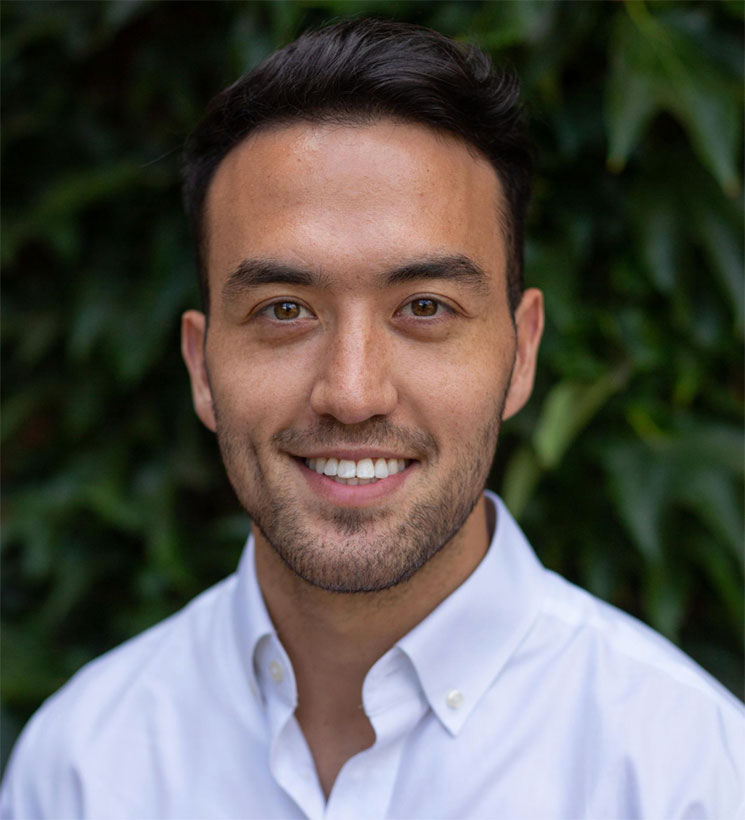
Sean
Founder, Succeed
Talk it through with Sean
“I can help you compare the programmes you're considering, think through the practicalities and work out what makes sense for you.”
20 minutes · No obligation to enrol
A practical overview of cost, accommodation, meals, dates and provider details to review before deciding.
Cost and what is included
$11,800; includes Room and board, Tuition, Laboratory supplies, Local transportation.
Accommodation
Double-occupancy college dorm
Meals
Room and board included
Provider details
Review the Summer Science Program provider page and official sources before making a final decision.
Dates and logistics
5 weeks; River Falls, Wisconsin, United States.
What to check before committing
Confirm current dates, payment terms, travel arrangements, cancellation rules and what is included with the provider.
Compare this program with similar options before deciding on dates, cost, format and fit.
Compare with similar programsEffort level
High.
Best started
Begin six to eight weeks before the winter application deadline so teachers and your school have time to prepare supporting materials.
Main challenge
Explaining your motivation while showing readiness for collaborative, uncertain research.
Choose the single SSP research track that best matches your interests.
Confirm that biology and Algebra II will be completed for credit and a grade by June.
Ask a current math or science educator for the required recommendation early.
Draft a specific explanation of what you would contribute and hope to gain.
Useful if
You already enjoy biology, algebra, scientific reading, and team problem-solving.
Participants progress from foundational instruction to increasingly independent team research, completing a full CRISPR investigation and communicating the results.
Learn cell biology, molecular biology, laboratory safety, CRISPR methods, and scientific literature skills.
Form a three-person team and identify a cell-cycle gene needing further study.
Design guide RNA and prepare the materials needed to target the selected gene.
Carry out the CRISPR protocol and verify whether the edit reached its intended target.
Characterize phenotypic and genotypic changes in baker’s yeast.
Compare experimental findings with published research and draw supported conclusions.
Coauthor a manuscript and poster, then defend the team’s work.
The program covers the following focus areas.
Cell Biology
Practice aseptic technique, yeast culture, transformation, and phenotypic and genotypic characterization.
Molecular Biology and CRISPR
Extract and characterize DNA, run PCR and gels, design guide RNA, and edit genes.
Laboratory Instrumentation
Use micropipettes, microplate readers, microscopy, and electronic laboratory notebooks.
Bioinformatics
Use online tools to characterize targets, design guides, and analyze sequences.
Scientific Communication
Interpret journal articles, visualize data, coauthor a manuscript, and defend a poster.
Curriculum may be adjusted based on participant interests and current developments.
A typical day during the program.
Teams learn techniques and conduct their cell-cycle gene research.
Faculty teach the underlying science and research methods.
Campus life includes trips, outdoor games, and craft nights.
Participants dine at assigned tables with faculty for conversation.
Summer Science Program faculty teach the scientific foundations and hands-on techniques used in the research, while trained scientists mentor participants. Guest lecturers and speakers also share their research and career experiences.
The fast-paced program emphasizes cooperation and a high level of personal faculty attention.
Housing arrangements vary by campus; the typical setup uses shared bathrooms and gender-separated accommodations.
After completing this program, participants often pursue:
Receive a letter confirming completion of the program.
Request a recommendation letter from a faculty member.
Join an alumni network of more than 4,300 members.
Access College Link mentorship with younger alumni in college.
Use the experience to assess whether STEM research fits your goals.
SSP retains intellectual property over program outcomes, so competition use requires approval and substantial independent advancement.
The latest verified Cell Biology session was based at the University of Wisconsin-River Falls in River Falls, Wisconsin. Campus assignments are issued after admission and cannot be changed.
SSP provides group transportation between its designated airport and campus on official arrival and departure days.
Program fee
$11,800 — Maximum 2026 all-inclusive fee.
Funding or discounts
What's included
Room and board, Tuition, Laboratory supplies, Local transportation
Current high school juniors only.
Aged at least 15 and not yet 19.
Complete biology by June for credit and a grade.
Complete Algebra II by June for credit and a grade.
Strong algebra skills are highly recommended.
AP or advanced-level classes are not required.
Self-study does not satisfy course prerequisites.
Freshmen, sophomores, and seniors are ineligible.
Review the Cell Biology research track and confirm that it is your one project choice.
Check the junior-year, age, biology, and Algebra II requirements.
Prepare an application explaining your motivation, interests, contribution, and goals.
Arrange one recommendation from a current school math or science educator.
Coordinate the required school materials and monitor their receipt in the portal.
Submit every application component by the deadline for your applicant category.
After admission, a parent or guardian may request the financial-aid application.
Next cycle not announced yet. These dates are from the latest verified cycle and should be used as a reference only.
Application deadline
29 January 2026
International applicants.
Application deadline
19 February 2026
Domestic applicants.
Programme dates
15 June-18 July 2026
Applications open
31 December 2025
Latest verified 2026 cycle.
International decisions
Mid-March 2026
Admissions decisions released.
Domestic decisions
Mid-April 2026
Admissions decisions released.
| Milestone | Date | Timezone | Status | |
|---|---|---|---|---|
Application deadline | 29 January 2026 | Local | Reference date | |
Application deadline | 19 February 2026 | Local | Reference date | |
Programme dates | 15 June-18 July 2026 | Local | Reference date | |
Applications open | 31 December 2025 | Local | Reference date | |
International decisions | Mid-March 2026 | Local | Reference date | |
Domestic decisions | Mid-April 2026 | Local | Reference date |
For a student seriously exploring cell biology or laboratory research, the program offers substantial depth: participants use real techniques, work through uncertain results, and communicate their findings in scientific formats. The combination of intensive research, close faculty attention, and residential community can reveal whether a STEM research pathway genuinely fits.
The main limitation is structure rather than rigor. Students follow a prescribed collaborative project, must commit exclusively for the full residential session, and generally cannot treat the resulting work as an independent competition or publication project without additional research and approval.
Next step with Succeed
or let us know if .
Succeed replies first, usually within a working day
Compare these related science and medicine programs if you want a different subject emphasis, setting, or age range.
Medical and biological sciences in Cambridge
Best for
Older students comparing biology with medicine
Cambridge biotechnology summer study
Best for
Students drawn to applied biological technology
Modern scientific methods and questions
Best for
Younger students exploring science broadly
Ecology and environmental science in Berkeley
Best for
Students preferring ecosystems to molecular biology
Save this program in Succeed to compare it with similar programs, dates, costs and formats in one place.
Compare with other programsContent reviewed by
Co-founder, Succeed | Former secondary teacher and educational leader
Ben works at the intersection of education, technology and school adoption, with expertise in how secondary schools evaluate data-driven tools and how education technology is used in practice.
Succeed uses official provider information where available, but keeps this public page focused on comparison and planning inside Succeed.
Program content reviewed
Eligibility requirements checked
Dates and deadlines checked
Fees and aid reviewed
Housing details reviewed
Safety information checked
Application process reviewed
We use source material to verify core facts, then show older cycle dates as reference when a current cycle is not available. Always check current application instructions before applying.
Cell Biology Summer Science Program
by Summer Science Program
Get the full picture before you decide
Succeed's assessment, estimated total cost and what applying involves.
No account needed for the Guide or Compare.