
Engineering Design Lab
Applications open
Computer Science
01 May 2027
From $4,425
15-18
In-person
by Northeastern University Pre-College Programs
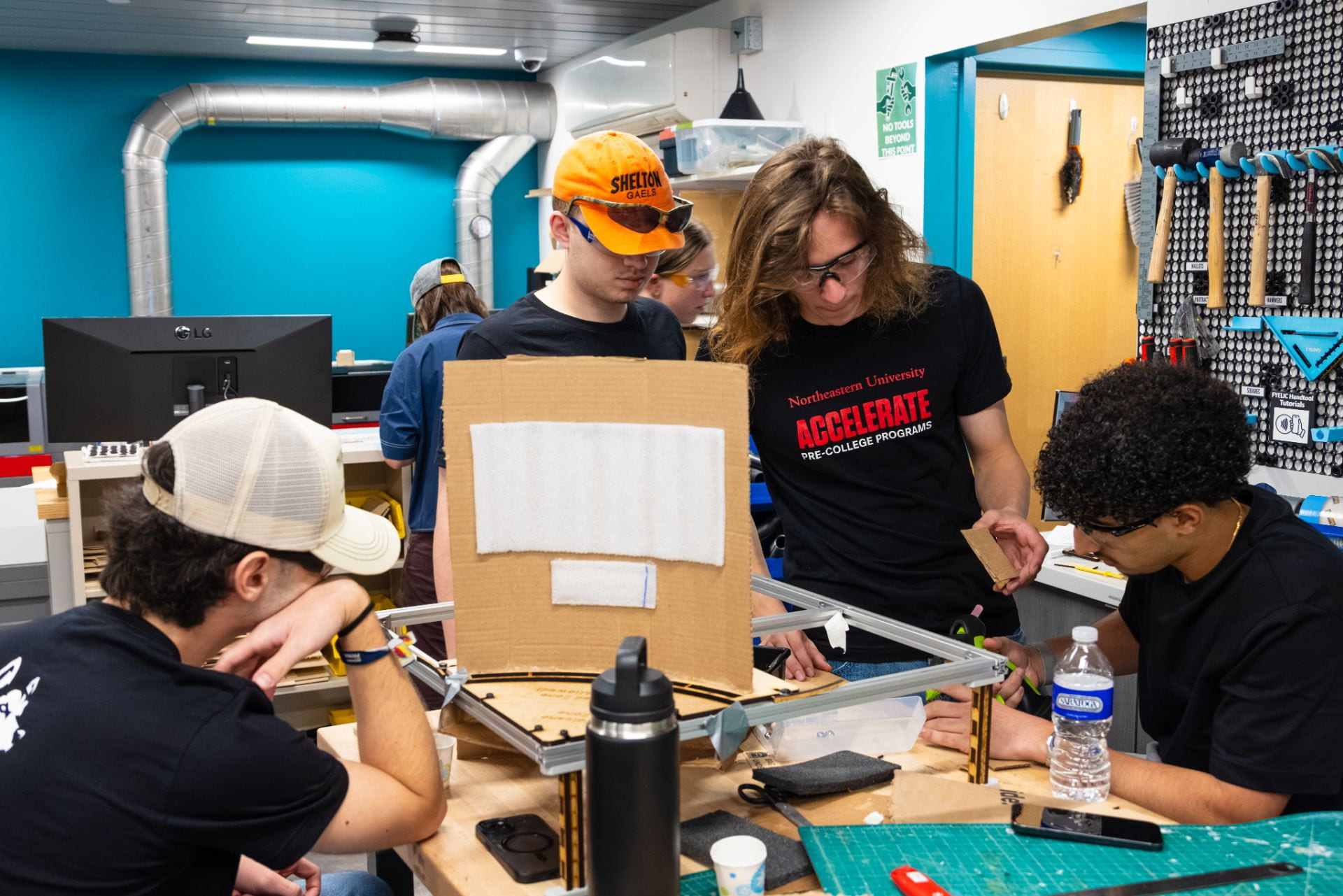
Over 12 days on Northeastern University's Oakland campus, you work in a team on a real Bay Area problem, such as wildfire detection, water conservation or air quality sensing, and build a working prototype in the makerspace with 3D-printed parts, laser-cut designs and Arduino hardware. Along the way you learn basic C++ programming for Arduino devices and the design software that drives the machines. You live in a campus residence hall, with evening and weekend activities around Oakland and the wider Bay Area.
 Sean Stevens · Sources
Get the key facts by email
The dates, costs and how to apply, then 2 reminders: 1 Mar (2 weeks before) and 12 Mar (3 days before).
Succeed's assessment
In short
Why it's worth it
You and your team build a working prototype yourselves, using tools such as 3D printers, laser cutters, CNC milling and Arduino code, and Northeastern connects the work to the companies, startups and local agencies tackling those same problems. That makes it a practical way to find out which kind of engineering you enjoy before you choose a major.
What it asks of you
It's 12 full days living on campus, with some group project work after class. At $6,995 before aid it's a large sum for under two weeks, so families on a budget should treat the need-based aid request as part of applying.
Who should skip it
Students who need something for a transcript, because the program carries no credit or grade and ends with a Recognition of Completion signed by a faculty member. A student already set on one engineering field may also find the mix of design, fabrication and coding more of a sampler than they need.
On weekdays you're in the program from about 9:00 a.m. to 4:30 p.m., and Northeastern says students spend much of each day designing, building and testing their projects. The session runs from move-in on Sunday 20 June 2027 to move-out on Friday 2 July 2027 and starts with orientation and welcome events.
Evenings and weekends are for optional social activities, some on campus, such as arts and crafts or outdoor recreation, and some off campus around Oakland and the wider Bay Area. Northeastern also expects some work outside class hours, usually group project work with your teammates, so not every evening is free.
Northeastern faculty lead most of its pre-college programs, with help from other faculty, instructors or graduate students, and current Northeastern students may work as teaching assistants. Northeastern doesn't name the instructor for this program and notes that faculty assignments can change.
Groups are small, with 15 to 30 students in a typical program, and Northeastern says small cohorts allow personal attention from faculty.
You need to be a rising junior or senior in high school when the program starts, which means finishing 10th or 11th grade in spring 2027. The application asks for an unofficial transcript or report cards and a personal statement of up to 250 words on your passion for the subject, why you want to enroll and what you hope to gain, and you can add a teacher or counselor as an optional reference. Since the program is built around problems like wildfire detection, water conservation and air quality, a statement that ties your interest in engineering to a real problem you've noticed answers the prompt directly.
Northeastern reviews applications the way it reviews undergraduate ones, weighing academics, activities and the rest of the file equally. International students are welcome as long as they can be present for the program, and they're considered for aid. Northeastern doesn't sponsor student visas for non-credit programs like this one, though, so check with the US authorities what you'd need to travel.
At full price a family pays $6,995, which covers tuition, course materials, a room in a campus residence hall, meals and social activities. Travel to and from Oakland isn't on that list. Northeastern also requires health or travel health insurance that covers you in Oakland for the whole program, and says most programs need a personal laptop.
Once you're admitted, a non-refundable deposit of 20% of tuition after any aid or discounts holds your place, which comes to $1,399 on the full $6,995. There's no formal payment plan, although Northeastern asks families who need more time for the final payment to email the pre-college team.
All admitted students are considered for need-based aid, which usually takes the form of a scholarship or a program discount that lowers what you pay. You ask for it inside the program application by giving your family's adjusted gross income from its latest federal tax return and the number of dependents, and the award arrives with your admissions decision. Children of benefits-eligible Northeastern faculty or staff get 33% off, and some partner high schools and community organizations sponsor students.
You live in a residence hall on the Oakland campus and have to be back in the hall by 9:00 p.m. every evening. Student Life staff, both professionals and current Northeastern students, live in the hall with you and run residential life and social activities, and the Accelerate Pre-College team, led by Senior Director Liz Quinn, oversees the programs.
Off-campus trips are chaperoned, and a parent or guardian can submit a leave request if you want to leave campus on your own. You can list allergies, restrictions and preferences on the program form, and staff work with campus dining to meet them as far as they can. Families can also email the team before enrollment to ask for academic, disability (ADA), dietary or religious accommodations.
Northeastern posts the application on its pre-college admissions page.
Apply
The online application opens in early December 2026 and asks for your transcript, a statement of up to 250 words and an optional reference.
Pick your round
Submit by 15 January 2027 (priority), 28 February 2027 (regular) or 15 March 2027 (late), each at 11:59 p.m. Eastern Time, but a program with very high interest may stop taking applications after the priority deadline.
Get your decision
Decisions and any aid award come by email in early February, mid-March or early April 2027, depending on your round.
Pay the deposit fast
Deposits are due by 18 February, 1 April or 15 April 2027, depending on your round. Northeastern admits more students than it has places and says programs typically fill before the deposit deadline, so an offer only becomes a place once you've paid.
Pay the balance
The rest of the tuition is due by 1 May 2027 at 11:59 p.m. Eastern Time.

Sean
Founder, Succeed
Talk it through with Sean
“I can help you compare the programs you're considering, think through the practicalities and work out what makes sense for you.”
20 minutes · No obligation to enroll
Save this program in Succeed to compare it with similar programs, dates, costs and formats in one place.
Compare with other programsprecollegeprograms.northeastern.edu · Official page
precollegeprograms.northeastern.edu
precollegeprograms.northeastern.edu
precollegeprograms.northeastern.edu
precollegeprograms.northeastern.edu
apply.northeastern.edu
admissions.northeastern.edu
precollegeprograms.northeastern.edu
Not ready to decide yet? Keep it for later.