
Deadline: Not announced yet · From $4,999 · 14-18 · In-person
In-person Program
Open, rolling admissions
Oxbridge Academic Programs The Oxbridge Institute for Advanced Studies
- 2027 program
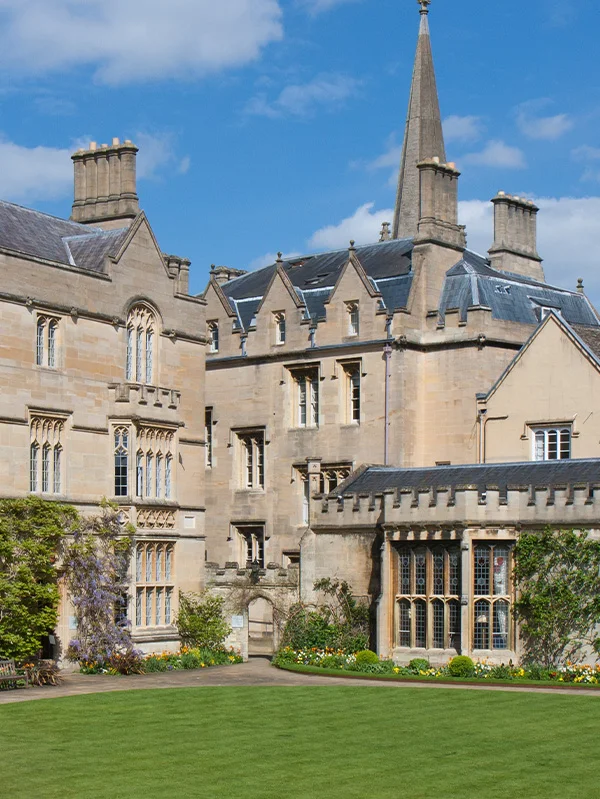
The Oxbridge Institute for Advanced Studies is a four-week residential research program at Pembroke College, Oxford, for students in grades 10 to 12, run by Oxbridge Academic Programs. You pick one of seven courses, such as AI and the World, Medicine and Public Health or International Relations, and settle on a research topic with your tutor by the end of the first week. You then spend the rest of the month working on your own project in a small group before presenting your results conference-style. Outside class there are talks on university and careers, as well as trips and activities around Oxford.
At a glance
Official facts · checked 10 Nov 2026- 2027: 2 to 30 July
- Students in grades 10 to 12. Applicants whose second language is English provide a TOEFL score or a short letter from their English teacher confirming fluency
- 2027: $12,995
- In person, Pembroke College, Oxford
- Length
- 4 weeks (28 days)
- Included / budget separately
- Included: accommodation, meals (breakfast and dinner). Separately: Airfare, daily lunch and personal spending (Oxbridge estimates $15 to 30 a day), Course materials fees for some courses, 2% credit card processing fee
- Deposit and refunds
- Deposit $500. Cancel in writing 75 or more days before the program start: tuition is refunded less a US$500 fee and non-refundable fees such as deposits and insurance
- Financial aid
- Oxbridge awards a select number of partial and full scholarships based on financial need, academic achievement and the student's ability to contribute to the program
- Apply by
- Rolling admissions
- Cohort and selectivity
- Applications are reviewed on a rolling basis and Oxbridge says rejection is rare. A student is turned down if their academic or behavioral record suggests they won't meet its standards
- Credit or certificate
- Grade reports with the course syllabus and the student's contributions and achievements, plus a letter from Oxbridge's executive director
Should you apply?
SucceedIt's worth it for a 10th to 12th grader who wants to spend a month in Oxford turning a topic of their choice into a supervised research paper. Families mainly after research experience on a budget will get less from it, since the fee of $12,995 to $13,795 also pays for a month abroad.
Why it's worth it
The month's classes are built around one project of your own, from choosing the question with your tutor to presenting what you found, so you come away having actually done research rather than just been taught about it.
What it asks of you
You need to give up most of July and commit to a topic by the end of the first week, then keep working on it for three more weeks with one tutor and a small group.
Who should skip it
Students who can't spend a month in England, or whose family can't stretch to the fee plus flights, because much of what you pay for here is the Oxford setting.
What does a week of research in Oxford look like?
You meet your tutor in a small group for three hours on six mornings a week, starting with research methods and moving on to your own project as the month goes on. On three afternoons a week there are presentations on making the move into higher education and the job market, and later in the month several afternoons are set aside to finish projects.
Breakfast and dinner are in hall, while lunch is yours to buy from the college snack bar or a nearby shop. Free afternoons and evenings fill up with optional activities, such as tours of the Bodleian Library and Christ Church, sports (Quidditch included), local Shakespeare productions and field trips to Stonehenge and London.
Who supervises your research?
Oxbridge says students work under the guidance of university and industry experts, but it doesn't name this program's tutors, and families who want to know who's teaching in 2027 are asked to email info@oxbridgeprograms.com. Across all its programs, Oxbridge says its faculty are professors and researchers from universities including Oxford, Cambridge, Harvard and Yale, many of them Rhodes, Gates or Marshall scholars, along with industry professionals. Teaching happens in small groups, although Oxbridge doesn't publish a class size for the Institute.
What do you have to show for the month?
You leave with a finished research project, which you've presented conference-style to your group. Shortly afterward, you and your parents get a set of grade reports showing the course syllabus and your contributions and achievements, along with a letter from Oxbridge's executive director.
Oxbridge says students can include the project in their transcripts, and that alumni ask it for extra copies of the grade reports to send with college applications. It doesn't mention academic credit, though, and how much weight a college gives the work is up to that college.
How hard is it to get in?
Getting in is mostly a matter of applying in time, because Oxbridge reviews applications on a rolling basis and says turning a student down is rare. It turns a student down if their academic or behavioral record suggests they won't meet its standards, and it gives a decision within three weeks of a complete application.
Classes in Oxford are taught only in English, so if English is your second language you'll also need a TOEFL score or a short letter from your English teacher confirming you're fluent.
Course choice
You list your course preferences from the seven research courses.
A reference
You give the name and contact details of a teacher or counselor who knows you well.
Personal statement
About 500 words on why you want to come, what interests you about your courses and what you'll bring to the program.
Grades and payment
A recent grade report plus a deposit or full payment, and the personal statement and grade report can follow once the deposit is paid.
What will the month really cost?
The four weeks cost $12,995 if you enroll by 31 December 2026 and $13,795 from 1 January 2027. That covers your room, classes, workshops, breakfast and dinner, field trips, organized activities, course supplies and airport transfers. Flights are extra, and so is lunch every day, with Oxbridge estimating that students spend $15 to $30 a day on meals, incidentals and souvenirs.
A few other costs can come on top. You can request a private bathroom for a fee that Oxbridge doesn't give, and some courses carry materials fees. Paying by credit card adds 2%, which you avoid by paying by bank transfer (ACH).
You can add the Paris Connection, six days in Paris from 30 July to 5 August 2027, for $2,750 by 31 December 2026 or $2,850 after that. Oxbridge gets you to Paris, but you book your own flight home. To apply you pay in full, put down $500 and join a monthly plan, or put down $1,000 and pay the rest in March or April 2027. The deposit comes back if you're not accepted.
Scholarships, based on financial need and academic merit, go toward part of tuition, so you'd still pay the rest along with travel, lunch and spending money. They're open only to students currently in grades 8 to 11 who haven't been on an Oxbridge program before, through a separate application due 9 February 2027. That's after the price rises on 1 January, and because awards depend on the places still free when applications are reviewed, applying for a scholarship doesn't hold you a spot.
Canceling costs more the closer you get to the 2 July 2027 start. The 75-day cutoff falls around 18 April 2027, and the 44-day mark around 19 May 2027.
| When Oxbridge receives your written cancellation | What you get back |
|---|---|
| 75 or more days before the start | Tuition minus a US$500 fee and non-refundable fees such as the deposit |
| 45 to 74 days before the start | Tuition minus the US$500 fee, 40% of tuition and 40% of the cost of any extension such as the Paris Connection |
| 44 days or fewer before the start | Nothing |
How are students looked after in Oxford?
The program Director, the Deans and some faculty live in the residence with students, so an adult is on hand around the clock. You check in with a Dean between 10 and 11 p.m. and must be in your own room by midnight, with gates locked after curfew and hallways or floors separated by gender. The college has 24-hour security, porters and CCTV, and the program office is staffed from 8 a.m. until well past midnight.
Every student is met at the airport within a set arrival window and escorted to Oxford, then taken back and seen through check-in at the end. There's a Medical Officer on site and 24-hour phone access to a U.S.-based doctor through WorldStrides, and Oxbridge strongly urges full medical insurance for students traveling from abroad. Students and parents sign a behavior contract, and anyone caught with alcohol or drugs is expelled and sent home at the family's expense. The full rules are on Oxbridge's health and safety page.

Sean
Talk it through with Sean
Want to talk it through?
“I can help you compare the programs you're considering, think through the practicalities and work out what makes sense for you.”
What should you do next?
If you're going to apply, doing it by 31 December 2026 keeps the fee for the 2 to 30 July 2027 session at $12,995 rather than $13,795. The application asks for your course preference and a teacher's or counselor's contact details, and the roughly 500-word statement can follow once you've paid the deposit. If you need a scholarship, use the separate scholarship application instead, due 9 February 2027, because you can't file the regular one at the same time.
Similar programs
View details
Deadline: Not announced yet · From $6,300 · 14-18 · Durham · In-person
MEDscienceTECH Visionaries
Applications open
10 Mar 2027 · From $5,800 · 15-18 · Boston · In-person
Save this program in Succeed to compare it with similar programs, dates, costs and formats in one place.
Compare with other programsFrequently asked questions
No. It's run by Oxbridge Academic Programs, a subsidiary of WorldStrides, Inc. based in Vienna, Virginia, which uses Pembroke College as its venue. Oxbridge doesn't present it as a University of Oxford course, although it says the company itself is accredited by the Accreditation Service for International Schools, Colleges and Universities (ASIC).
Only if your course requires one. Oxbridge says only a few courses do, and you'd be told well before the summer. The program also provides computers, so you can check email every day.
Yes, but Oxbridge points out that students are kept busy with classes and activities, so it suggests scheduling any family trip for before or after the program.
Sources
- The Oxbridge Institute for Advanced Studies
oxbridgeprograms.com · Official page
- Health and Safety
oxbridgeprograms.com
- Frequently Asked Questions
oxbridgeprograms.com
- Application and Admissions
oxbridgeprograms.com
- Program Costs, Tuition & Payments
oxbridgeprograms.com
- (opens in new tab)
oxbridgeprograms.com
- Information Sessions
oxbridgeprograms.com
- What Is Oxbridge?
oxbridgeprograms.com
Facts checked against the official page on 10 Nov 2026
Editor: Ben Stacy
Succeed has no commercial relationship with Oxbridge Academic Programs.
Spot an error? Report it