
In person in Cambridge, ages 14 to 18, from £6,995, several sessions.
Deadline: Not announced yet · From £6,995 · 14-18 · Cambridge · In-person
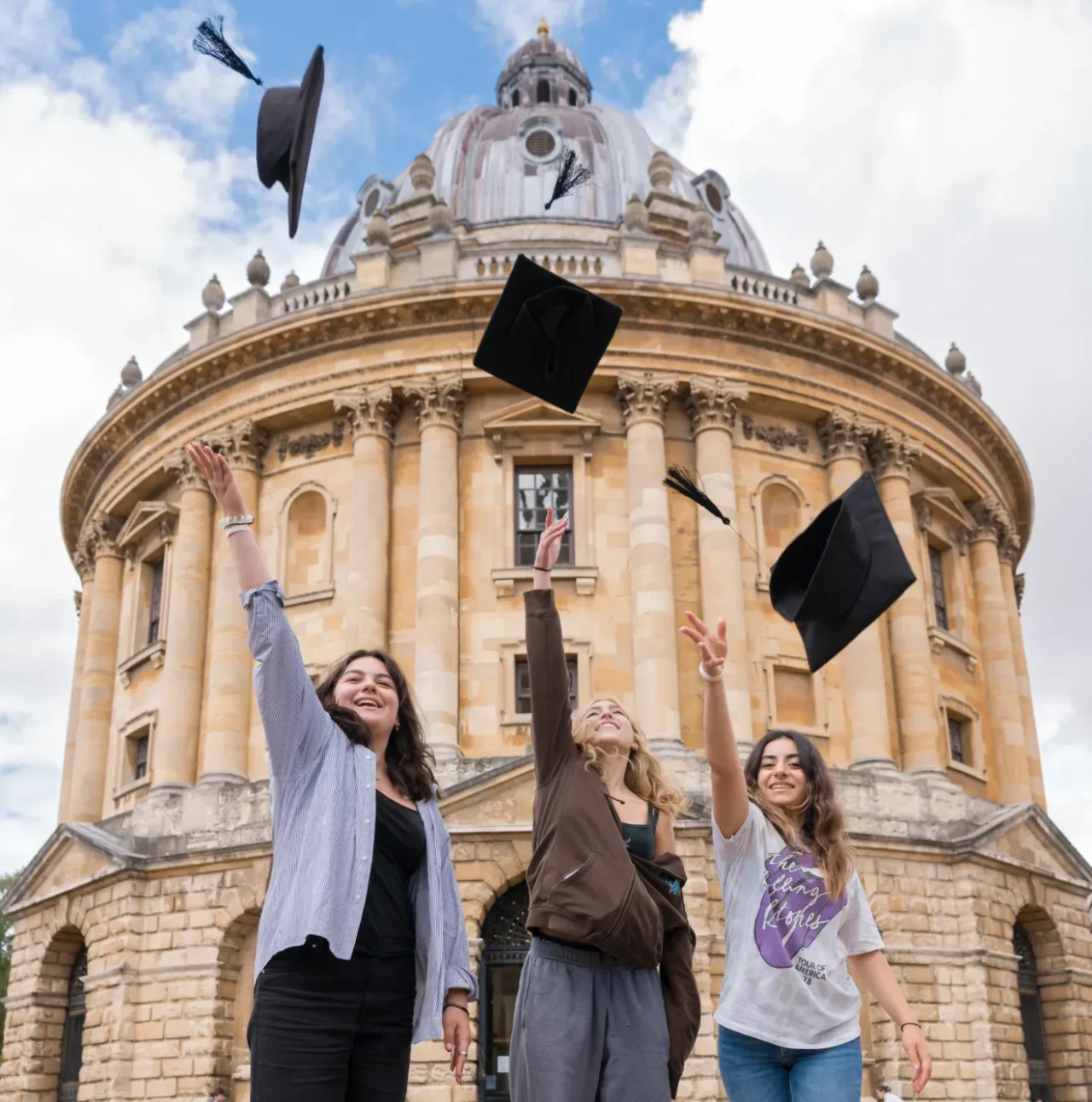
Over two weeks in Oxford, you take a daily discussion class with your tutor on topics from personality and the brain to memory, mood disorders and how language shapes thought. Around the classes come skills masterclasses, a Q&A with a young psychologist and a four-hour challenge in which your team designs and runs a questionnaire study on fellow students. You stay in Oxford college rooms, with day trips and evening activities organized by Oxford Scholastica Academy.
Why it's worth it
Nine topic classes take you from personality and brain structure through mood disorders to whether AI language models have a theory of mind, all taught as discussion rather than lectures, so two weeks give you a broad map of the subject before you choose a degree.
What it asks of you
Money and English are the real tests. At £7,995 for two weeks before lunches and flights, it's a large outlay for an introductory course, and you'll need confident, C1-level English to keep up in classes built on discussion.
Who should skip it
Students who want to do genuine research, because the Research Challenge lasts four hours and your data comes from classmates answering a questionnaire.
The listed tutor is Dr Alexandra Hibble, who has a doctorate (DPhil) in experimental psychology from the University of Oxford, lectures there part time and heads data and research at EdProof, where she uses data to support schools. Oxford Scholastica Academy notes that tutors may change, so treat the name as likely rather than guaranteed. Classes are capped at 15 students.
The final class, Class X, is built around the tutor's own research area, so its content depends on who teaches your session. Outside class, a young professional psychologist runs a Q&A about their path and careers in psychology and neuroscience.
Each class day is built around a discussion-based session with your tutor rather than a lecture, followed by study time to prepare for the next class and work on group projects, across 10 days of classroom learning in total. On top of that come 12 hours of skills masterclasses and the four-hour Research Challenge.
You get a couple of hours off at lunch to explore Oxford with friends, and afternoons and evenings fill up with organized activities such as punting on the Thames, an outdoor Shakespeare play at Oxford Castle, quiz and movie nights and a ball on a Thames boat, plus day trips to Blenheim Palace and Windsor Castle. Weekends are more relaxed, with optional activities. You need to be in your room by 10:30pm, with lights out at 11pm.
Everyone who completes the course gets an Oxford Scholastica Academy Certificate of Achievement, and students who meet the organizer's criteria also get a personalized letter of recommendation from their tutor. To graduate, you have to attend every compulsory session, hand in all the work your tutor sets and avoid plagiarism. You're also invited to apply for the one-year Ambassador Programme, which runs monthly virtual meetings on skills such as marketing and networking.
None of this is academic credit. The certificate comes from a private summer school rather than a university, and the British Accreditation Council accreditation Oxford Scholastica holds covers its teaching and pastoral standards, not your work. How much a recommendation letter counts is up to the universities you apply to.
The course is designed for 15- to 18-year-olds who haven't started university, and Oxford Scholastica sometimes takes bright, mature 14-year-olds too. There are no academic prerequisites. Instead, an admissions panel reads the personal statement on your registration form and looks for clear evidence that you want to learn about psychology.
You also need strong English, at Common European Framework level C1 (about IELTS 6.5). No test certificate is required, but the terms let Oxford Scholastica remove a student whose English falls short without a refund, or move them to paid English tuition, so if you're unsure it's worth booking a call with the admissions team before you apply.
Two weeks with a room in an Oxford college cost £7,995, or £6,995 if you live elsewhere, such as with family, although Oxford Scholastica has only a limited number of these non-residential places. The residential fee covers classes and materials, your room, breakfast and dinner every day, the activities and day trips, and graduation. Lunch isn't included, and the organizer suggests bringing about £20 a day in spending money. Flights are extra, and so is the optional £150 transfer from Heathrow. Students who need a UK visa or electronic travel authorization arrange and pay for it separately.
A £995 deposit holds your place and comes back in full if you're not accepted, but once you're in, it's refundable only within 14 days of paying it. The balance is due by 31 March 2027, or within seven days of the invoice if you're accepted later, and paying it by card adds a 3% surcharge. After that, refunds shrink fast through May, and illness or a refused visa doesn't change the scale, which is why the terms require comprehensive travel and cancellation insurance.
| When you cancel | What you get back |
|---|---|
| Within 14 days of paying the deposit | The deposit |
| On or before 30 April | 100% of the balance paid |
| 1 to 15 May | 50% of the balance paid |
| 16 to 31 May | 10% of the balance paid |
| From 1 June | Nothing |
Oxford Scholastica staffs the accommodation around the clock, with a matron responsible for health and wellbeing on each campus, first-aid-trained staff and a 24-hour emergency phone line for families. Boys and girls are housed separately by floor or corridor, buildings open only with a fob or key, and you sign in and out whenever you head into Oxford on your own. From dinner onward everyone is supervised, either at a group activity or back at the accommodation.
Alcohol, tobacco and e-cigarettes are banned, and the terms allow staff to send a student home without a refund for serious breaches. The safeguarding policy is published, and new staff go through safer-recruitment checks and a child-protection induction.

Sean
Talk it through with Sean
“I can help you compare the programs you're considering, think through the practicalities and work out what makes sense for you.”
In person in Cambridge, ages 14 to 18, from £6,995, several sessions.
Deadline: Not announced yet · From £6,995 · 14-18 · Cambridge · In-person
In person in St Andrews, ages 16 to 18, 24 July to 14 August 2027, from £6,950.
Deadline: Not announced yet · From £6,950 · 16-18 · St Andrews · In-person
In person in Cambridge, ages 16 to 18, from £5,995, several sessions.
Deadline: Not announced yet · From £5,995 · 16-18 · Cambridge · In-person
Save this program in Succeed to compare it with similar programs, dates, costs and formats in one place.
Compare with other programsoxfordscholastica.com · Official page
oxfordscholastica.com
oxfordscholastica.com
oxfordscholastica.com
oxfordscholastica.com
oxfordscholastica.com
oxfordscholastica.com
oxfordscholastica.com
Facts checked against the official page on 10 Nov 2026
Editor: Ben Stacy
Succeed has no commercial relationship with Oxford Scholastica Academy.
Spot an error? Report it