
Emory Pre-Med Institute
Applications open
Biology
01 Feb 2027
From $8,264
15-17
Atlanta
In-person
by Penn Arts and Sciences High School Programs
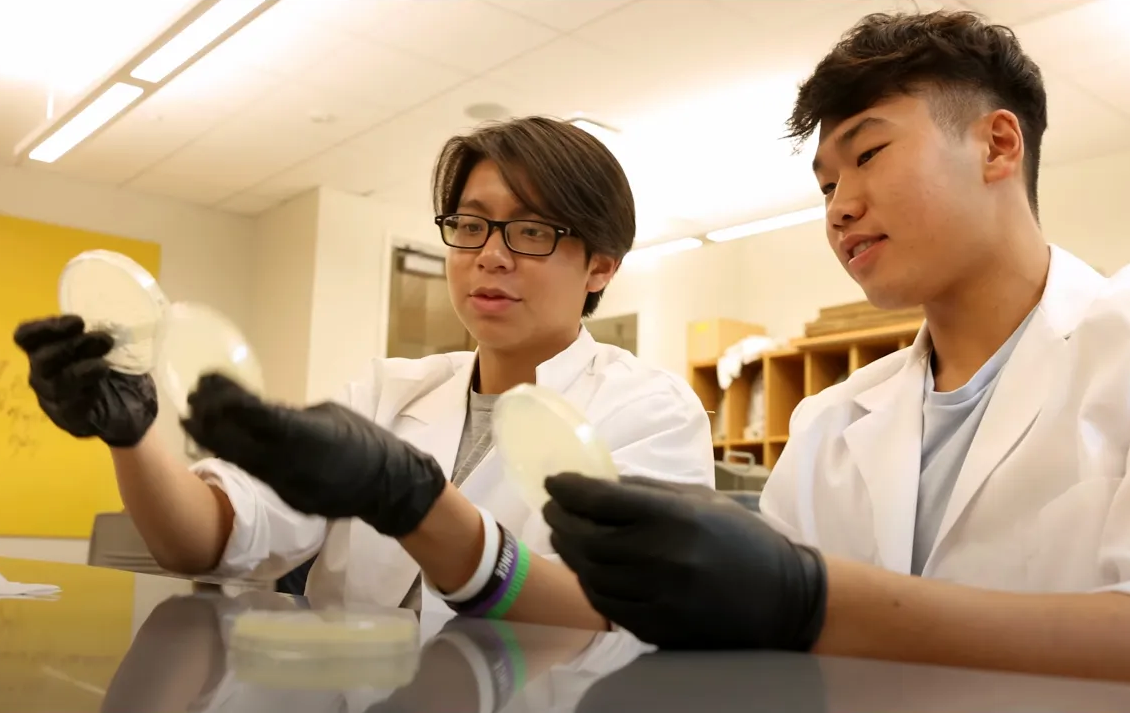
The Microbiology and Infectious Diseases Academy is a three-week residential summer program at the University of Pennsylvania for students in 9th to 11th grade. You learn the cell biology, immunology and epidemiology behind diseases such as malaria, HIV/AIDS and COVID-19, run microbiology experiments in Penn labs and hear every day from experts in infectious disease, public health and pandemic response. It ends with your review of one pathogen's epidemic and a public service announcement that you present to your classmates.
 Sean Stevens · Sources
Get the key facts by email
The dates, costs and how to apply, all in one place.
Succeed's assessment
In short
Why it's worth it
The whole course is built around infectious disease, so lectures on cells, immunity and pathogens lead straight into microbiology labs, visits to Penn research labs and daily interviews with experts in infectious disease, public health and pandemic response. It's led by a Penn biology lecturer who researched coronaviruses at Penn's medical school before she turned to teaching.
What it asks of you
You'll spend three weeks living on campus, with classes from 8:30 am to 4 pm each weekday and a journal club and public service announcement to prepare. Penn doesn't let residential students hold jobs or internships or attend other programs during the session, and the 2026 fee was $10,050.
Who should skip it
Penn offers no financial aid, and its limited scholarships go only to Philadelphia residents at School District of Philadelphia public or charter high schools. Families outside that group who need help with the cost would have to find funding elsewhere.
In 2025, classes ran from 8:30 am to 4 pm on weekdays. On Mondays, Wednesdays and Fridays you started with journal club or PSA prep at 8:30, worked in the micro lab from 9:30 until lunch at noon, and then had lecture and activities from 1:30. Tuesdays and Thursdays opened with a lecture at 8:30 and activities at 10, with guest speakers and more activities after lunch. You'll need your own laptop or tablet with administrator access for class work.
Each day of the 2025 course had a theme. It started with epidemiology and worked through molecular biology, cells, microbiology, the immune system, prevention, surveillance, vaccines and the social determinants of health, then ended with journal clubs and a final lab day with an award ceremony. Outside class you can use the residence hall lounges, gym (ages 15 and up), libraries and dining halls. The residential staff run nights such as trivia or arts and crafts during the week and organize weekend trips off campus, for example to the beach or a Phillies game.
Ruth Elliott, a senior lecturer in biology at Penn, directs the academy. She teaches biochemistry and biology in Penn's pre-health post-baccalaureate programs, and before she started teaching full-time in 2020 she was a research technician at Penn's Perelman School of Medicine, where she worked on coronaviruses. A team of Penn pre-health students, all aspiring doctors, teaches with her every summer, and in 2025 other members of the teaching team led the lessons on several days.
Outside voices are a big part of the course too. Frontline workers, researchers, virologists, epidemiologists and public health experts are interviewed in class, and in 2025 the head of a parasite lab visited. Penn doesn't publish a class size.
You leave with a Certificate of Completion from Penn, and you can ask your Penn instructors for letters of recommendation. The academy is non-credit, so there's no college credit and no Penn transcript. Penn also says that attending its high school programs doesn't guarantee admission to Penn as an undergraduate.
The work you take away is your final project. It's a review of an epidemic caused by one pathogen, plus a discussion you lead with your classmates and a public service announcement that tells friends and family what they need to know about the next pandemic. Penn's stated aims include understanding how DNA's genetic code becomes protein, explaining how pathogens use a cell to replicate and working with other students to analyze data.
You need to be in 9th, 10th or 11th grade and to have finished a year of high school biology before the academy starts. If your biology year was Living Earth or Living Environment, Penn asks you to send the course description with your transcript. If you're still taking the course, send a report card that shows at least one marking period. Graduating seniors can't apply, and you must be at least 13 to live in the residence halls.
According to Penn, successful applicants have at least a 3.5 GPA, strong writing and recommendations, and a range of extracurricular interests. You have to submit the application yourself, since Penn doesn't accept one from a parent, counselor or agent. Completed applications were reviewed in the order they arrived until the academy was full, and a decision could take up to six weeks. This academy reached capacity for summer 2026, and Penn keeps a waitlist for its Summer Academies. International students are welcome, but they need a tourist or B-2 visa, because the academy is non-credit and Penn doesn't sponsor student visas for it.
The 2026 application asked for:
Essays
Two essays of up to 400 words each, one on why this program and Penn interest you and one on two of your extracurricular activities, plus a third on your English background if English isn't your first language.
Transcript
A full transcript for the previous school year, official or unofficial, in English or with an official translation, plus a syllabus for your biology course.
Recommendation
One letter from an adult who knows your work, written on their organization's official letterhead and mentioning this academy by name.
English test
If English isn't your first language, a TOEFL iBT score of 100, an IELTS score of 7 or a Duolingo score of 130, unless you've attended an English-medium school for at least two years.
In summer 2026 the three-week academies cost $10,050. That one price covered classes, an on-campus room, the meal plan, linens, gym access, evening activities, weekend trips and supervision. Families also paid a nonrefundable $100 application fee and covered travel to Philadelphia, airport transfers, meals off campus, medical costs, laundry and spending money. Students whose permanent address is outside the US also pay a mandatory, nonrefundable international registration fee that includes health insurance. ESF Pre-College, which runs the residential side, contacts admitted students about it, and Penn doesn't publish the amount.
Once you're admitted, a $1,500 deposit holds your place. It counts toward the $10,050 but is nonrefundable, and it can't be moved to another Penn program. Penn sends a bill for the rest through PennPay, usually in May with payment due by June, and adds a 1.5% penalty to any amount paid late. If you withdraw in writing by 15 May, you get everything back except the deposit. Penn doesn't reduce the fee if you arrive late or leave early.
Students who live in Philadelphia and attend a School District of Philadelphia public or charter high school can apply for a limited number of scholarships. A scholarship can cover the academy, housing and meals, but not travel or personal costs, and these students don't pay the application fee.
ESF Pre-College, Penn's residential partner, runs life in the residence halls. It recruits, supervises and supports the residential staff, organizes evening activities and weekend trips, and looks after students' health, safety and well-being. After admission, families complete the residential paperwork through ESF's online system, Bravo.
After-hours emergency or urgent care is provided nearby at The Children's Hospital of Philadelphia. Penn's Division of Public Safety, which includes its own police department, offers walking escorts 24 hours a day. Penn doesn't publish a staff-to-student ratio or curfew rules.

Sean
Founder, Succeed
Talk it through with Sean
“I can help you compare the programs you're considering, think through the practicalities and work out what makes sense for you.”
20 minutes · No obligation to enroll
Succeed has a commercial partnership with this provider.
Save this program in Succeed to compare it with similar programs, dates, costs and formats in one place.
Compare with other programshs.sas.upenn.edu · Official page
hs.sas.upenn.edu
hs.sas.upenn.edu
hs.sas.upenn.edu
hs.sas.upenn.edu
hs.sas.upenn.edu
hs.sas.upenn.edu
hs.sas.upenn.edu
Not ready to decide yet? Keep it for later.