
Applications
Rolling admissions
A hands-on aerospace course exploring flight mechanics, propulsion, orbital mechanics and aircraft design through glider or rocket projects and industry insight.
See Succeed's assessment of the programme, who it may suit, the estimated total cost, what applying involves and what is still to confirm.
or let us know if .
What Succeed checks
We review public program details such as eligibility, age range, cost, duration, location, format, accommodation, meals and application timing.
What Last verified means
Last verified is the latest date Succeed checked the public details shown on this page. Program dates, prices and availability can still change.
How official sources are used
Succeed uses official provider information where available, then rewrites it into a student-facing summary for comparison and planning.
Why some dates are reference dates
If the current cycle is not available, Succeed may show the latest verified cycle dates so you can understand typical timing.
Succeed is independent from this provider unless a partnership is clearly stated.
Current status
Applications open
Eligibility
High-school students; 3.0 GPA
Age range / Year group
Ages 14-18
Location / Region
Los Angeles, California, United States
Cost
$3,548 commuter; $6,548 residential
Duration
2 weeks
Format
In-person
This is a practical aerospace engineering course covering flight mechanics, aerodynamics, propulsion, aircraft design and orbital mechanics.
Students apply the theory by designing and testing a glider or rocket, with industry visits, guest speakers and campus-based learning extending the experience.
It best suits students who want to test a serious interest in aerospace engineering before choosing a university subject or career direction.
The Aerospace Engineering High School Course is a Summer Springboard academic program offered across UCLA, the University of Washington and Yale. It introduces the physics and engineering principles behind aircraft and spacecraft through focused campus teaching.
Students study flight mechanics, aerodynamics, propulsion, aircraft design and orbital mechanics. Practical design challenges, aerospace excursions and conversations with professionals connect classroom concepts to real engineering work.
The course turns flight theory into a concrete glider or rocket design challenge.
Named instructors bring university research and aerospace-industry experience into the classroom.
Students encounter both aeronautical and astronautical engineering before committing to a narrower pathway.
Academic excursions and guest speakers show how aerospace concepts operate beyond a textbook.
Residential and commuter options offer families different ways to access the campus experience.
Motivated high-school students who enjoy physics, mathematics and practical design, and want to explore aerospace before university.
You want a formally credited course, need every excursion to be accessible without U.S. citizenship, or prefer a purely theoretical classroom program.
The course can be worthwhile for students who want a concentrated test of aerospace engineering through both technical concepts and practical work. Producing and testing a glider or rocket gives students something specific to reflect on when considering future study.
The main limitation is cost: base tuition is supplemented by mandatory fees, and the program does not generally award college credit. Families should also compare campus lengths, travel needs and excursion restrictions before deciding.
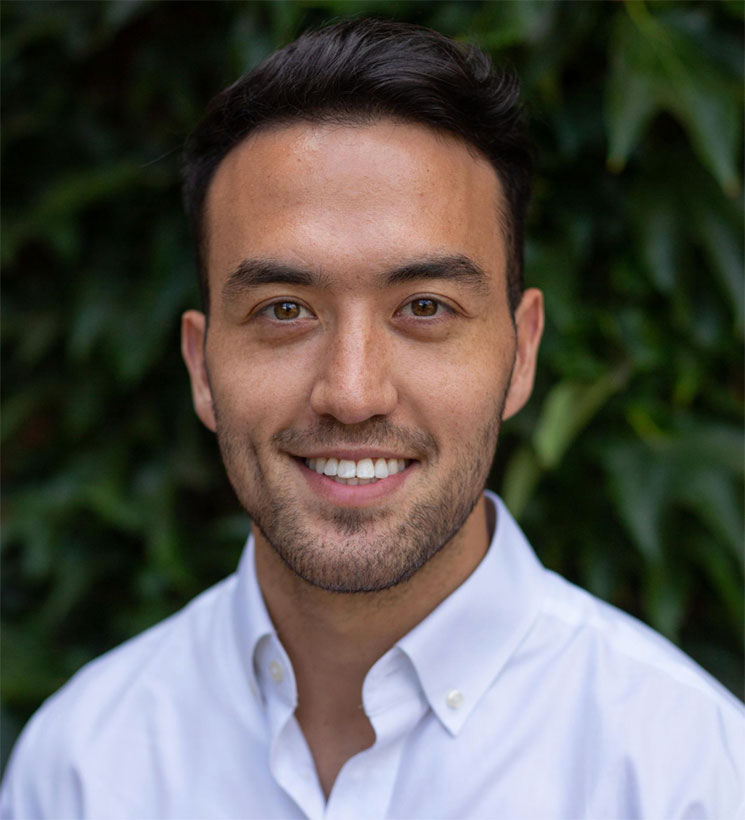
Sean
Founder, Succeed
Talk it through with Sean
“I can help you compare the programmes you're considering, think through the practicalities and work out what makes sense for you.”
20 minutes · No obligation to enrol
A practical overview of cost, accommodation, meals, dates and provider details to review before deciding.
Cost and what is included
$3,548 commuter; $6,548 residential; includes Academic course and course excursions, Residential lodging and all meals, Residential weekend excursions and activities, Commuter lunch and weekday programming, Completion certificate and professor recommendation letter.
Accommodation
Shared university dorms
Meals
Full board residential; commuter lunch
Provider details
Review the Summer Springboard provider page and official sources before making a final decision.
Dates and logistics
2 weeks; Los Angeles, California, United States.
What to check before committing
Confirm current dates, payment terms, travel arrangements, cancellation rules and what is included with the provider.
Compare this program with similar options before deciding on dates, cost, format and fit.
Compare with similar programsEffort level
Moderate to high academic intensity.
Best started
Begin comparing campuses and assembling application materials two to three months before the next admission deadline.
Main challenge
Turning flight principles into a glider or rocket that performs within set parameters.
Review core algebra and rearranging equations.
Refresh basic forces, motion and energy concepts.
Read introductory material on lift, drag, thrust and weight.
Prepare questions about aerospace study and careers for instructors or guest speakers.
Useful if
You have studied algebra and physics, although formal prerequisites are not required.
Students combine interactive teaching with practical design, testing and career exploration. The exact excursion program varies by campus.
Learn the fundamentals of flight mechanics, aerodynamics and propulsion.
Compare aeronautical and astronautical engineering using orbital mechanics.
Develop an aircraft or spacecraft design through hands-on challenges.
Build and test a glider or small rocket against flight parameters.
Meet aerospace professionals through guest talks or industry visits.
Reflect on aerospace university subjects and career pathways.
Applications
Rolling admissions
Session 1
20 June-2 July 2027
Session 2
4-16 July 2027
Session 3
18-30 July 2027
| Milestone | Date | Timezone | Status | |
|---|---|---|---|---|
Applications | Rolling admissions | Local | Date not confirmed | |
Session 1 | 20 June-2 July 2027 | Local | Upcoming | |
Session 2 | 4-16 July 2027 | Local | Upcoming | |
Session 3 | 18-30 July 2027 | Local | Upcoming |
Rising high-school freshmen through graduating seniors
Minimum 3.0 GPA or local equivalent
Must meet the Essential Eligibility Criteria
International applicants must demonstrate English proficiency
Student must participate in the application
U.S. citizenship required for some company excursions
Program tuition
From $2,498 — Campus, length and attendance type affect tuition
Funding or discounts
What's included
Academic course and course excursions, Residential lodging and all meals, Residential weekend excursions and activities, Commuter lunch and weekday programming, Completion certificate and professor recommendation letter
Ask a parent or guardian to create an application-portal account.
Confirm the registration email and complete the account details.
Select the campus, session, course and tuition type.
Enter the student's details and complete the short-answer questions.
Review and sign the required agreements.
Submit the application with the $600 deposit and application fee.
Wait for the enrollment decision and complete any additional forms.
Next step with Succeed
or let us know if .
Succeed replies first, usually within a working day
The program covers the following focus areas.
Flight mechanics
Explore lift, motion and the forces governing aircraft flight.
Aerodynamics and propulsion
Study airflow, aircraft performance and propulsion-system fundamentals.
Orbital mechanics
Apply basic orbital principles to spacecraft-focused design questions.
Aircraft and spacecraft design
Develop a glider or rocket within practical performance parameters.
Aerospace careers
Connect technical learning with professional roles and current technology.
Curriculum may be adjusted based on participant interests and current developments.
A typical day during the program.
Two-week students study 9am-noon on weekdays in week one and Monday-Thursday in week two.
Yale lists five four-hour classes from Monday through Friday.
Course excursions, labs, activities or guest speakers follow morning teaching.
Dinner, social activities and supervised dorm time complete the day.
Named instructors include aerospace engineers, researchers and university faculty such as Dr. Vincent Phong, Dr. Andres Garcia Jimenez, Carl Knowlen, Lily Behnke and Wajid Ali Chishty. Their backgrounds span propulsion, aerodynamics, materials science, aerospace research and engineering education.
Instructor assignments vary by campus and session.
Specific dorm buildings and room layouts can vary by campus and year.
After completing this program, participants often pursue:
Use the design project to reflect on aerospace engineering study.
Compare aeronautical and astronautical engineering pathways.
Explore future study in physics, mathematics or engineering.
Receive a completion certificate and professor recommendation letter.
Draw on professional encounters when evaluating aerospace careers.
The program generally does not award college credit.
The course is offered on the UCLA campus in Los Angeles, the University of Washington campus in Seattle and the Yale campus in New Haven. Each setting supports campus-based teaching alongside locally relevant aerospace visits, museums, laboratories or professional encounters.
Summer Springboard operates independently of the named campus partners except where explicitly stated otherwise.
Compare these related engineering and physics programs if you want a different location, subject balance or summer-course structure.
Engineering summer study in Cambridge
Best for
Students seeking engineering breadth rather than aerospace specialization
Physics and astronomy study in Cambridge
Best for
Students more interested in space science than aircraft design
Modern science methods and questions
Best for
Younger students exploring science before specializing
Save this program in Succeed to compare it with similar programs, dates, costs and formats in one place.
Compare with other programsContent reviewed by
Co-founder, Succeed | Founder, Immerse Education (2012–2026)
Sean works at the intersection of academic enrichment, program quality and university preparation, with expertise in evaluating pre-university experiences for ambitious secondary school students.
Succeed uses official provider information where available, but keeps this public page focused on comparison and planning inside Succeed.
Course details reviewed
Eligibility checked
Tuition compared
Dates verified
Schedules reviewed
Campus arrangements checked
Instructor profiles reviewed
We use source material to verify core facts, then show older cycle dates as reference when a current cycle is not available. Always check current application instructions before applying.
Aerospace Engineering High School Course
by Summer Springboard
Get the full picture before you decide
Succeed's assessment, estimated total cost and what applying involves.
No account needed for the Guide or Compare.