
Biology
Deadline: Not announced yet
From £5,795
13-24
Cambridge
In-person
by Tufts University Pre-College Programs
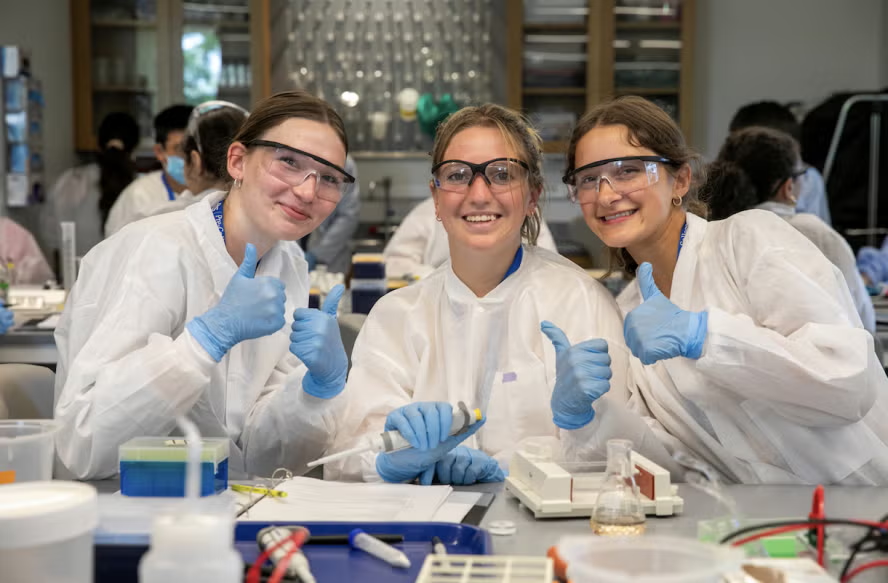
Lab Science Investigations - AMR Research is a two-week summer program at Tufts University where students entering grades 11 and 12 study antimicrobial resistance (AMR), the growing problem of infections that antibiotics and other drugs can no longer treat. You learn bench techniques such as bacterial culture, microscopy and PCR to detect resistance genes, and you add your results to a global project mapping AMR hotspots in the environment. Seminars from Tufts researchers and trips to the medical and veterinary schools fill out the days, and on the last morning you present a public health campaign you designed. You can live in a Tufts dorm or commute.
 Sean Stevens · Sources
Get the key facts by email
The dates, costs and how to apply, all in one place.
Succeed's assessment
In short
Why it's worth it
The lab work isn't just practice, because your results go into a global environmental surveillance project mapping AMR hotspots. The seminars also bring in Tufts faculty from medicine, veterinary medicine, dentistry and engineering, so you see one problem through several professions at once.
What it asks of you
Expect full weekdays of seminars, lab work and capstone sessions for two weeks, and you'll need a year of high school biology behind you before you start.
Who should skip it
Anyone hoping for a research paper of their own to show for the summer. The capstone is a public health campaign you design and present, not a write-up of an experiment you ran.
Weekdays combine the program's three strands: seminars on AMR from Tufts faculty, hands-on lab work and time on your capstone campaign, with field trips to the Tufts medical and veterinary schools. The program uses both the Medford/Somerville campus and the Boston Health Sciences campus. Tufts posts a sample schedule on its program page but says it may change as the program develops.
Residential students check in on Sunday 11 July 2027, and orientation for everyone starts on Monday 12 July. Commuters check in at 8:45 am each weekday and leave by 6 pm, and there's no programming on weekends. Residential students spend evenings on staff-run activities such as ice cream socials, midnight pancakes and trips to Davis Square. Weekend trips change from year to year, and past pre-college trips have included Crane Beach, the Museum of Fine Arts and Charles River cruises. On the last day, Friday 23 July, you present at the Capstone Gala in the morning, and the closing ceremony wraps up by 2 pm.
The director is Dr. Revati Masilamani, an Assistant Professor of Medical Education at Tufts University School of Medicine who teaches immunology in its professional programs. She also directs Teaching the Great Diseases, a graduate program for high school science teachers, and her research looks at ways to get teenagers engaged with science and health.
The seminars come from faculty of the Tufts Levy Center for Integrated Management of Antimicrobial Resistance (CIMAR), drawn from the medical, veterinary, dental and engineering schools and from Arts and Sciences. Tufts doesn't give a class size or student-to-teacher ratio for this program.
You leave with lab experience and a finished capstone, but no college credit, because Tufts lists the program as not for credit. For the capstone you design a public health campaign on AMR and present it at the Capstone Gala on the last morning to friends, family and members of the Tufts community. Along the way you'll have added experimental data to a geospatial database of AMR hotspots and practiced bacterial culture, PCR, microscopy and keeping lab records.
Tufts says plainly that taking part doesn't lead to admission to a Tufts degree program. It also notes that conduct reports from its pre-college programs can be seen by its admissions offices if you apply there later.
You need to be entering 11th or 12th grade, have a year of high school biology and be at least 15 by the start date. If you'll live in the dorms, Tufts requires you to be between 16 and 19 when the program starts.
The application asks for your academic history, a transcript that a school official uploads directly (you can't send it yourself), one recommendation from a teacher, counselor or mentor, a statement of interest and a parent permission form. Tufts emails your recommender and parent once you submit, and review doesn't start until everything has arrived. Decisions usually follow within 10 business days of that. If English isn't your first language, you'll need an internet-based TOEFL score of 100, IELTS 6.5, PTE 68, Duolingo English Test 120 or a transcript showing at least a year at an English-language school.
Tufts reviews applications holistically and doesn't publish an acceptance rate. It names your transcript and recommendation as the best ways to stand out, so choose a recommender who can speak to your curiosity and interest in science.
Living on campus costs $6,950 and commuting costs $5,425. Tufts lists these as its 2027 fees but notes they may still change. The residential fee covers your room, three meals a day (brunch and dinner on Sundays), lab materials, activities and excursions, bedding and towels, 24-hour residential support and a staffed airport transfer during set arrival windows. The commuter fee covers the program, field-trip transport and a weekday lunch, but not breakfast, dinner or weekend meals.
With either option, you'll also need to budget for travel to Boston and spending money, and residential students pay $1.50 a cycle for laundry. If you can't show U.S.-based health insurance, Tufts enrolls you in a plan and bills you for it ($55.16 in summer 2026). Vaccinations you're missing and receive on campus are also charged ($55.00 in summer 2026).
Once you're admitted, a $550 deposit is due within 10 days and counts toward the fee. The balance is due by 15 May 2027, and Tufts' payment plan can't be used for summer tuition. If you're admitted after 15 May, you pay the full fee straight away to hold your place.
The deposit is never refunded. The rest of the tuition is refundable only if you withdraw in writing by 15 May at 11:59 pm ET, and a visa delay or denial doesn't count as a reason for a refund.
Tufts offers limited need-based scholarships, which it says typically cover 75% to 100% of the fee, and it issues decisions twice a month from February. International students aren't eligible. If you can only attend with aid, Tufts suggests waiting for its decision before paying the deposit, although the program could fill in the meantime and leave you waitlisted.
Residents are supervised by a director, senior staff and one resident advisor for every ten students. Tufts makes reasonable efforts to run background checks on staff who work with students and give them Title IX training. Curfews are strict. From Sunday to Thursday you need to be in the residence hall by 10 pm and in your room by 11 pm, and on Friday and Saturday by 10:30 pm and midnight. Breaking curfew is grounds for dismissal without a refund.
Halls are divided by gender and age, you need a Tufts ID card to get in and every room locks. You can't be in a lab or leave campus without a staff member or explicit permission from a parent, and you use a buddy system in free time. On arrival day, staff meet students at Boston Logan Airport, North Station and South Station. Staff also hold any medications unless your medical forms say otherwise. Tufts uses campus and hospital care for routine and emergency medical needs, but there's no mental health counseling on site, so it encourages students to stay in touch with their own provider.
Commuters are supervised only during program hours, and they aren't allowed in the residence halls.

Sean
Founder, Succeed
Talk it through with Sean
“I can help you compare the programs you're considering, think through the practicalities and work out what makes sense for you.”
20 minutes · No obligation to enroll
Succeed has a commercial partnership with this provider.
Save this program in Succeed to compare it with similar programs, dates, costs and formats in one place.
Compare with other programsuniversitycollege.tufts.edu · Official page
universitycollege.tufts.edu
universitycollege.tufts.edu
universitycollege.tufts.edu
universitycollege.tufts.edu
universitycollege.tufts.edu
universitycollege.tufts.edu
universitycollege.tufts.edu
Not ready to decide yet? Keep it for later.