Solving Global Challenges
Applications open
In person in New Haven, ages 16 to 18, from $7,500, several sessions.
06 Jan 2027 · From $7,500 · 16-18 · New Haven · In-person
by UC Berkeley Pre-College Scholars
You live in a UC Berkeley residence hall for six or eight weeks and take two regular lower-division Berkeley Summer Sessions courses, earning college credit and an official Berkeley transcript. One fee covers tuition, housing, a meal plan, college-prep workshops and Bay Area excursions, and resident mentors supervise the halls under a 10 PM curfew. It's for students who have finished 10th or 11th grade with at least a B average.
 Sean Stevens · Sources
Get the key facts by email
The dates, costs and how to apply, all in one place.
Why it's worth it
You sit in regular lower-division Berkeley Summer Sessions courses alongside Berkeley students rather than classes written for visitors, and the program wraps housing, meals, supervision and college-prep workshops around them.
What it asks of you
Six or eight weeks of full-time college study with compulsory attendance, and a large bill that has to be paid in full within a week of being admitted.
Who should skip it
Students who want teachers and a cohort built around one subject, because here you join general courses as a visiting student and only get seats that are still open. Your grades go on an official Berkeley transcript, so think carefully if you're unsure about college-level work.
Course choice comes after you commit
You only request courses once you've accepted your place, departments can turn requests down or cancel courses that don't fill, and missing your first choices isn't grounds for a refund, so draw up a backup list early.
Berkeley Pre-College Scholars takes high school students who, by the start of summer classes, have finished 10th or 11th grade, have at least a B average (3.0, weighted or unweighted) and will be 16 by the cutoff, which was 21 June 2026. Recent graduates can apply if they'll be 16 or 17 that summer, but graduates who are over 18 have to go through the regular Summer Sessions visiting student application.
Every student needs valid health insurance for the whole program, and for international students it must include medical evacuation and repatriation cover. International students must also attend on an F-1 student visa. If your school is outside the US, you'll need English test results from the last three years, such as TOEFL iBT 80, IELTS 6.5 or Duolingo 115. That requirement is dropped for schools in exempt countries and for students taking only English as a Second Language courses, and Berkeley Summer Sessions considers waivers in other cases, for example after at least three years of high school taught in English.
Applications are reviewed on a rolling basis, and Berkeley doesn't say how many places there are or how many applicants get in. Places are limited, and once the program fills, applicants are offered a waitlist place. Accepting a waitlist place counts as accepting admission, so if a spot opens up you're enrolled and billed straight away.
For summer 2026, Session C (eight weeks) cost $15,987 and Session D (six weeks) cost $14,687. That covered tuition and fees, housing, a meal plan with three meals on weekdays and two on weekends and holidays, orientation, excursions and activities, a basic emergency-use health plan and on-site support. Flights, textbooks, the course materials fees that some lab and art courses charge, extra health center fees and personal spending are yours to cover. Non-UC students also pay a nonrefundable application fee, though Berkeley doesn't list the amount for this track.
The full fee is due within seven days of admission, and Berkeley doesn't accept payment plans or third-party contracts. In 2026 you could cancel through the applicant portal by 9 April for a refund minus the application fee, but after that date you owe the whole amount even if you withdraw or are dismissed.
In 2026 Berkeley offered one media scholarship, valued at $15,987, which covered tuition plus room and board for a single Session C student. It was open to domestic and international students, and the winner documents the summer under the supervision of program staff and the marketing team. The 2026 deadline was 23 February, and Berkeley says to check back for the next round.
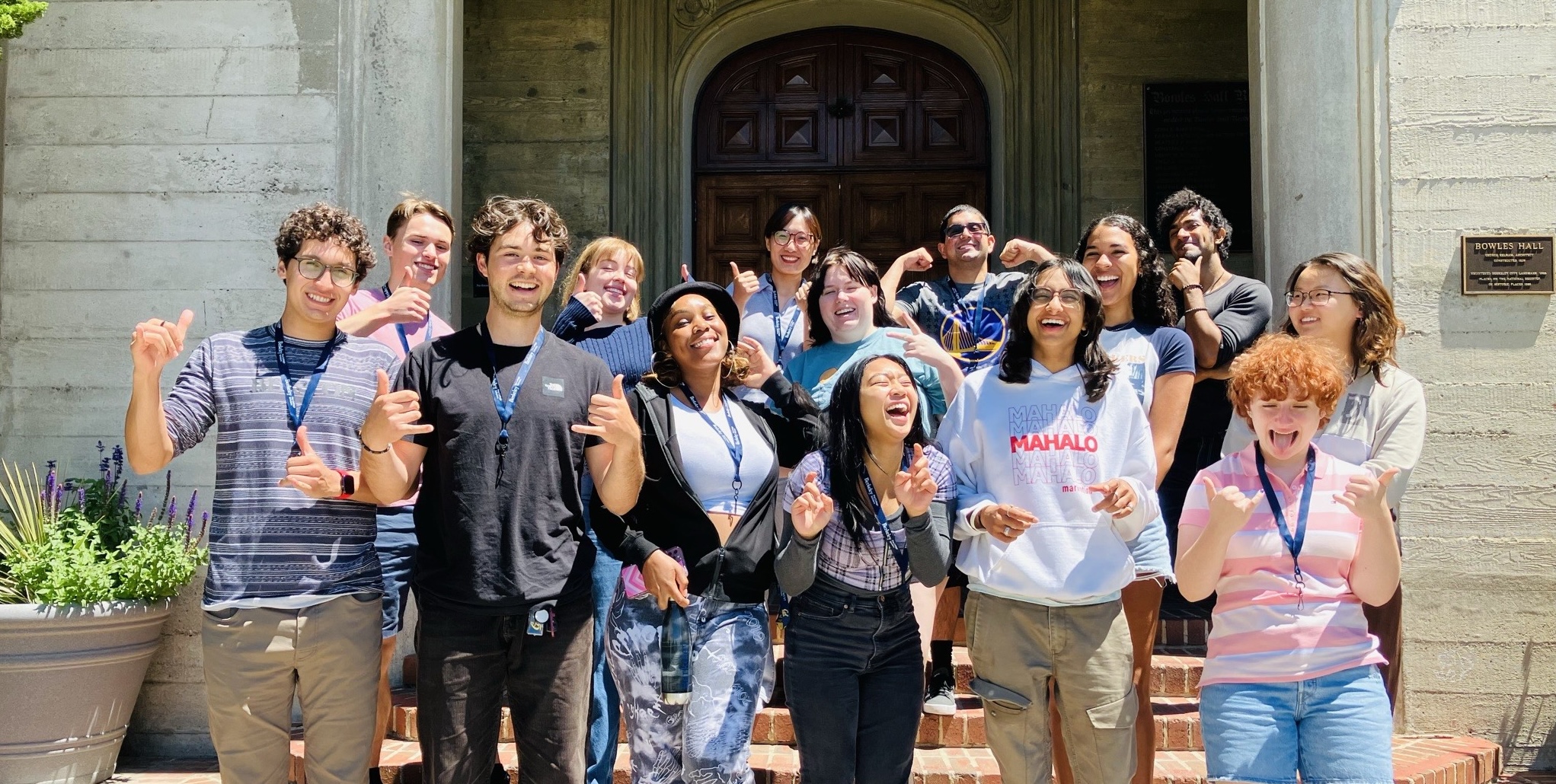
Students live in Bowles Hall and Stern Hall, a walk from campus, under full-time supervision by residential staff and undergraduate resident assistant mentors (RAMs). Each RAM looks after a small group as its first point of contact. Assistant resident directors each oversee five or six RAMs and run daily check-ins, and resident directors lead teams of about 15 RAMs and three assistant resident directors. Students will likely share a double or triple, with rooms and roommates assigned at random and handed out on arrival, and assignments can't be changed or swapped.
The rules are firm. Curfew runs from 10 PM to 6 AM, and nights away are allowed only for situations such as an emergency or a late class activity, with a parent emailing a request at least 72 hours ahead. Leaving the City of Berkeley without written permission can lead to dismissal. Alcohol or drugs mean automatic dismissal, and the code of conduct bans physical contact, down to holding hands. Apart from family helping on move-in and move-out days, nobody from outside the program can enter the halls.
Every student is enrolled in an emergency-use health plan and needs the MMR vaccine, plus varicella unless they've had chickenpox. Students who can't get them before arrival can have them at the campus health center, at extra cost. Students store and take their own medication, and since rooms have no fridge, tell the program ahead of time if a medicine needs to be kept cold.
You leave with an official UC Berkeley transcript for two lower-division courses, plus a letter of commendation from the Dean of Extended Education if you pass. The credit may transfer to another college, but that's always the receiving school's decision. You can also list Berkeley Summer Sessions on college applications, though the program doesn't say how admissions offices view it.
The courses are numbered 1 to 99 and taught in person, and they have to be open to visiting high school students, with prerequisites you've already met. You take exactly two, for at least six units in Session C or five in Session D. Session C students can mix in one Session D course, while Session D students take two Session D courses.

Sean
Talk it through with Sean
“I can help you compare the programs you're considering, think through the practicalities and work out what makes sense for you.”
In person in New Haven, ages 16 to 18, from $7,500, several sessions.
06 Jan 2027 · From $7,500 · 16-18 · New Haven · In-person
In person in Pittsburgh, 26 June to 7 August 2027, ages 16+, from $7,409.
01 Mar 2027 · From $11,704 · 16+ · Pittsburgh · In-person
In person in Oxford, 6 to 19 December 2026, ages 16 to 19, from £6,850.
Deadline: Not announced yet · From £6,850 · 16-19 · Oxford · In-person
Save this program in Succeed to compare it with similar programs, dates, costs and formats in one place.
Compare with other programsprecollege.berkeley.edu · Official page
precollege.berkeley.edu
myapp.berkeley.edu
myapp.berkeley.edu
myapp.berkeley.edu
uhs.berkeley.edu
Facts checked against the official page on 3 Nov 2026
Editor: Sean Stevens
Succeed has no commercial relationship with UC Berkeley Pre-College Scholars.
Spot an error? Report it