
The Science of Food, Nutrition and the Biological World
Applications open
Biology
12 Mar 2027
From $8,371
15-18
Los Angeles
In-person
by University of Chicago Summer Session
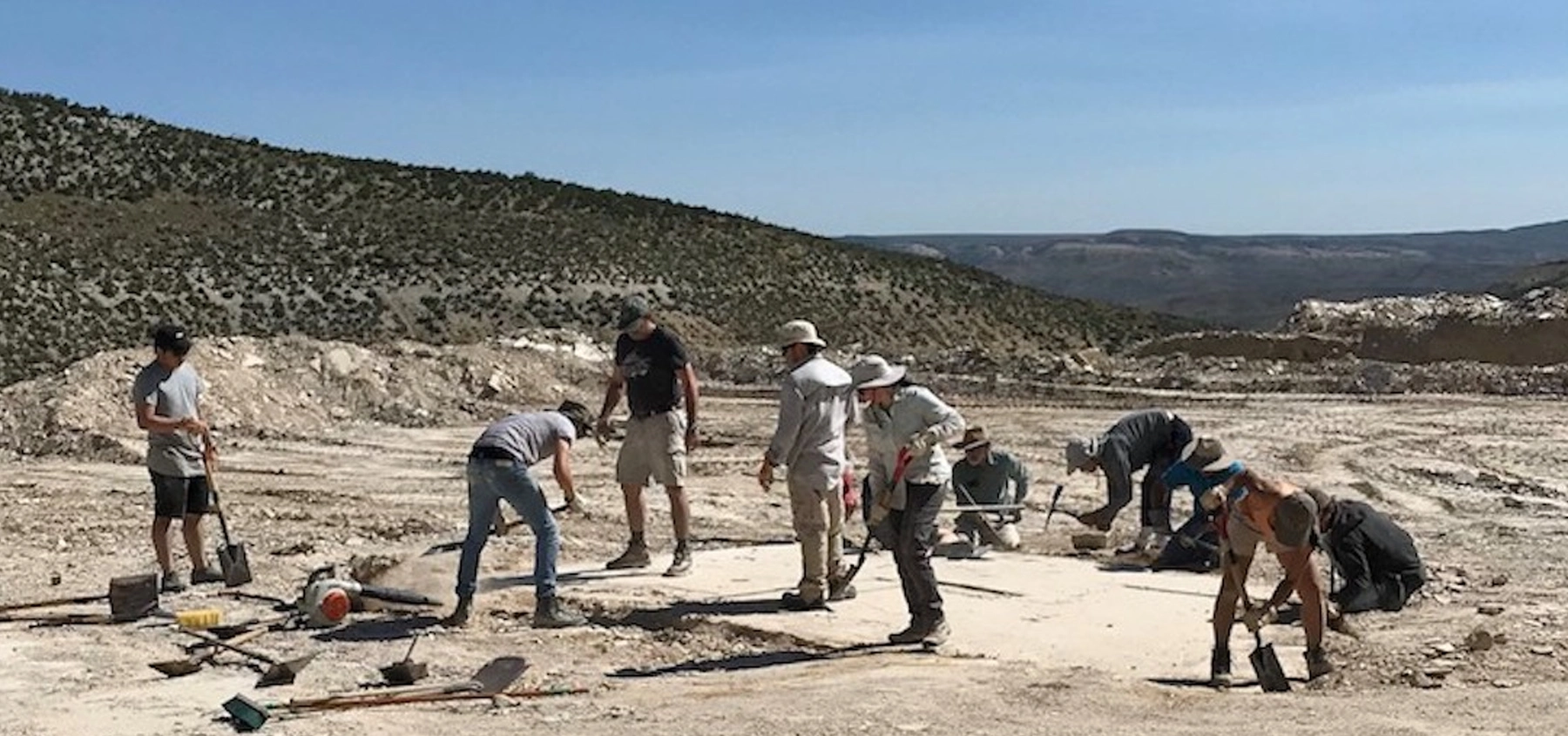
Stones and Bones is a four-week paleontology course from UChicago Summer Session and the Field Museum, split between Chicago and a fossil dig in Wyoming. You start at the museum, learning geology, stratigraphy and fossil preparation in its labs and galleries, then spend two weeks camping and digging in the Green River Formation before returning to Chicago to conserve, catalog and analyze what you found. It's a graded UChicago course for 10th and 11th graders, with places for 16 students.
 Sean Stevens · Sources
Get the key facts by email
The dates, costs and how to apply, then 2 reminders: 30 Dec (2 weeks before) and 10 Jan (3 days before).
Succeed's assessment
In short
Why it's worth it
You don't just study fossils. You join the Field Museum's ongoing dig in the Green River Formation and then prepare your own finds in its labs, so you see a specimen through from the ground to the catalog, and the course goes on a UChicago transcript as graded credit.
What it asks of you
You live in residence for all four weeks, with no option to commute even for Chicago families, and two of those weeks are spent tent camping in semi-arid desert. Days there range from the upper 60s to the upper 90s °F, nights occasionally drop to the mid-30s, and rainstorms sometimes come through. As well as digging, you'll help set up camp and cook for the group.
Who should skip it
Students who are only testing an interest in paleontology, because UChicago doesn't let Practicum students change course once enrolled, and families who'd need the whole fee covered, since UChicago makes no full aid awards.
Classes run from 9:00 am to 3:00 pm, and UChicago describes its four-week courses as a full day of course work Monday through Friday with homework every day. In Chicago most of that time is spent at the Field Museum, in the labs and galleries where its scientists work, and evenings back on campus go to homework and the activities the residential staff organize. There are no classes on 19 June or 4 July.
The two weeks in Wyoming follow a different rhythm. You dig for fossils in the mornings and again in the late afternoon, while the early afternoons and evenings go to trips into town for supplies, cooking for the group and sitting around the campfire with the museum's researchers and their families. You then return to Chicago for the final stretch in the museum's preparation labs.
The listed instructor is Fabiany Herrera, who runs the Herrera PaleoLab, a paleobotany lab at the Field Museum. In Chicago, University of Chicago and Field Museum scientists teach you in the labs and galleries where they work, and in Wyoming you dig and camp with the museum's researchers on their own expedition. The class is capped at 16 students, so you'll be working in a small group the whole time.
Stones and Bones is open to 10th and 11th graders who are at least 15, and UChicago wants students who excel in their high school science classes. Coursework in geology or biology is recommended but not required, and you don't need to have camped before, although you must be able to adapt and work well with others.
You apply through UChicago Summer Session's standard application, with one extra essay for this course. You can list up to four course choices in ranked order but will be admitted to only one, and test scores are optional.
Transcript
An unofficial transcript covering every high school year so far, plus a grade report for your 2026-27 courses if they aren't on it yet.
Two essays
Why you chose this course and how it fits your plans (up to 500 words), and your most rewarding academic project or experience (up to 250 words).
Stones and Bones essay
Up to 250 words on a time you showed resilience and adaptability in a group, which ties directly to the camp work in Wyoming.
Writing sample
A typed English essay or research paper carrying your teacher's grade and comments. Lab notes and math sets aren't accepted.
Recommendation and sign-off
A letter from a teacher in a related subject, a parent or guardian confirmation and the $75 application fee, which is waived if you apply for financial aid with the required documents.
The 2026 program fee was $15,200, which covered tuition, housing and dining, and UChicago hasn't yet published the fee for 2027. On top of it come the $75 application fee, travel to and from Chicago, course materials and personal spending money, plus an optional O'Hare airport shuttle on arrival day that carries its own fee. International students should also budget for visa costs.
Aid has to be requested in the application itself, with your family's financial documents, because UChicago can't award it after a decision. Its 2026 aid table showed a 4-week Practicum student paying $7,600 with a household income under $125,000 and $3,800 under $80,000, depending on eligibility and available funds.
Payment moves quickly. You have a week after admission to pay a $1,000 deposit to hold your place, and the balance is due within four weeks. The deposit and application fee are only refunded if UChicago cancels the course and you don't choose a replacement. In 2026, the rest of the fee could be refunded on a written request until 4 May, and nothing was refunded after that.
Stones and Bones is a graded (A to F) UChicago course, BIOS 10011, worth 200 UChicago units, which UChicago equates to two undergraduate courses, or 10 quarter hours and 6.6 semester hours. The course and your grade are recorded on a UChicago transcript, and UChicago notes that college applications, including the Common App, will ask you to submit that transcript, so the grade goes with you.
Whether the credit counts anywhere else is up to each college, since transfer is at the receiving school's discretion. These courses don't count toward graduation requirements if you later enroll at UChicago. Finishing a Summer Session program does make you eligible, in your final year of high school, to apply to UChicago through its binding Summer Session Early Notification option under Early Decision I.
In Chicago, under-18s live in their own residence hall (Woodlawn Residential Commons in 2026), where resident assistants live on the students' floors and the residential director's team is reachable 24 hours a day. Curfew runs from 10:00 pm to 6:00 am with a nightly sign-in with an RA, and the front desks are staffed around the clock.
For medical care there's UChicago Student Wellness, an on-call physician after hours and the University of Chicago Medical Center on campus. The fee also includes accident and sickness insurance that covers emergency evacuation.
UChicago gives far less detail about the Wyoming weeks, beyond saying that students camp and work alongside Field Museum scientists, so if supervision at the dig matters to you, ask Summer Session how the field camp is staffed. One rule does apply there: if a student has to leave for physical or mental health reasons, a parent or guardian must collect them within 48 hours of being notified, and the family pays any costs.

Sean
Founder, Succeed
Talk it through with Sean
“I can help you compare the programs you're considering, think through the practicalities and work out what makes sense for you.”
20 minutes · No obligation to enroll
Succeed has a commercial partnership with this provider.
Save this program in Succeed to compare it with similar programs, dates, costs and formats in one place.
Compare with other programssummer.uchicago.edu · Official page
summer.uchicago.edu
summer.uchicago.edu
summer.uchicago.edu
summer.uchicago.edu
summer.uchicago.edu
summer.uchicago.edu
herrerapaleolab.org
Not ready to decide yet? Keep it for later.