
Climate Change & Environmental Policy High School Course
Applications open
Succeed has a commercial partnership with this provider.
Business & Economics
21 Feb 2027
From $3,298
14-18
San Diego
In-person
by University of Chicago Summer Session
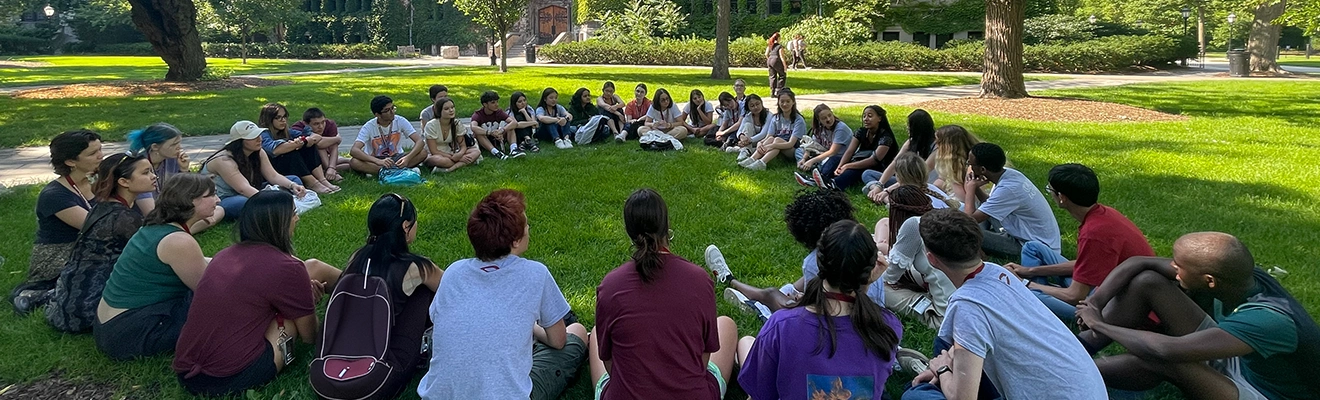
Young Innovators Climate & Energy is a one-week residential program at UChicago where 11th graders study how the world can keep energy reliable and affordable while tackling climate change. Classes mix discussion, readings, lectures and hands-on group projects led by faculty from the Energy Policy Institute at the University of Chicago (EPIC), the Becker Friedman Institute and the Climate Impact Lab. The week also takes students out into Chicago, including a tour of Invenergy's headquarters and a panel with people who work across the energy industry.
 Sean Stevens · Sources
Get the key facts by email
The dates, costs and how to apply, then 2 reminders: 17 Feb (2 weeks before) and 28 Feb (3 days before).
Succeed's assessment
In short
Why it's worth it
In a single week you hear how researchers at EPIC, the Becker Friedman Institute and the Climate Impact Lab think about energy and climate, then see the industry side at Invenergy, which gives you a concrete picture of where a STEM or policy degree could lead. For U.S. families earning $125,000 or less, UChicago waives the fee as funds allow, so the real cost can come down to travel.
What it asks of you
You spend a full week living on campus in Chicago, with no commuting option even for local students, and at the 2026 price of $3,000 plus travel that's a lot for one week if you don't qualify for aid. The application also needs lead time, because you'll need a teacher's recommendation and a graded essay with their comments on it.
Who should skip it
Students who want something concrete to show for the summer, such as credit, a grade or a finished research project, because UChicago runs this as a one-week introduction built around talks, discussion and visits.
Classes are led by faculty from three research groups: the Energy Policy Institute at the University of Chicago (EPIC), the Becker Friedman Institute and the Climate Impact Lab. UChicago doesn't name individual instructors or publish a class size for this program.
Outside the classroom you also hear from Invenergy, the renewable and clean energy company that partners on the program. Its team members host a tour of the company's Chicago headquarters and sit on a panel about their work in different parts of the industry and what they've done with their STEM degrees.
Days start at 9:00 a.m. with lectures, discussion sections or workshops, and afternoons usually bring a campus tour, an outing to another part of Chicago or a hands-on activity tied to the subject. Evenings are given over to activities run by residential staff or free time with other students, and past Summer Session outings have included baseball games, museum trips and beach days. UChicago says each Enrichment program sets its own timetable, so read this as the usual shape of a day rather than a fixed plan.
Enrichment students move in the day before classes begin, usually a Sunday, and leave after noon on the last day. In 2026 this program ran from 12 to 17 July.
If you attend every day, you leave with a certificate, and that's the only formal record, because UChicago's one- and two-week programs carry no credit and no grade. While you're enrolled you can also join Admissions Academy, a series of workshops from UChicago's Office of College Admissions on application essays and how applications are reviewed.
Later on, rising seniors who completed a Summer Session program can apply to UChicago through Summer Student Early Notification, a binding option under Early Decision I that runs from 1 September to 15 October and returns a decision about three weeks after the application is complete.
You need to be in 11th grade and at least 15 years old, and UChicago aims the program at students interested in future careers in climate and energy policy. The listing sets no country or school-type limit, test scores are optional, and you can show your English through the application itself or an optional TOEFL, IELTS or Duolingo score. UChicago doesn't publish how many students it takes, but the 2026 session filled, with a waitlist for later applicants.
Transcript
An unofficial transcript covering all your high school grades so far, plus a current grade report if recent courses aren't on it.
Two essays
Up to 500 words on why you chose this program and how it ties to your interests and plans, and up to 300 words on how your perspective or background would add to the program and what you hope to gain from your peers.
Recommendation
One letter from a teacher in a related subject, and a counselor or teacher can also send an optional nomination through a separate form.
Writing sample
A typed English essay or research paper carrying your teacher's grade and comments, since lab notes and math sets aren't accepted.
Parent confirmation
UChicago won't review your application until a parent or guardian answers its confirmation email.
The 2026 program fee was $3,000 for the week, plus a $75 application fee, and UChicago hasn't yet published the 2027 fee. If you're admitted, a $1,000 deposit within a week holds your place and counts toward the fee, and the balance is due within four weeks of admission. The deposit and application fee are never refunded, and in 2026 the rest of the fee could only be refunded on a written request made by 4 May 2026.
UChicago says dining-hall meals are paid for, but travel to Chicago, spending money for outings and your own U.S. health insurance, which one-week students must have, are extra. Students from outside the U.S. may need a tourist visa, so check that cost with official sources.
Need-based aid can bring the fee down to nothing. If you apply only to one-week Enrichment programs, UChicago covers the amounts below as funds allow. You have to ask for aid in the application, Enrichment-only applicants don't upload financial documents, and applying for aid waives the $75 fee. UChicago describes this support for domestic students and doesn't cover travel from outside the U.S. for this program.
| Household income | What UChicago covers |
|---|---|
| $125,000 or less | Program fee waived |
| $60,000 or less | Program fee waived plus domestic roundtrip travel |
Residential assistants, who are current UChicago undergraduates and recent alumni, live on the same floor as students, and the Residential Director and assistant directors can be reached by students and families 24 hours a day. Students must be inside the residence hall from 10 p.m. to 6 a.m. and sign in with their RA every night in a 15-minute window from 9:45 p.m., and repeated curfew violations can end in dismissal.
Building security
Residence halls are staffed around the clock, entrances are secured, and students show their UChicago ID at the front desk to get in.
Medical care
UChicago's Medical Center is on campus, residential staff are available 24/7 in an emergency and will contact parents, and parents sign a release authorizing treatment if they can't be reached.
Arriving
For Enrichment programs, a staff member meets students at a prearranged spot at the airport and takes them to the shuttle, though staff can't meet anyone at the gate.
Zero tolerance
Having, using or even being around alcohol or drugs leads to immediate dismissal.
Leaving campus
Students can go out before curfew without staff but should tell residential staff where they're going, and a night away needs a parent's curfew release form and an adult to collect them.

Sean
Founder, Succeed
Talk it through with Sean
“I can help you compare the programs you're considering, think through the practicalities and work out what makes sense for you.”
20 minutes · No obligation to enroll
Succeed has a commercial partnership with this provider.
Save this program in Succeed to compare it with similar programs, dates, costs and formats in one place.
Compare with other programssummer.uchicago.edu · Official page
summer.uchicago.edu
summer.uchicago.edu
summer.uchicago.edu
summer.uchicago.edu
summer.uchicago.edu
summer.uchicago.edu
summer.uchicago.edu
Not ready to decide yet? Keep it for later.