

The Study of Culture through Language
Applications open
Humanities
01 Apr 2027
From $5,984
15-18
Evanston
In-person
by University of Notre Dame Pre-College Programs
Confronting Poverty: Bringing Service to Justice is a two-week, college-level course in Notre Dame's Summer Scholars program, taught on campus during Session II from 10 to 24 July 2027. Connie Snyder Mick, who directs Notre Dame's Poverty Studies minor, leads the course. It asks why people are poor and draws on economics, sustainability, social entrepreneurship, statistics and creative writing to find answers. Alongside the classwork, you meet community leaders who do anti-poverty work and serve residents living in poverty in and around South Bend.
Get the key facts by email
The dates, costs and how to apply, then 2 reminders: 3 Feb (2 weeks before) and 14 Feb (3 days before).
Succeed's assessment
In short
Why it's worth it
The course doesn't stop at reading about poverty. You also meet people doing anti-poverty work in South Bend and serve residents yourself, and the course is led by the director of Notre Dame's own Poverty Studies minor. That means the theory comes from a specialist, and the service connects you with people who do the work locally.
What it asks of you
You'll need to submit a full application by 17 February 2027, with two essays, a teacher recommendation and a report and transcript from your counselor. Then you'll spend two weeks living on campus in July. The family pays $5,200, plus the $75 application fee and travel to Indiana.
Who should skip it
Families who'd need most of the cost covered and don't live in Indiana or the Philadelphia area. Outside those two grants, Notre Dame's aid is very limited and meant for extreme hardship, and asking for it doesn't guarantee an award.
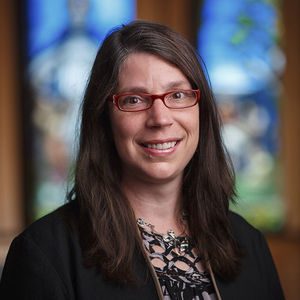
Connie Snyder Mick, Ph.D., leads the course. She directs academic affairs at Notre Dame's Institute for Social Concerns and runs its Poverty Studies Interdisciplinary Minor. At Notre Dame she teaches the minor's core courses, including a poverty and justice class held inside the Westville Correctional Facility, where college students learn alongside incarcerated students and corrections staff. She also edits the Journal of Poverty and Public Policy.
Her research covers the role of writing in social change and the rhetoric of poverty, and she has written two Oxford University Press books on writing. That background suits a course that asks how the media represents poverty and uses creative writing as one of its methods. Notre Dame says it keeps Summer Scholars classes small but doesn't publish a class size or staff ratio.
If you complete all the program requirements, you can receive one transferable Notre Dame college credit with a Satisfactory (S) grade, and you order the transcript from Notre Dame's University Registrar. It's a pass grade rather than a letter grade, and Notre Dame doesn't say how other colleges treat the credit, so check with any college you hope will count it.
The course also asks you to think about how you might work on poverty later, whether through medicine, law, politics, social work, business, economics, engineering or another field. That makes it a good way to test an interest before you choose a college major.
Current sophomores and juniors can apply if they'll be at least 16 by 1 August 2027. Notre Dame makes no exceptions to the age rule, citing its insurance and child-protection policies. It also looks for strong academic standing, solid extracurricular activities, self-discipline and maturity, as well as a sincere wish to be part of the Notre Dame community.
Notre Dame calls the essays very important and wants them to show who you are and why you want this particular course. Your teacher's letter should speak to your ability to handle college-level work and to your maturity, integrity and leadership. Notre Dame says it helps if the letter comes from a teacher who can support your interest in the course's subject. SAT, ACT and PSAT scores are encouraged but optional. Applicants who don't attend an English-speaking high school need a TOEFL (5.5 or higher), IELTS (7.5 or higher), PTE Academic (55 or higher) or Duolingo English Test (120 or higher) score.
Applications go through Notre Dame's pre-college application portal, which opened on 19 October 2026.
Start the online application and add the contact details of your counselor and a recommending teacher, once the teacher has agreed, so Notre Dame can email them both.
Write the two essays and share your activities through the application's activity list, a resume or both.
Upload SAT, ACT or PSAT scores by 31 January 2027 if you choose to send them.
Submit your part of the application and pay the $75 fee by 17 February 2027, after which you can no longer swap or add recommenders.
Follow up with your counselor and teacher so their documents also arrive by 17 February 2027, since Notre Dame reviews a file only once everything is in.
If admitted, pay the $300 enrollment fee by 23 April 2027 to secure your place and the remaining $4,900 by 14 May 2027.
The two weeks cost $5,200, which covers tuition, a room in a residence hall, meals, extracurricular activities and class field trips. Books and class materials are provided. You pay a $300 enrollment fee by 23 April 2027 to hold your place and the $4,900 balance by 14 May 2027. On top of that comes the $75 application fee, which you pay whether or not you're admitted, plus travel to campus, which Notre Dame recommends insuring.
None of it is refundable. If a student is dismissed for breaking the rules, the family also pays for the trip home.
For aid, Notre Dame offers limited need-based scholarships that cover part or all of tuition, but no merit awards. Separate grants cover tuition, room and board for qualifying students living in Indiana or the Philadelphia area. A parent or guardian applies through the Financial Aid Request Form by 17 February 2027, and the aid decision arrives with the admission letter. Application fee waivers are rare and given only in extreme circumstances.
Students can't leave campus except on a scheduled, supervised activity or with a staff member or Resident Counselor. They also can't drive any vehicle or enter a residence hall of the opposite gender, and any visitor needs written approval from the program's directors. Attendance at classes, field trips, meals and check-ins is required.
Medication needs planning ahead. Notre Dame staff don't store or give out medication, so students manage their own, and parents must arrange for any medical or mental health needs at least 30 days before the program starts. The family pays for any healthcare during the program. These rules come from Notre Dame's standards and policies for pre-college students, which currently cover Summer 2026, so check for any changes for 2027.

Sean
Founder, Succeed
Talk it through with Sean
“I can help you compare the programs you're considering, think through the practicalities and work out what makes sense for you.”
20 minutes · No obligation to enroll
Save this program in Succeed to compare it with similar programs, dates, costs and formats in one place.
Compare with other programsprecollege.nd.edu · Official page
precollege.nd.edu
precollege.nd.edu
precollege.nd.edu
precollege.nd.edu
precollege.nd.edu
precollege.nd.edu
precollege.nd.edu
Not ready to decide yet? Keep it for later.