
The Study of Culture through Language
Applications open
In person in Evanston, ages 15 to 18, from $5,984.
01 Apr 2027 · From $5,984 · 15-18 · Evanston · In-person
by Stanford Pre-Collegiate Studies
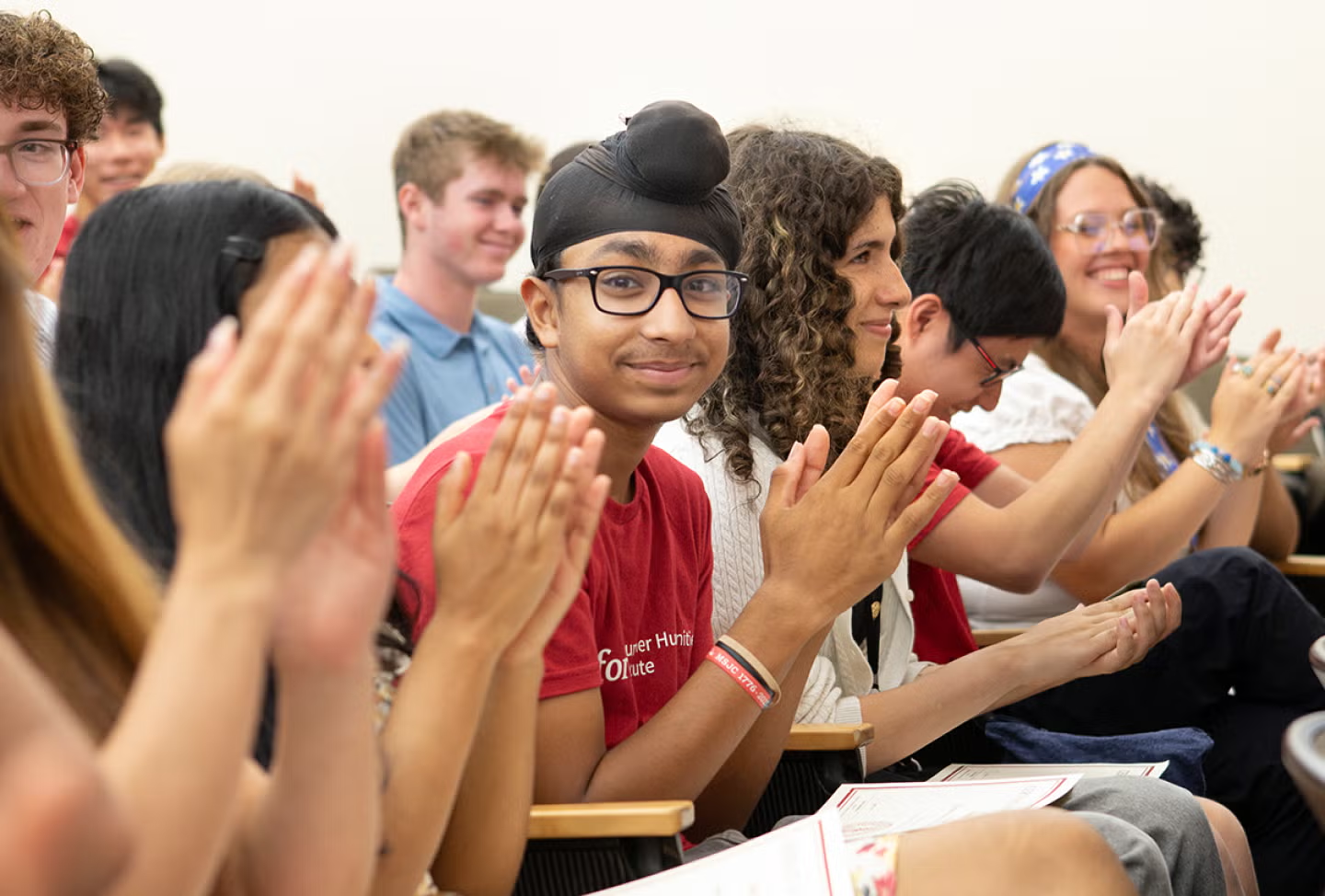
Stanford Summer Humanities Institute is a three-week residential program where rising high school juniors and seniors live on the Stanford campus and take one humanities course led by a Stanford professor. Mornings bring a faculty class and afternoons a smaller discussion section with a Stanford graduate student, with readings and papers to work on in between. The third week goes to an original research project, and weekends include field trips around the San Francisco Bay Area.
Get the key facts by email
The dates, costs and how to apply, then 2 reminders: 18 Jan (2 weeks before) and 29 Jan (3 days before).
Why it's worth it
You're taught by a Stanford professor in their own field of expertise, and you spend the third week producing an original research project with help from professors, graduate students and residential staff. If you're wondering whether to study the humanities in college, it's a direct way to try it.
What it asks of you
You spend three weeks living on campus, and Stanford Pre-Collegiate Studies warns of a heavy workload outside class on top of required evening and weekend activities. The $9,385 tuition is due in one payment, because there's no installment plan.
Who should skip it
Students who need credit, since the program gives no grades or credit, only a written evaluation from the instructor and a certificate of completion. It's also a poor fit for athletes on a strict training plan, because students can't continue their athletic training during the program and get only some chances to work out.
Stanford professors lead every course, teaching in their own areas of expertise, while Stanford graduate students run the smaller afternoon discussion sections. The residential staff who live in the halls are assigned by academic area, so they also act as mentors you can talk ideas over with outside class.
Stanford Pre-Collegiate Studies lists the professors and courses below. The list isn't dated and the 2027 courses haven't been announced yet, so treat it as a guide to the kinds of topics on offer rather than the 2027 lineup.
Professor Christopher Bobonich
The Greeks and Beyond
Associate Professor Joel Cabrita
Colonial Extractions of African Cultural Treasures
Professor Dan Edelstein
Revolutions
Associate Professor Allyson Hobbs
Racial Identity in the American Imagination
Professor Héctor Hoyos
Magical Realism: One Hundred Years of Solitude
Assistant Professor Roanne Kantor
Books to Bollywood
Professor Christopher Krebs
Ancient Rome and Its Legacies
Professor Haiyan Lee
Happiness and the Good Life
Class runs from 9:00am to 11:00am Pacific Time, Monday to Friday, with lecture, small-group discussion and some individual work, and after lunch you join a discussion section with a Stanford graduate student starting at 1:00pm. The rest of the afternoon until 5:00pm is set aside for study, office hours and a snack break.
From 5:00pm there's a required activity, such as a workshop or pickup sports, followed by dinner, free time, informal study and a house meeting, and the day ends with free time and lights out by 11:00pm. Evenings and weekends can also bring karaoke, trivia, a firepit night or a trip to downtown Palo Alto. There are no classes on weekends, but field trips and other planned activities are required, with some unstructured time left to rest or catch up on homework. If you're in Session One, note that class meets as usual on 5 July 2027.
You can apply if you're in grade 10 or 11 when you submit and you'll be at least 15 and under 18 during the program. Admission is selective, with a single round and a holistic review of every part of the application, and all decisions arrive in early April 2027. You rank up to three courses, and if you're admitted you get one course in one session, chosen for fit, with no switching afterward. Listing more courses doesn't help your chances, so rank only the ones you'd happily take.
Past participants can apply for a course they haven't taken before, but preference goes to students who have never taken one. Test scores are optional and you don't need TOEFL or IELTS, but you do need to be fluent in English.
Transcripts
Unofficial transcripts from every school or program where you earned grades from Fall 2024 through Fall 2026.
Work sample
One humanities or social sciences piece written as a school assignment within the past year, up to five pages, ideally graded and with the prompt attached.
Teacher recommendation
One online form from a teacher of English, history or social science, and your application isn't reviewed until it arrives.
Video essay (optional)
Strongly encouraged if your school teaches mainly in a language other than English.
Your own words
Parents sign the application after reading it but may not help write it.
Tuition is $9,385. That covers a room in a Stanford residence hall with linens and towels, three meals a day, daily activities, and course readings and supplies. It also pays for weekend field trips, including transport and entry, and the shuttle between San Francisco International Airport (SFO) and campus at set times on arrival and departure days. Applying costs $65 on top, and applying for financial aid adds a $60 fee, with waivers for both if you qualify.
Flights, spending money and a laptop are extra, and every participant must have U.S.-based health insurance, which Stanford Pre-Collegiate Studies doesn't provide.
Tuition is paid in full in one payment. In 2026 it was due on 17 April, which was also the last day to request a tuition refund, and after that date tuition wasn't refunded, whether the student withdrew, left early or was dismissed. Application fees and deposits aren't refunded, except that the deposit comes back if an admitted student who applied for aid isn't awarded enough to attend.
Aid is need-based, open to domestic and international families and has no effect on the admissions decision. The aid application is due 8 February 2027 and the income documents by 15 February 2027, both through Ravenna Financial Aid.
About eighteen trained residential staff live in the halls with participants and supervise around the clock. They're undergraduates, graduate students and recent graduates, and all instructors and staff are mandated reporters, which means California law requires them to report any suspected child abuse or neglect. Once you've settled in, you can explore the main campus only with a buddy during set hours and must be back before dark. Parents can ask to check a student out for up to three hours between 5:00pm and 8:00pm, with 48 hours' notice, and staff approve it only when it doesn't clash with program activities.
If staff can't treat an illness or injury on campus, they take the student to Palo Alto Medical Foundation urgent care or the Stanford pediatric emergency department and contact parents. Before arriving you'll need proof of an up-to-date MMR vaccination and tuberculosis clearance. Rooms are usually shared by two or three students and assigned by gender, with all-gender housing available, and the halls have no air conditioning. The code of conduct sets the rules everyone signs up to.

Sean
Talk it through with Sean
“I can help you compare the programs you're considering, think through the practicalities and work out what makes sense for you.”
In person in Evanston, ages 15 to 18, from $5,984.
01 Apr 2027 · From $5,984 · 15-18 · Evanston · In-person
In person in San Luis Obispo, ages 14 to 18, from $2,998.
21 Feb 2027 · From $2,998 · 14-18 · San Luis Obispo · In-person
In person in New Haven, ages 16 to 18, from $7,500.
06 Jan 2027 · From $7,500 · 16-18 · New Haven · In-person
Save this program in Succeed to compare it with similar programs, dates, costs and formats in one place.
Compare with other programsspcs.stanford.edu · Official page
admitted.spcs.stanford.edu
summerhumanities.spcs.stanford.edu
summerhumanities.spcs.stanford.edu
summerhumanities.spcs.stanford.edu
summerhumanities.spcs.stanford.edu
summerhumanities.spcs.stanford.edu
summerhumanities.spcs.stanford.edu
Facts checked against the official page on 11 Nov 2026
Editor: Ben Stacy
Succeed has no commercial relationship with Stanford Pre-Collegiate Studies.
Spot an error? Report it