Game Development High School Course
Applications open
21 Feb 2027 · From $2,998 · 14-18 · Durham · In-person
by UT Austin Computer Science Summer Academies
A six-day overnight camp on the UT Austin campus where students entering 10th to 12th grade work in small teams to build a playable web-based game with the Godot engine and its GDScript language. Lab time and faculty lectures fill the day, with guest talks from industry and campus tours mixed in. Evenings bring social activities, and students sleep in university residence halls.
 Sean Stevens · Sources
Why it's worth it
In six days you go from an idea to a working web game made with a team, which shows you the art, design and studio side of games as well as the code. The whole week, room and meals included, comes at one price, so there are few surprises on campus.
What it asks of you
A week away from home in Austin, sharing a residence hall room with another student you're matched with by age, and the cost of getting there on top of the fee if you live far away.
Who should skip it
Students who already code games in an engine of their own. The labs are built to teach programming to newcomers as well as to stretch those with some experience, and the game is split across a team, which leaves less room to push your own skills.
No. UT Computer Science lists the prerequisite as Beginner+, and its labs are built to teach you to program or to build on what you already know. What it does expect is that you're genuinely interested in games and how they're made.
There's no application and no selection. Any student entering 10th to 12th grade in fall 2027 can enroll until the seats run out, and UT Computer Science says seats are limited and its academies fill quickly, although it doesn't publish how many places there are.
Dr. Sarah Abraham, an Assistant Professor of Instruction in UT's Department of Computer Science, teaches students to make games using computer science, art and design. She works in UT's Real-time Graphics and Parallel Systems group, and her interests include simulation tools for artists and video game mechanics that encourage cooperation and empathy, so she's teaching from her own field.
In the lab, daytime counselors called Program Assistants help with the programming, and UT Computer Science runs its academies at 10 students per mentor. Guest talks from game development professionals fill out the week, while Academy Director Aleece Methvin manages the program as a whole.
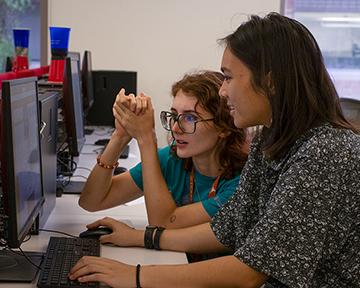
Days start with breakfast at 7:30 am, and from 9:00 am to 4:00 pm you're either in the computer lab working on your group's game or in lectures led by faculty. Guest talks and guided tours of departments around campus fit into those hours too, and you'll meet current UT students along the way.
After dinner there's bowling, a movie night, basketball or another team activity, and everyone is back in their residence hall by 9:30 pm.
The 2027 academy costs $2,100, and that one fee covers your residence hall room, breakfast, lunch and dinner in a campus dining hall, all teaching, and every educational and recreational activity, evening activities included. UT Computer Science doesn't list travel to and from Austin among the things tuition covers, so budget for that separately.
Need-based scholarships are available on a limited basis through a separate application that opens with registration. UT Computer Science doesn't say how much a scholarship covers, and it hasn't yet set a deadline for applying.
Every student is placed in a group of about 10 with a counselor responsible for them around the clock. Program Assistants supervise during the day, while Resident Assistants run the evening activities and sleep in the same dorms overnight.
You share a room with one other student of the same gender, matched by age, on a floor kept to one gender with counselors of that gender. The dining halls offer meals free of the top 9 allergens, the enrollment forms collect medical and emergency details, and families with a specific accommodations need can email academies@cs.utexas.edu to be put in touch with the Academy Accommodations Coordinator.
Enrollment runs through UT's Ideal-Logic portal, and there's no application to write.
From 31 January 2027, use the Enroll Now button on the academy page to reach the portal.
Sign in with the option UT calls Community Login, not the University of Texas Login, which is only for current UT faculty and staff, and pick the Academy for Game Development. The portal's sign-in screen currently labels the public option Guest Login.
Fill in contact, emergency and medical details plus questions about your background in the subject, and both you and a parent or guardian sign the agreements.
If you need help with the cost, complete the separate scholarship application, which opens at the same time as registration.
Registration closes as soon as the academy is full, so there's no later date to aim for.

Sean
Talk it through with Sean
“I can help you compare the programs you're considering, think through the practicalities and work out what makes sense for you.”
21 Feb 2027 · From $2,998 · 14-18 · Durham · In-person
Deadline: Not announced yet · From $4,599 · 13-18 · Atlanta · In-person
15 Jan 2027 · From $6,995 · 16-18 · Boston · In-person
Save this program in Succeed to compare it with similar programs, dates, costs and formats in one place.
Compare with other programscs.utexas.edu · Official page
cs.utexas.edu
cs.utexas.edu
cs.utexas.edu
utexas.qualtrics.com
apps.ideal-logic.com