UW Robinson Center for Young Scholars Applied Public Health: Solving Real World Health Problems
by UW Robinson Center for Young Scholars
- 2027 program
Applied Public Health is a four-week summer day course on the University of Washington's Seattle campus, run by the UW Robinson Center for Young Scholars for qualifying students in 7th to 10th grade. You learn the tools public health professionals use, such as behavior theories, intervention mapping and program evaluation, and apply them with your project group to design a health program or campaign on an issue you care about, from mental health to nutrition. Each week includes a field trip off campus, and the course ends with you presenting your final project.

At a glance
Official facts · checked 27 Nov 2026- 2027: 6 to 29 July
- Students currently in 7th, 8th, 9th or 10th grade at the time of registration. Functional English proficiency, personal independence in self-care, and ability to take part without one-to-one adult support or an aide
- 2027: $1,500
- In person, University of Washington Seattle Campus, Seattle, Washington
- Length
- 4 weeks (15 class days)
- Included / budget separately
- Included: meals (Students bring their own lunch and snacks for the 11:45 to 12:45 lunch period, with no access to microwaves or refrigerators). Separately: Before Care $83 (optional, full session), After Care $221 (optional, full session)
- Deposit and refunds
- Withdraw in writing by 9 April 2027: full refund of the course fee
- Financial aid
- Tuition and fee waivers for families eligible for the federal free or reduced-price school lunch program
- Apply by
- Applications open 1 February 2027. 2027: 12 February (Lottery), 4 March (Teacher recommendation, if used), 11 June (General registration)
- Cohort and selectivity
- Qualified applicants who apply in the two-week lottery window are placed by lottery, and remaining places go first come, first served until registration closes. The 2026 class was listed as full
- Credit or certificate
- Unofficial final transcript on request. No high school credit (the Robinson Center is not accredited)
Get the key facts by email
The dates, costs and how to apply, all in one place.
Should you apply?
SucceedWhy it's worth it
The field trips and guest lectures put you in front of people who design health programs for a living, and you put what you learn into a health campaign or program of your own, so you finish with something you built and presented, not just notes.
What it asks of you
It fills four weekdays for four weeks, with some homework on top, and the Robinson Center strongly discourages missing even a few days because the course moves quickly. Getting to the UW Seattle campus each day is up to your family, so it really only works if you live within reach of Seattle.
Who should skip it
Students who want the course on their high school transcript, because the Robinson Center isn't accredited and leaves credit decisions to each school. You can request an unofficial transcript during the first week, but if credit matters, ask your counselor before you register.
What do you need to qualify?
You need to be in 7th, 8th, 9th or 10th grade when you register, so a 10th grader who signs up during the 2026-27 school year still counts even though they'll be a rising 11th grader by July. Every student also needs working English, has to handle their own self-care and must be able to take part in a group without a one-to-one aide. The Robinson Center doesn't publish a class size or acceptance rate, but the 2026 class was listed as full.
On top of that, you need to meet one of the Robinson Center's qualifying routes, and any one of these is enough:
- Enrollment in a highly capable program that serves gifted students, or participation in Rainier Scholars.
- Smarter Balanced Assessment (SBA) scores at the 90th percentile or above in English or math from the current or previous school year. The published cutoffs are from spring 2026 and are due to be updated between December 2026 and January 2027.
- ITBS, SSAT, SCAT, CoGAT or ERB/ISEE scores at the 90th percentile or above, PSAT, SAT or ACT scores at the 85th percentile or above, or MAP scores at the 99th percentile, all from the current or previous school year.
- A recommendation from a teacher who can speak to your ability, requested through their school email address. It can't come from a family member.
- Previous enrollment in a Robinson Center Summer Challenge or Summer Stretch program.
What do the days and weeks look like?
The 2027 session runs from Tuesday 6 July to Thursday 29 July 2027, with class from 9am to 2:30pm Monday to Thursday, which comes to 15 class days and leaves your Fridays free. You arrive at your classroom between 8:50 and 9:00am and bring your own lunch and snacks for the 11:45am to 12:45pm lunch break, with no microwave or refrigerator to use. You'll need a laptop, which the Robinson Center can lend if you don't have one.
| Week | What you cover | Field trip |
|---|---|---|
| 1 | Population health, what health means, health behavior theories and models, and forming final project groups | King County Public Health |
| 2 | Intervention mapping and designing an intervention or campaign, plus project work | Woodland Park Zoo for OneHealth |
| 3 | Implementation planning, community readiness and working with community partners | Gates Foundation |
| 4 | Designing evaluations, collecting and analyzing data, and presenting final projects | A major hospital system or occupational health worksite |
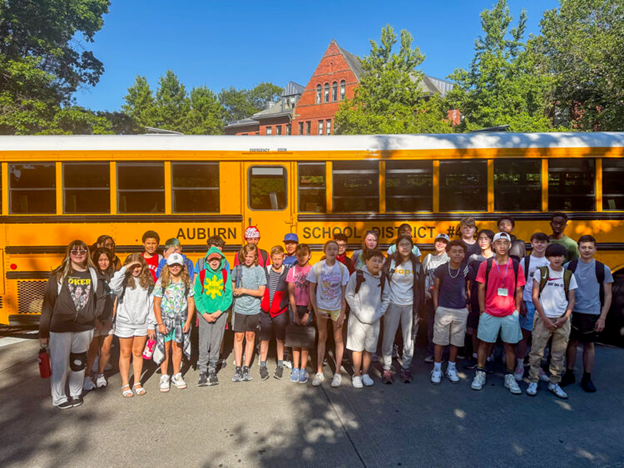
Days mix interactive lectures, workshops and project work, and some homework comes home too. Once a week the class leaves campus by public transportation for a field trip. In 2026 the four weeks ran like this:
Who teaches the course?
In 2026 the course was taught by Daphne Guiselle Gallegos-Klinefelter, who holds a Master of Public Health (MPH), and Christina DuJardin, a Robinson Center Saturday and summer instructor with master's degrees in Public Health and Social Work from the University of Washington. We couldn't find the 2027 instructors in the published material, so check the course page once the 2027 list goes up on 18 January 2027.
Guest lectures from public health professionals who design and run programs are built into the course, and the Robinson Center's student support team also includes classroom aides and a coach.
What does the summer really cost?
For summer 2027 the Robinson Center charges $1,500 per course, and that includes a $50 registration fee that's never refunded. Lunch, snacks and the daily trip to campus are up to you. Before Care ($83) and After Care ($221) are optional extras priced for the whole session, and After Care is a flat fee however many days you use it. You can only add either one once your student has been accepted.
Tuition and fee waivers go to families eligible for federal free or reduced-price school lunch, but only students living in Washington State qualify, and the waivers are given first come, first served until the funds run out. Once enrollment is confirmed, you can switch to another course for free until registration closes, if there's space. Withdrawals have to be sent by email, and the refund depends on the date:
By 9 April 2027
You get the full course fee back, apart from the $50 registration fee.
10 April to 7 May 2027
Half the course fee comes back.
After 7 May 2027
There's no refund unless the Program Director accepts a documented extenuating circumstance.
If the course is canceled
Classes that are still under-enrolled on 16 April 2027 may be canceled, and if the Robinson Center cancels a course you get everything back, registration fee included.
How are students looked after on a big campus?
Teachers or classroom assistants supervise students from 9:00am to 2:30pm, lunch included, unless a parent signs a form letting their student buy lunch unsupervised at places like the HUB, the UW student union. Staff follow the University of Washington's standards for interacting with young people, and the Robinson Center sets out its approach on its youth safety page.
Field trips
Extra chaperones go along on every off-campus trip.
Attendance
It's taken every day, families are contacted if a student is missing without notice, and families need to report an absence by 8:30am that day.
Pickup
Parents choose either independent dismissal at 2:30pm or release to a parent, guardian or designated adult, and students can't stay in classrooms after class ends.
Medical care
Teachers are trained to use EpiPens, every classroom has a first aid kit, and students who need medication during the day must be able to take it themselves.
Staff checks
Staff complete annual youth protection training that includes background checks, and families sign a Policy Guide and Code of Conduct.
How do you get a place?
Applications go through your Robinson Center account, and the steps are on the summer program apply page.
Set up a Robinson Center account before the lottery opens, as the Robinson Center recommends.
Check the 2027 course list when it's posted on 18 January 2027 to confirm Applied Public Health is running.
Apply between 10am on 1 February and 5pm on 12 February 2027 to enter the lottery, picking a first- and second-choice course and uploading your qualifying document as a photo, PDF or JPEG under 2 MB.
If you're qualifying through a teacher, enter their school email so the request goes out automatically, and make sure they finish it by 4 March 2027.
Placements are completed by 24 February 2027, and students who miss out on a full course go on the waitlist. Parents have a week to appeal if a student isn't accepted.
After the lottery, remaining places go first come, first served until registration closes on 11 June 2027.
Once placed, pay tuition or upload financial aid documents through the Make a Payment page of your account.

Sean
Talk it through with Sean
Want to talk it through?
“I can help you compare the programs you're considering, think through the practicalities and work out what makes sense for you.”
What should you do next?
Frequently asked questions
More from UW Robinson Center for Young Scholars
- Chemistry Summer Enrichment Course
- Design for Happiness: Analyzing and Shaping the Built Environment
- Dungeon Master's Guild
- Introduction to Anatomy and Physiology
- Introduction to Comparative Democracy
- Introduction to Programming in Python
- Research & Writing: Create Connections Through Community Zines
- Understanding Our World Through Data
More programs to explore
- Minds and MachinesUBC Future Global Leaders
- Psychology InstituteWake Forest University
- Pre-College Enrichment UCLAWestcoast Connection
- Summer Discovery DartmouthSummer Discovery
- Notre Dame Pre-College ProgramsUniversity of Notre Dame Pre-College Programs
- Emory Pre-College ProgramEmory Pre-College Programs
- College EdgeColumbia University Pre-College Programs
- Psychology Summer SchoolKing's College London
Sources
- Applied Public Health: Solving Real World Health Problems
robinsoncenter.uw.edu · Official page
- Youth Safety & Learning Environment
robinsoncenter.uw.edu
- Student Support
robinsoncenter.uw.edu
- FAQs
robinsoncenter.uw.edu
- Apply
robinsoncenter.uw.edu
- Tuition and Fees
robinsoncenter.uw.edu
- Program Info
robinsoncenter.uw.edu
- Tuition & Fees
robinsoncenter.uw.edu