
In-person summer study in humanities and social sciences.
Deadline: Not announced yet · From $8,850 · 15-17 · Stanford · In-person
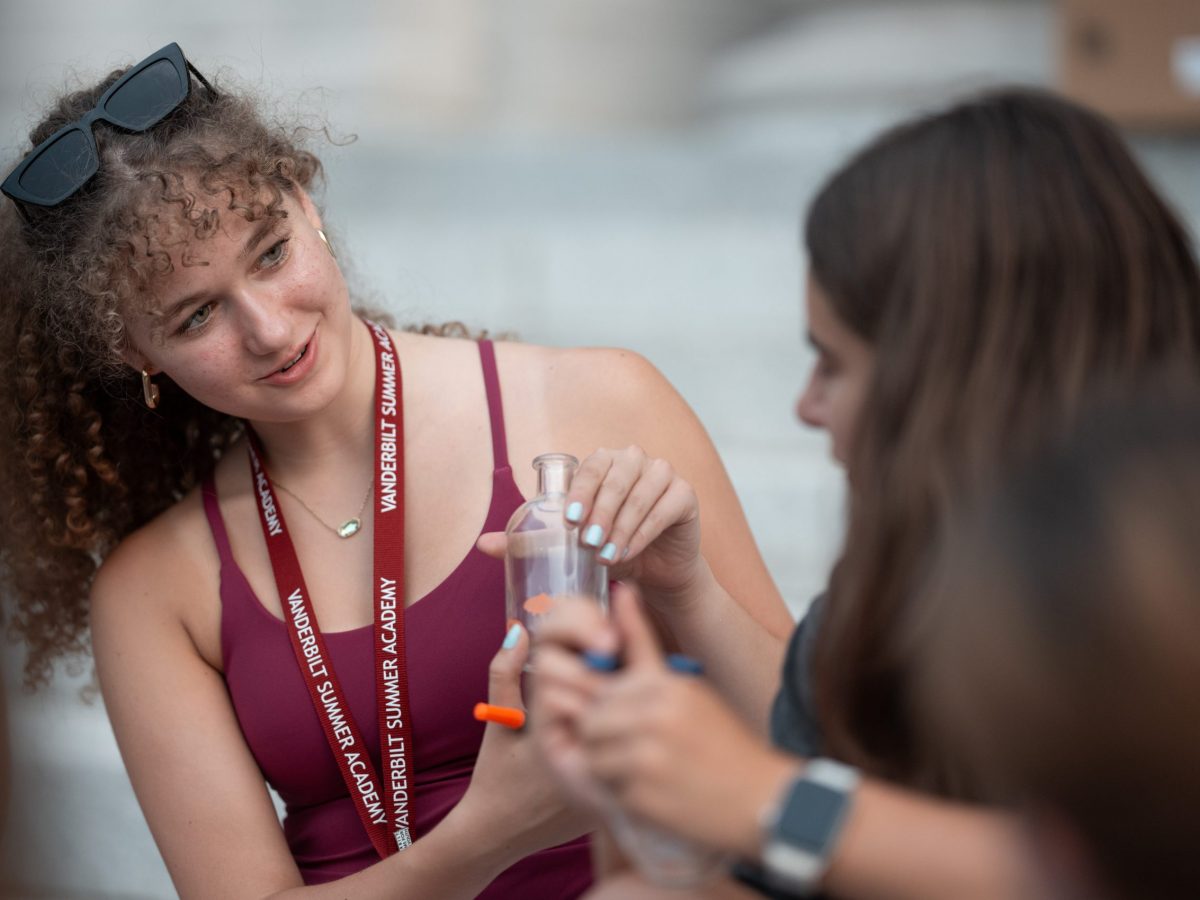
Over one week at Vanderbilt in Nashville, you study the Hundred Years' War through Jean Froissart's chronicles, letters from Edward III and excerpts from Shakespeare's Henry V, then set them against how films and popular culture picture knights and battles. The centerpiece is a war council simulation where students play commanders, juggling alliances, supply lines and morale as campaigns unfold on a live Google Earth map. It's one of the courses in Vanderbilt Summer Academy (VSA), a residential program where you take a single course and live in a first-year residence hall, and it ran three times in summer 2026.
Why it's worth it
You don't just read about the war. You work with the chroniclers' and the king's own words, compare them with how Shakespeare and modern films tell the story, and then run campaigns yourself in the war council simulation. That mix of source work and strategy play suits a student who likes arguing about what really happened.
What it asks of you
You'll spend a week away from home in a fully scheduled residential program, with about six hours of class each weekday. For 2027, tuition is $2,150 for rising 7th and 8th graders and $2,850 for rising 9th and 10th graders. To get in, you'll need reading and writing scores near the 90th percentile or a portfolio that includes an essay.
Who should skip it
Students who want some independence on the trip, because VSA gives rising 7th to 10th graders no sign-out free time and warns that students used to unsupervised time may find its rules restrictive.
Jesse McCarthy, who holds a Ph.D. in History, taught all three 2026 sessions. He's a former Vanderbilt University lecturer and postdoctoral fellow who now teaches Upper School history at Harpeth Hall, and he also teaches advanced Research Immersion courses for Vanderbilt Programs for Talented Youth. Outside school he has led public humanities seminars at Nashville's Belcourt Theatre, which fits a course built around how films and plays reshape the past.
Every VSA course has its own instructor and a teaching assistant, although VSA doesn't publish class sizes. It also says courses and instructors can change with demand and availability, so check the 2027 listing before counting on the same teacher.
Class takes up most of the day, about six hours each weekday, and you take only this one course for the whole week. Outside class, VSA runs evening activities and outings that every student is expected to join unless an accommodation is approved in advance, and meals are cafeteria-style in the campus dining halls, from dinner on the first day to breakfast on the last.
For rising 7th to 10th graders the whole day is planned, and after the evening program you stay on your residence hall floor until breakfast. Phones aren't allowed in class or organized activities, and you'll need a laptop or iPad for study hall work, although VSA has a limited number of loaner laptops if you ask before the session.
You apply for the session built for your rising grade, and in 2026 this course ran once for rising 7th and 8th graders and twice for rising 9th and 10th graders. VSA asks for evidence that an accelerated course suits you, through one of two routes it treats equally, and for a humanities course like this one it looks mainly at reading, writing and English language arts results.
There's no hard score cutoff, and VSA doesn't rank applicants against each other. Every complete application sent during the one-week priority window gets a random place in the review queue, and seats left after that go first-come, first-served. You rank up to four courses and are placed in the highest one with a seat, so list only courses you'd actually take. Admission is need-blind, and for returning students VSA also considers past conduct at its programs.
Test scores
Results around the 90th percentile or above for your age group in at least one section of the ACT, SAT, PSAT or another nationally normed test such as state tests, MAP or ITBS, or a cognitive measure such as the CogAT, less than three years old, plus a transcript.
Portfolio
A transcript, one educator recommendation through VSA's 10- to 15-minute online form, and an essay of under 600 words on why you'd commit summer time to an academic program and why you chose your first-choice course. VSA strongly encourages the test-score route but says the portfolio won't hurt your chances.
International applicants
Everything must be in English. Students whose first language isn't English need to show proficiency, and VSA recommends scores such as 7.0 on the IELTS, although the test is waived if you've spent three of your last four school years in a mainly English-speaking curriculum.
For 2027, VSA lists one-week tuition at $2,150 for rising 7th and 8th graders and $2,850 for rising 9th and 10th graders, plus a $50 application fee ($100 for international applicants) that isn't refunded. Tuition covers the course, materials, housing, meals and residential outings, so the main extras are the $75 round-trip airport shuttle, which is required if you fly into Nashville alone, and spending money, where VSA suggests $50 to $75 a week. You'll also need health insurance.
Once you're placed, a nonrefundable deposit of 20% of tuition ($430 on $2,150, or $570 on $2,850) is due within a week and counts toward the total. Withdraw before the tuition deadline and you get back everything above the deposit, but after it there are no refunds, even if you leave early. In 2026 that deadline was 14 March for students admitted before 1 March.
Need-based aid is available to families with an adjusted gross income of $105,000 or less, or facing severe hardship, and some named scholarships from outside donors cover full tuition. VSA offers no financial aid to international students. Any family can set up a monthly payment plan.
Very closely. Rising 7th to 10th graders are with a staff member through class and the afternoon and evening activities, residence halls stay locked with card access, a security team watches them overnight and Vanderbilt University Police patrol the campus. VSA follows Vanderbilt's policy on minors on campus, and every staff member goes through a nationwide background check.
Proctors
Between 25 and 35 trained undergraduate and graduate residential counselors live on the floors, and each student joins a proctor group of about 6 to 14.
Health
There's no full-time medical staff, but a nurse reviews health records, handles medications and triages concerns, and emergencies go to the nearest hospital, usually Monroe Carrell Jr. Children's Hospital at Vanderbilt.
Travel
Staff meet students flying in alone at Nashville International Airport and take them back on departure day, but VSA can't provide unaccompanied-minor escorts, so you must be old enough to fly alone without an airline's unaccompanied-minor service.
Visits
Families stay off campus except at check-in and check-out, and parents can join a virtual open house with the instructor near the end of the session.
You leave with written feedback and a performance evaluation from your instructor, not a grade or academic credit. VSA also says attending doesn't help admission to Vanderbilt University, and whether an instructor writes you a recommendation letter is up to them.
What the course aims to give you is a sharper sense of how chivalric ideals clashed with the realities of medieval warfare, how propaganda and myth shaped what people remembered, and how the Hundred Years' War still colors ideas about heroism and national identity.

Sean
Talk it through with Sean
“I can help you compare the programs you're considering, think through the practicalities and work out what makes sense for you.”
In-person summer study in humanities and social sciences.
Deadline: Not announced yet · From $8,850 · 15-17 · Stanford · In-person
Cambridge summer study in social and political sciences.
Deadline: Not announced yet · From £6,995 · 14-18 · Cambridge · In-person
Online summer study focused on philosophy.
04 Mar 2027 · From $3,250 · 13-17 · Online · Online
Save this program in Succeed to compare it with similar programs, dates, costs and formats in one place.
Compare with other programspty.vanderbilt.edu · Official page
pty.vanderbilt.edu
pty.vanderbilt.edu
pty.vanderbilt.edu
pty.vanderbilt.edu
pty.vanderbilt.edu
pty.vanderbilt.edu
pty.vanderbilt.edu
Facts checked against the official page on 10 Nov 2026
Editor: Ben Stacy
Succeed has no commercial relationship with Vanderbilt Summer Academy.
Spot an error? Report it