
Applications
Rolling admissions

Vanderbilt’s astrophysics summer program in Nashville explores stars, black holes, galaxies, and exoplanets through hands-on demonstrations, NASA telescope images, and beginner-friendly Python.
See Succeed's assessment of the programme, who it may suit, the estimated total cost, what applying involves and what is still to confirm.
or let us know if .
What Succeed checks
We review public program details such as eligibility, age range, cost, duration, location, format, accommodation, meals and application timing.
What Last verified means
Last verified is the latest date Succeed checked the public details shown on this page. Program dates, prices and availability can still change.
How official sources are used
Succeed uses official provider information where available, then rewrites it into a student-facing summary for comparison and planning.
Why some dates are reference dates
If the current cycle is not available, Succeed may show the latest verified cycle dates so you can understand typical timing.
Succeed is independent from this provider unless a partnership is clearly stated.
Current status
Applications open
Eligibility
Academic-fit documentation required
Age range / Year group
Ages 12-14
Location / Region
Vanderbilt University, Nashville, Tennessee, United States
Cost
$2,150
Duration
1 week
Format
In-person
Application deadline
Rolling · Next cycle not announced yet. These dates are from the latest verified cycle and should be used as a reference only.
Save programThis Vanderbilt Summer Academy course connects big cosmic questions with the methods astronomers use to answer them, covering stars, black holes, exoplanets, and galaxies.
Hands-on demonstrations, NASA telescope images, and beginner-friendly Python give students several ways to explore the subject beyond reading about space.
It suits curious learners who want focused academic study alongside a supervised residential community.
Introduction to Astrophysics: How the Universe Works is a course within Vanderbilt Summer Academy, organized by Vanderbilt University’s Programs for Talented Youth. It introduces the physical processes behind star formation, supernovae, black holes, exoplanets, and galaxy evolution.
Students explore these ideas through hands-on demonstrations, real NASA telescope images, and beginner-friendly Python activities. The academic experience sits within VSA’s residential campus program, combining concentrated study of one subject with supervised social and recreational activities.
NASA telescope images connect astronomical ideas with observations students can examine.
Beginner-friendly Python introduces the computational side of astronomy alongside physical demonstrations.
The listed instructor’s gravitational-wave research provides a direct connection to contemporary astrophysics.
Written feedback and a performance evaluation give students a concrete way to reflect on their learning.
Curious students who enjoy space science and want to connect cosmic phenomena with images, data, and introductory coding.
You want an unstructured camp or extensive independent time, because VSA combines accelerated academic study with comprehensive supervision.
This course offers a useful way to test an interest in astrophysics through several kinds of learning rather than relying on lectures alone. The combination of NASA images, demonstrations, and introductory Python can help students see how scientific explanations connect to observations.
Its value depends on wanting both concentrated academic work and residential community life. Families should treat it as subject exploration: VSA awards no academic credit, and participation does not signal admission to Vanderbilt University.
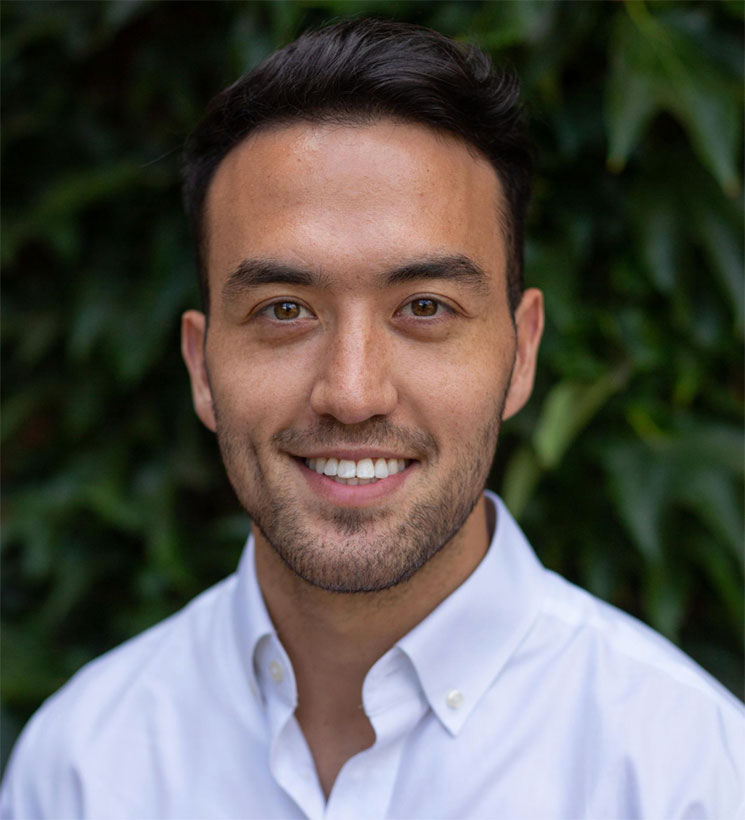
Sean
Founder, Succeed
Talk it through with Sean
“I can help you compare the programmes you're considering, think through the practicalities and work out what makes sense for you.”
20 minutes · No obligation to enrol
A practical overview of cost, accommodation, meals, dates and provider details to review before deciding.
Cost and what is included
$2,150; includes Course instruction and materials., Residential housing., All meals from arrival dinner through departure breakfast., Residential outings and activities..
Accommodation
5 nights; double or triple rooms
Meals
Arrival dinner through departure breakfast
Provider details
Review the Vanderbilt Summer Academy provider page and official sources before making a final decision.
Dates and logistics
1 week; Vanderbilt University, Nashville, Tennessee, United States.
What to check before committing
Confirm current dates, payment terms, travel arrangements, cancellation rules and what is included with the provider.
Compare this program with similar options before deciding on dates, cost, format and fit.
Compare with similar programsEffort level
High academic intensity within an introductory subject course.
Best started
Allow four to six weeks before a published priority application window to organize documents, recommendations, and family plans.
Main challenge
Sustaining focused academic engagement alongside a structured residential schedule.
Choose between the test-score and portfolio documentation routes and gather your transcript.
For the portfolio route, request educator recommendation documentation and draft the essay about your academic commitment and course interest.
Practice explaining one question about stars or black holes that you would like to investigate.
Plan residential packing, health forms, and travel arrangements with a parent or guardian.
Useful if
You want to discover whether studying space through data and coding interests you.
You explore how astronomical objects form and change while learning how scientists investigate them. Demonstrations, NASA telescope images, and beginner-friendly Python activities connect the subject’s big questions with practical scientific methods.
Explore star formation and the stellar life cycle, including supernova explosions.
Investigate black holes, exoplanets, and the evolution of galaxies.
Use demonstrations and NASA telescope images to connect concepts with observations.
Try beginner-friendly Python activities and examine how astronomers use computer models.
Consider what scientists look for when searching for life on other worlds.
Next cycle not announced yet. These dates are from the latest verified cycle and should be used as a reference only.
Applications
Rolling admissions
Programme dates
7-12 June 2026
Applications open
7 January 2026
Beginning of the VSA priority application window.
| Milestone | Date | Timezone | Status | |
|---|---|---|---|---|
Applications | Rolling admissions | Local | Reference date | |
Programme dates | 7-12 June 2026 | Local | Reference date | |
Applications open | 7 January 2026 | Local | Reference date |
Rising seventh- and eighth-grade students.
Apply only within your current rising grade level.
Submit qualifying academic documentation through either admissions route.
Test-score applicants submit assessment results and a transcript.
Portfolio applicants submit a transcript, recommendations, and an essay.
International applicants may need English proficiency documentation.
All participants need health insurance and completed required forms.
Program fee
Not announced
Funding or discounts
What's included
Course instruction and materials., Residential housing., All meals from arrival dinner through departure breakfast., Residential outings and activities.
Use the official VSA admissions page to review the course choices and application requirements.
Create or sign in to your SchoolDoc account.
Prepare test scores and a transcript, or the required portfolio components.
Rank up to four courses that you would be willing to attend.
Submit eligibility documents, any financial aid materials, and the application fee.
After placement, follow the admissions email’s payment and required-form instructions.
Next step with Succeed
or let us know if .
Succeed replies first, usually within a working day
The program covers the following focus areas.
Stars and supernovae
Explore how stars form inside nebulae and how massive stars end in supernova explosions.
Black holes
Investigate the creation of black holes and the physical questions they raise.
Galaxies and the Milky Way
Examine how galaxies evolve and how the Milky Way changes over time.
Exoplanets and life
Explore discoveries of exoplanets and what scientists look for when searching for life beyond Earth.
Images, data, and Python
Use NASA telescope images and beginner-friendly Python activities to explore astronomical methods.
Curriculum may be adjusted based on participant interests and current developments.
A typical day during the program.
Approximately six hours of accelerated study focused on one course.
Organized recreational and social activities with PTY staff supervision.
Seventh- and eighth-grade students remain on their residential hall after evening activities until breakfast.
The listed instructor is Kaylah McGowan, a Vanderbilt astrophysics Ph.D. student whose research focuses on gravitational-wave instrumentation and detector characterization with the LIGO Livingston Observatory. She holds degrees in Applied Physics and Physics and develops software for analyzing detector noise.
Each VSA course has a dedicated instructor and teaching assistant; course instructors are subject to change.
Most rooms are doubles, with some triples; roommates are assigned randomly and shared on arrival.
After completing this program, participants often pursue:
Build an introductory understanding of stellar life cycles and black holes.
Connect astronomical questions with images, data, and computer models.
Explore Python as a tool for studying space science.
Use written instructor feedback and a performance evaluation to guide further study.
VSA does not award academic credit, and recommendation letters are at individual instructors’ discretion.
The residential experience takes place at Vanderbilt University in Nashville, with students becoming familiar with Peabody Campus and living at the Ingram Commons. Nashville International Airport is approximately 20 minutes from campus, and PTY provides a required paid shuttle for students flying alone.
VSA cannot provide airline Unaccompanied Minor escorts; students flying alone must meet their airline’s independent-travel rules.
Compare these related options by subject focus, setting, and age range.
A physics-focused summer course in Cambridge
Best for
Students interested in physics beyond astronomy
Introduces the methods and questions that define modern science
Best for
Students exploring several areas of science
An online course focused on orbital mechanics and aerodynamics
Best for
Older students interested in space and engineering
Save this program in Succeed to compare it with similar programs, dates, costs and formats in one place.
Compare with other programsContent reviewed by
Co-founder, Succeed | Founder, Immerse Education (2012–2026)
Sean works at the intersection of academic enrichment, program quality and university preparation, with expertise in evaluating pre-university experiences for ambitious secondary school students.
Succeed uses official provider information where available, but keeps this public page focused on comparison and planning inside Succeed.
Course identity checked
Session dates reviewed
Eligibility routes reviewed
Tuition cycle checked
Financial assistance reviewed
Residential supervision reviewed
We use source material to verify core facts, then show older cycle dates as reference when a current cycle is not available. Always check current application instructions before applying.
Introduction to Astrophysics: How the Universe Works
by Vanderbilt Summer Academy
Get the full picture before you decide
Succeed's assessment, estimated total cost and what applying involves.
No account needed for the Guide or Compare.