Introduces the methods and questions of modern science.
Deadline: Not announced yet · From £3,495 · 12-16 · Oxford · In-person
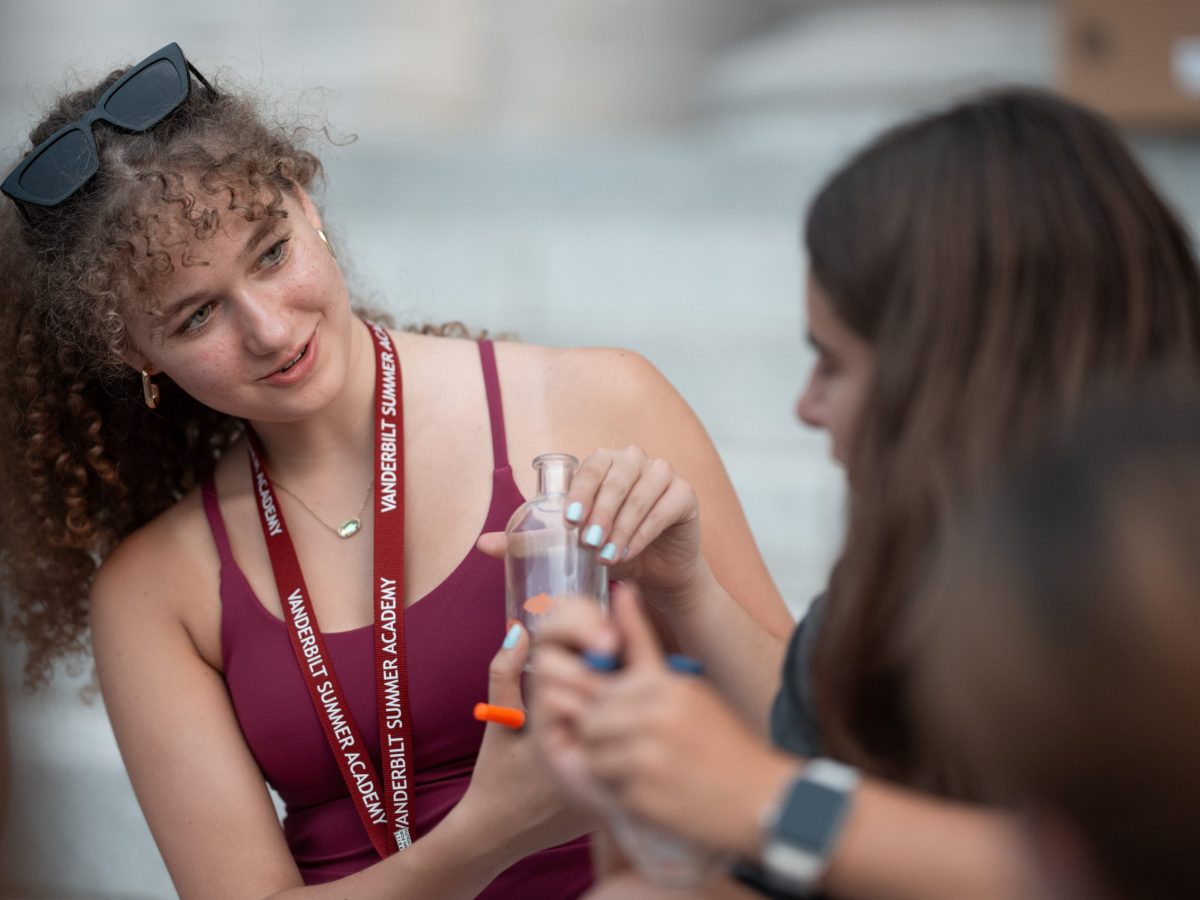
Introduction to Statistical Analysis is a one-week Vanderbilt Summer Academy course for rising 7th and 8th graders, taught on Vanderbilt's campus in Nashville. In 2026 it covered descriptive statistics, correlation, regression and significance testing, and students ran and interpreted their own analyses on datasets the instructor provided, working both by hand and in Excel or Google Sheets. Students live in a university residence hall for five nights, with organized activities in the evenings.
 Sean Stevens · Sources
Why it's worth it
You don't just hear about statistics. You run your own analyses on datasets the instructor provides, by hand and in spreadsheets, on topics like regression and significance testing that Vanderbilt says are covered in AP and college statistics courses.
What it asks of you
A full residential week in Nashville and the tuition that comes with it, plus test scores or a portfolio showing you can keep up with a course Vanderbilt teaches at an accelerated pace. Families outside Nashville also need to budget for travel.
Who should skip it
Students who want a relaxed week or plenty of time to themselves, because class takes up most of each day and the evenings go to planned group activities that Vanderbilt expects everyone to join.
Gabriella Noreen, a doctoral candidate in the Quantitative Methods Program at Vanderbilt's Peabody College, taught the 2026 course. She holds a master's degree in quantitative methods from Vanderbilt, has taught with Vanderbilt's Programs for Talented Youth for several years and has been a teaching assistant on Vanderbilt courses including Statistical Analysis. She also works as a research assistant at the Study of Mathematically Precocious Youth.
Every course has its own instructor and a teaching assistant. Vanderbilt notes that courses and instructors can change with demand and availability, so the instructor for any future run isn't confirmed.
Class runs about six hours each weekday, all on this one course, so the week goes deep into statistics without switching subjects. In 2027 the rising 7th and 8th grade week runs from check-in on Sunday, 13 June, between 1:30 and 3:30 p.m. Central time, to check-out on Friday, 18 June, between 9 and 11 a.m.
Meals are served cafeteria-style in campus dining halls, from dinner on opening day to breakfast on closing day. Evenings are given over to activities run by the residential staff, and admitted families get a student handbook with a typical day's timetable.
You leave with a written performance evaluation from your instructor and the experience of having run and interpreted your own analyses, but no grade and no academic credit. Vanderbilt is also clear that attending doesn't help with admission to Vanderbilt University itself.
Recommendation letters aren't part of the program, so it's up to each instructor whether to write one, and Vanderbilt asks students to give plenty of notice. Parents can join a virtual open house led by instructors near the end of the week.
You apply with either test scores or a portfolio, and Vanderbilt weighs the two routes equally, although it strongly encourages scores. The scores route looks for results at or near the 90th percentile for your age in at least one section of a test. That can be the ACT, SAT or PSAT, another nationally normed test such as a state test, MAP or ITBS, or a cognitive test such as the WISC-V or CogAT. Scores should be less than three years old, and you send a transcript with them. Vanderbilt looks at scores in the subject area of the course you rank, which for a statistics course points to math.
The portfolio route asks for a transcript, one educator recommendation through Vanderbilt's online form, and an essay of under 600 words on why you'd give part of your summer to study and why you chose this course. Vanderbilt also says an application isn't complete until it has two educator recommendations, so check how many it wants before you ask your teachers.
There's no score cutoff, and Vanderbilt doesn't rank applicants against each other. Every complete application sent during the roughly one-week priority window (7 to 14 January in 2026) gets the same chance, because Vanderbilt reviews them in a randomly drawn order, and later applications are reviewed as they arrive while seats remain. You rank up to four courses and are placed in the highest one with a free seat, so only rank courses you'd happily take.
Expect to pay about $2,200 if you live near Nashville, from the $2,150 tuition and the $50 application fee. If your student flies in alone, the $75 round-trip airport shuttle is required, which brings it to about $2,275 before flights. Vanderbilt lists that tuition beside its 2027 dates for the rising 7th and 8th grade week, so confirm it once the 2027 courses are out. Tuition covers the course, materials, housing, meals and residential outings, and Vanderbilt suggests $50 to $75 a week in spending money.
Once your student is placed in a course, a nonrefundable deposit of 20% of tuition (about $430) is due within a week. In 2026 the balance was due by 14 March for students admitted before 1 March. Withdraw before the tuition deadline and you get back everything above the deposit, but after it nothing is refunded, even if your student leaves early. Any family can spread tuition over a monthly payment plan, but installments already paid aren't refunded if you cancel, and in 2026 plans weren't offered to families notified after 1 May.
Need-based aid is open to families with an adjusted gross income of $105,000 or less, or facing a severe hardship, and the admissions review doesn't consider finances. Vanderbilt also lists named scholarships from outside donors, some covering full tuition. International students can't get aid and pay a $100 application fee. Every student needs health insurance, and parents cover anything it doesn't.
Rising 7th through 10th graders are with a Vanderbilt staff member through the whole academic day and every afternoon and evening activity, and after the evening program they stay in their residence hall overnight. The halls stay locked to anyone without an approved card, a security team watches them overnight, and campus police patrol the grounds.
Each student belongs to a proctor group of about 6 to 14, led by one of 25 to 35 trained residential counselors who live on the residential floors near their groups, and all staff pass a nationwide background check. A nurse reviews health records and handles medication, though there's no full-time medical staff, and emergencies go to the nearest hospital, usually Monroe Carrell Jr. Children's Hospital at Vanderbilt. Staff follow Vanderbilt's policy on minors on campus.
Families flying a student in should know that Vanderbilt can't provide airline unaccompanied-minor escorts, so a student flying alone has to be old enough to travel without that airline service. Check your airline's rules before booking. Staff meet arriving students at Nashville International Airport and bring them to campus on the required shuttle.

Sean
Talk it through with Sean
“I can help you compare the programs you're considering, think through the practicalities and work out what makes sense for you.”
Introduces the methods and questions of modern science.
Deadline: Not announced yet · From £3,495 · 12-16 · Oxford · In-person
Online pre-collegiate study across academic subjects.
Deadline: Not announced yet · From $3,200 · 13-17 · Online · Online
Save this program in Succeed to compare it with similar programs, dates, costs and formats in one place.
Compare with other programspty.vanderbilt.edu · Official page
pty.vanderbilt.edu
pty.vanderbilt.edu
pty.vanderbilt.edu
pty.vanderbilt.edu
pty.vanderbilt.edu
pty.vanderbilt.edu
app.schooldoc.com
Facts checked against the official page on 4 Nov 2026
Editor: Sean Stevens
Succeed has no commercial relationship with Vanderbilt Summer Academy.
Spot an error? Report it