Ages 12 to 16, in person, from £3,495, several sessions.
Deadline: Not announced yet · From £3,495 · 12-16 · Oxford · In-person
Physics of Motion is a one-week residential physics course at Vanderbilt University in Nashville for students heading into 9th or 10th grade, run through the Vanderbilt Summer Academy (VSA). Its 2026 run, from 5 to 11 July, was taught by Dr. Savanna Rae Starko and gave students about six hours of class each weekday on mechanics, fluids, sound, thermal and statistical physics, electricity and magnetism, basic circuits and optics. Students live in a first-year residence hall and spend their evenings at supervised activities.
 Sean Stevens · Sources
Why it's worth it
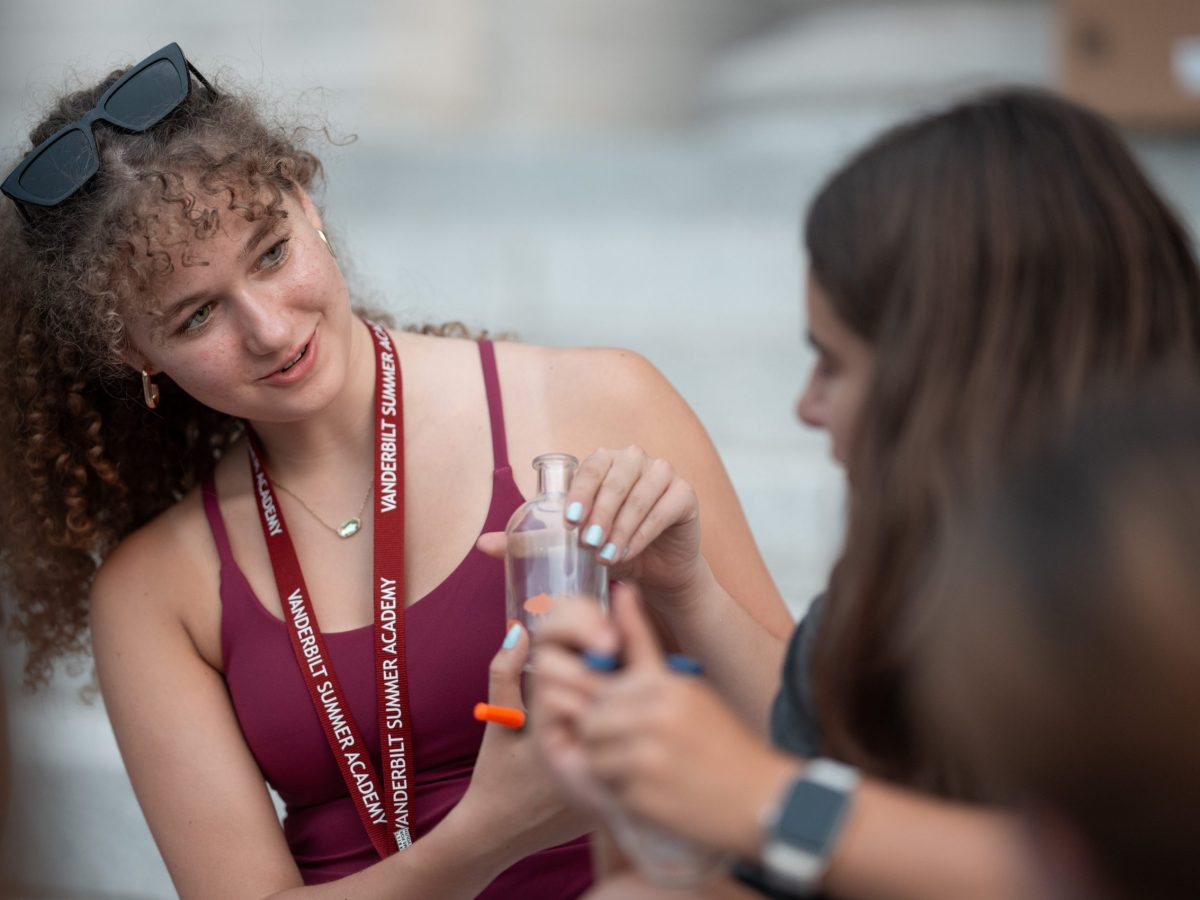
It combines a week of fast-paced physics with living in a Vanderbilt first-year residence hall, which makes it a gentle first taste of a college-style summer for a younger high school student.
What it asks of you
The days are tightly structured and supervised, and $2,850 plus travel to Nashville is a sizable spend for a one-week survey course.
Who should skip it
Students who already know which area of physics they want to dig into, because the course spreads its time across many topics.
You might not get this course
You rank up to four courses and VSA places you in the highest-ranked one that still has seats, so you could end up in your second or third choice and still owe the deposit.
The 2026 course was taught by Dr. Savanna Rae Starko, who earned her PhD in high energy physics at Vanderbilt in 2020 and was a senior lecturer in physics there from fall 2020 through spring 2024. She now teaches STEM full time at the high school of Templeton Academy Nashville, so she's used to teaching students this age, and she holds bachelor's degrees in mathematics and physics from Washington and Jefferson College. She describes her classroom as a place where every student is seen, heard and valued.
Every VSA course also has its own teaching assistant. VSA says courses and instructors can change with demand and availability, so check the 2027 listing to see who's teaching.
Class takes up about six hours each weekday, all of it on this one course, since every VSA student studies a single subject for the week. Sessions run from an afternoon check-in on Sunday to a check-out the following Saturday morning.
Outside class you eat cafeteria-style in campus dining halls, join evening activities with your proctor group and get some free time to make friends. Supervision is close at this age. A staff member stays with rising 9th and 10th graders through the academic day and all afternoon and evening activities, and after evening activities you stay in your residence hall until breakfast. Only rising 11th and 12th graders get sign-out time off campus.
Everyone is expected to take part in the scheduled activities, and phones stay put away during class. You'll need a laptop or iPad for study hall, although VSA keeps a few loaners. Most students share a double room in the Martha Rivers Ingram Commons with a roommate assigned at random.
You leave with a written performance evaluation from your instructor, not a grade or academic credit, because VSA doesn't grade its courses. The feedback covers your engagement, growth and the ideas you contributed, which can help you judge whether physics is worth pursuing further. Unlike some VSA courses, Physics of Motion's description doesn't mention a final project, so don't expect a finished piece of work to show for the week.
Whether your instructor writes you a recommendation letter is up to them, and VSA says plainly that attending won't help a student get into Vanderbilt University. Parents can join a virtual open house led by instructors near the end of the session.
You need to be a rising 9th or 10th grader, because VSA only accepts students into sessions built for their own rising grade, and you show you're ready for an accelerated course in one of two ways, which VSA weighs equally. Both routes need a transcript showing your 2025-2026 and fall 2026 grades, and a screenshot of your unofficial record is fine.
VSA doesn't rank applicants against each other. It reviews each complete application for fit, looking at your strengths in the subject of the course you've ranked, then places you in your highest-ranked course that still has seats. There's no cutoff score, but scores around the 90th percentile or above have the best chance of immediate placement. If you've attended a PTY program before, your past performance and conduct count too.
Test scores
A score at the 90th percentile or above for your age in at least one section of the ACT, SAT, PSAT or another nationally normed test such as your state test, MAP or ITBS, less than three years old. Cognitive tests such as the CogAT and out-of-level scores are accepted too.
Portfolio
A transcript, one educator recommendation submitted through PTY's own form, and an essay of under 600 words on why you'd commit to an academic program in your summer and why you picked your first-choice course. VSA still encourages test scores where you have them.
English
Applicants whose first language isn't English also send test results that meet VSA's recommended minimums, such as IELTS 7.0 or Duolingo 130, unless three of their last four school years were taught mainly in English.
Tuition is $2,850 for a one-week session for rising 9th and 10th graders, and it covers the course, materials, housing, meals and residential outings. On top of that comes a $50 application fee ($100 for international applicants), which isn't refunded. If your student flies in alone, the $75 round-trip airport shuttle is required, and VSA suggests $50 to $75 a week in spending money. Proof of health insurance is required, and international families should check visa requirements with immigration authorities.
Once you're placed, 20% of tuition ($570) is due within a week as a nonrefundable deposit that counts toward the total. If you withdraw before the tuition deadline of 14 March 2027, you get back anything you've paid above the deposit. After that there are no refunds, even if your student leaves early. Students placed after 14 March pay full tuition about a week after placement instead, with no deposit, and that due date becomes their refund cutoff.
Need-based aid is available to families with an adjusted gross income of $105,000 or less or facing severe hardship, though not to international students, and admission decisions don't consider finances. Named scholarships from outside sponsors also exist, some covering full tuition. Any family can spread tuition across monthly payments due by 1 June 2027, although installments already paid aren't refunded if you cancel.
Applications go through PTY's SchoolDoc portal, reached from VSA's apply page, and VSA keeps accepting them through spring 2027 until classes fill, though it warns that courses fill very quickly.
Check the 2027 course list VSA publishes on 1 December 2026 to see whether Physics of Motion is back and which session it's in.
Create a free SchoolDoc account and, on the portfolio route, send your teacher PTY's recommendation form early, since recommendations can be submitted before applications open.
Apply from 15 December 2026, ranking up to four courses you'd genuinely take, uploading your eligibility documents, paying the application fee and flagging financial aid if you need it.
Expect a decision one to three weeks after applying, with notifications going out weekly from 5 January 2027.
Pay the 20% deposit within one week of being placed, or the seat goes to someone else.
Pay the rest of tuition and submit the required health, permission and insurance forms by 14 March 2027. If you're placed after that date, tuition is due about a week after placement.

Sean
Talk it through with Sean
“I can help you compare the programs you're considering, think through the practicalities and work out what makes sense for you.”
Ages 12 to 16, in person, from £3,495, several sessions.
Deadline: Not announced yet · From £3,495 · 12-16 · Oxford · In-person
Ages 15 to 18, Evanston, from $3,625, apply by 1 April 2027.
01 Apr 2027 · From $3,625 · 15-18 · Evanston · In-person
Ages 13 to 18, in person in Cambridge, from £5,995.
Deadline: Not announced yet · From £5,995 · 13-18 · Cambridge · In-person
Save this program in Succeed to compare it with similar programs, dates, costs and formats in one place.
Compare with other programspty.vanderbilt.edu · Official page
pty.vanderbilt.edu
pty.vanderbilt.edu
pty.vanderbilt.edu
pty.vanderbilt.edu
pty.vanderbilt.edu
pty.vanderbilt.edu
pty.vanderbilt.edu
Facts checked against the official page on 17 Nov 2026
Editor: Sean Stevens
Succeed has no commercial relationship with Vanderbilt Summer Academy.
Spot an error? Report it