
In person in Cambridge, ages 14 to 17, from £3,495, English communication focus.
Deadline: Not announced yet · From £3,495 · 14-17 · Cambridge · In-person
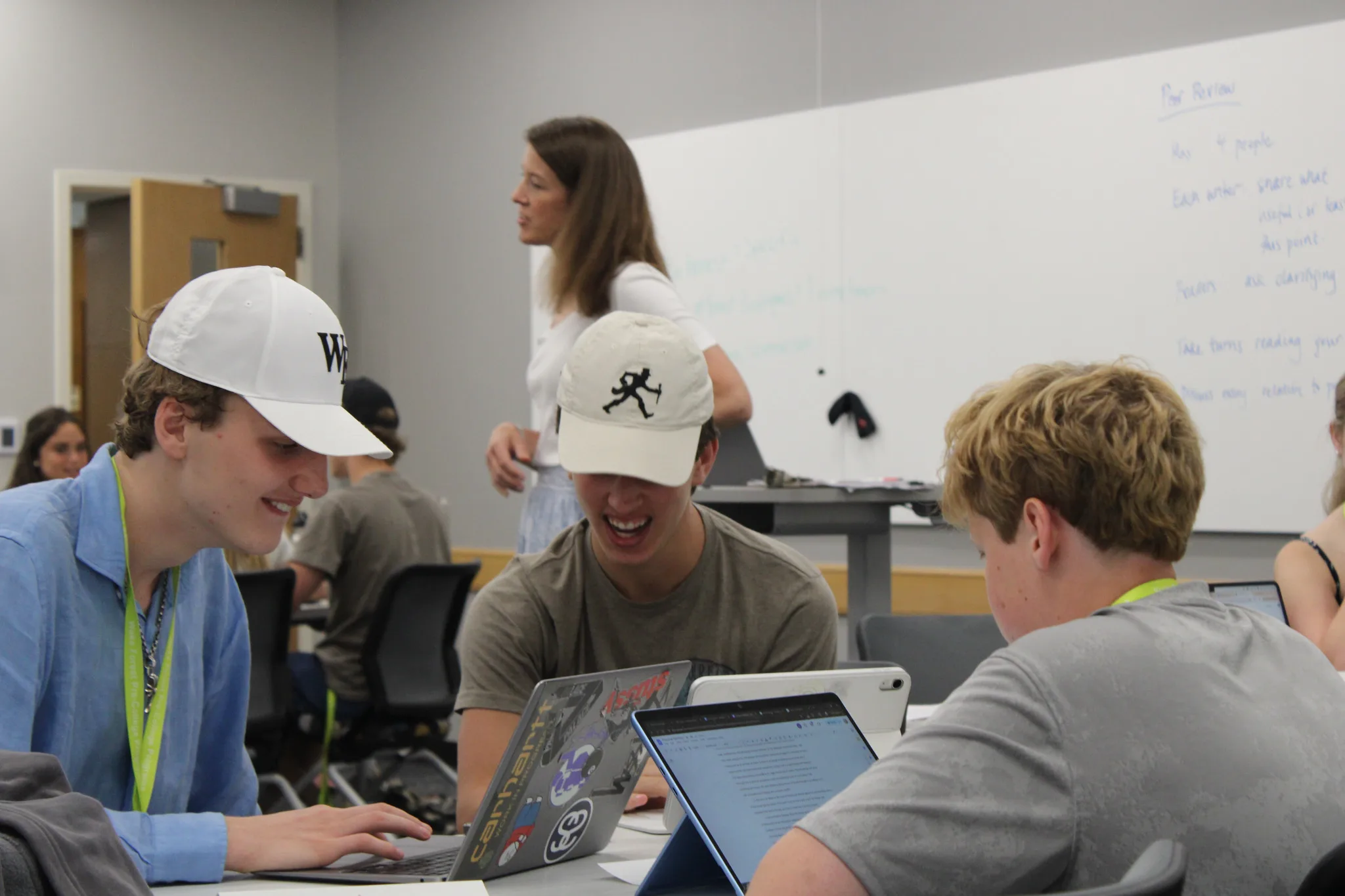
The Writing for Life Institute is a one-week residential writing course on Wake Forest University's campus in Winston-Salem, North Carolina, for students in 9th through 12th grade. It's built around writing that works for a real reader, so from Monday to Thursday you'll write a personal essay and practice writing for different audiences in small-group workshops, taking your work from brainstorming and drafting through revision and proofreading. Along the way you'll hear from authors, journalists and poets. You stay in a campus residence hall from Sunday check-in to Friday checkout, with staff-led activities each evening.
Why it's worth it
The week treats writing as something that has to work for a real reader, with practice on a personal essay, writing for the public and adapting to an audience. For a student wondering whether writing could be part of a future career, the faculty panel and time with working authors, journalists and poets are the strongest part.
What it asks of you
It's a sizeable cost for five days of teaching, and the days are scheduled from breakfast to lights out, so it suits a student who's happy to live on a group timetable away from home for a week.
Who should skip it
Students who need credit on a transcript, since the course carries none, and anyone who can't spend the whole week in Winston-Salem, because even local students have to live on campus.
Classes run from 8 am to 5 pm, Monday to Thursday, with evening activities and free time afterward, and you check out at noon on Friday. Wake Forest's sample day for this institute, which it says may change, opens with a morning meeting over breakfast at 8 am, then an introduction to writing for the public and a workshop on audience analysis before lunch. The afternoon brings a faculty panel on writing and a three-hour block on tailoring your writing to its intended readers, followed by a short debrief to prepare for the next day.
Dinner is at 5:30 pm, and after it come staff-led evening activities such as basketball, karaoke, Spikeball or s'mores, plus an optional nightly panel on topics like study abroad. Free time follows, and lights are out at 10:30 pm. The week starts with check-in between 3 and 5 pm on the Sunday.
Dr. Erin Branch, the institute's Academic Leader, teaches in Wake Forest's writing program and earned her MA and PhD in rhetoric and composition at the University of North Carolina at Chapel Hill. Over the past decade she has taught first-year writing and classes on the essay, the rhetoric of health and medicine, and the history of rhetoric. Before graduate school she taught English in Vietnam and then at an independent K-12 school in Virginia.
Teaching assistants help out during the week, and Wake Forest undergraduates working as student interns run the evening programs and offer advice on college life. A faculty panel and the authors, journalists and poets you meet add other voices. Wake Forest doesn't state a class size or staff-to-student ratio for the institute, so it's worth asking if that matters to you.
You leave with an official Wake Forest University Certificate of Completion and the writing you produced during the week, including a personal essay, having worked through the whole process from brainstorming and drafting to revision and proofreading. The course carries no high school or college credit, and Wake Forest encourages attending all five days to receive the certificate.
If you're thinking of applying to Wake Forest later, the university says taking part won't give you preferential treatment in admissions, although it does count as demonstrated interest.
Staff are with students at all times, including during evening activities, and a team of teaching assistants, student engagement interns and professional staff takes turns on call 24 hours a day. Professional staff live in the residence hall for overnight supervision, and the Wake Forest University Police Department is available around the clock.
Every student lives in an assigned residence hall for the week, even students from Winston-Salem, and anyone who drives must hand over their car keys at Sunday check-in and can't use the car until checkout on Friday. Before arriving, students and a parent sign a Code of Conduct, and a student dismissed for breaking it goes home with no refund. After registering you'll complete a medical authorization form and list any dietary needs, and the dining hall has an allergen-friendly station.
Flying in
Don't book your child as an unaccompanied minor, because staff meet students at baggage claim rather than at the gate. On Sunday, flights need to land by 2:30 pm at Greensboro (GSO) or 1:00 pm at Charlotte (CLT) to make the shuttle.
Free time
The university gym is off-limits to program students, but basketball and volleyball courts are open and undergraduate ambassadors supervise evening games.
The week costs $3,500 in tuition plus a $65 nonrefundable application fee, so a family pays $3,565 before travel. Wake Forest lists no separate charge for the residence hall, provides all meals, and includes transportation to off-site field trips, although it notes that tuition can change from year to year.
Once you're accepted, a nonrefundable $550 deposit holds your seat, and the rest is due by 2 April 2027, or in full at registration if you sign up after that. Cancel with more than three weeks' notice and you get back everything except the deposit. Within three weeks of the start, nothing you've paid toward tuition is refunded. Wake Forest also offers to defer your acceptance and deposit to a future summer, and payment plans are available on request.
Need-based scholarships are limited and awarded first come, first served. You must apply by 1 February 2027, and Wake Forest says funding is often used up by January. Students classified as international can't receive them.
Airport shuttle
$100 each way from Piedmont Triad (GSO) or $150 each way from Charlotte (CLT), with no refunds once booked and no shuttle from Raleigh-Durham.
Parking
A $50 parking pass if you drive yourself to campus.
Card fees
Paying by credit card adds a processing fee, which US families can avoid by paying by electronic check (ACH).
You apply through Wake Forest's online application portal, which opens each year on 1 November. There's no hard deadline because decisions are made on a rolling basis, but popular institutes start waitlists as early as December, so it pays to apply early.
Check you qualify
You need to be a current 9th to 12th grader in good academic standing with no school suspensions and fluent in English. Home-schooled and international students are welcome, with no TOEFL score required.
Submit the application
Create a portal account and send in two essays, a self-reported GPA (no transcript or test scores) and the $65 nonrefundable fee.
Name a recommender
List a teacher, school counselor or administrator who knows you well. They'll get an automated email with a form to fill in, so no formal letter is needed, and the recommendation can't come from a family member, coach, religious leader or paid tutor.
Ask for aid if you need it
Answer yes to the scholarship question and upload your family's W-2 from the previous year's tax return.
Wait for a decision
Most students hear by email within two weeks, and for scholarship applicants it can take up to four. Reviews pause over Thanksgiving and winter break.
Register for this institute
Acceptance is to the Summer Immersion Program as a whole, so you then choose Writing for Life and your week on the registration form. Paying the $550 deposit secures your seat, or a waitlist spot if the week is full.

Sean
Talk it through with Sean
“I can help you compare the programs you're considering, think through the practicalities and work out what makes sense for you.”
In person in Cambridge, ages 14 to 17, from £3,495, English communication focus.
Deadline: Not announced yet · From £3,495 · 14-17 · Cambridge · In-person
Hybrid NYU writing course, ages 16 to 18, from $700, summer 2027.
15 Mar 2027 · From $700 · 16-18 · New York · Hybrid
Online creative writing course, ages 15 to 18, from £595, several sessions.
Deadline: Not announced yet · From £595 · 15-18 · Online · Online
Save this program in Succeed to compare it with similar programs, dates, costs and formats in one place.
Compare with other programsimmersion.summer.wfu.edu · Official page
prod.wp.cdn.aws.wfu.edu
immersion.summer.wfu.edu
immersion.summer.wfu.edu
immersion.summer.wfu.edu
prod.wp.cdn.aws.wfu.edu
immersion.summer.wfu.edu
Facts checked against the official page on 10 Nov 2026
Editor: Ben Stacy
Succeed has no commercial relationship with Wake Forest University.
Spot an error? Report it